I haven’t gotten a blog post up for a while because I haven’t been in a good position to do one. Lack of internet connectivity and working on a cell phone are frustrating at best.
Mileage wise, I am now over halfway done. I’m right at mile 1150. There is still some pretty tough terrain to be covered, in particular the White Mountains. Right now, I’m typically doing 18 – 23 mile days. That will likely drop to 10 – 15 miles days in the Whites.
As I write this, I am staying at my sister Lynn’s house in Jonestown, PA. She lives only a few miles off the trail and I’m taking advantage of that proximity. Lise is here so she can take me back and forth to the trail and I can get some miles in without having to carry everything I need for survival on my back. Honestly, “camping” in a house with indoor plumbing, a comfortable bed, and cooked meals is kind of nice after 1100 miles.
There are various sleeping options along the AT. Benton McKay’s original AT concept was to have an inn or something similar every ten or fifteen miles. He also never thought that people would be trying to do the whole trail in one long trip. In fact, until Earl Schaeffer proved everyone wrong, it was thought impossible to do the whole trail continuously in one year.
Most of the time, one either tent camps or uses shelters that are provided along the trail. The shelters can be convenient, especially in nasty weather. Most of them have an associated water source, and just as important, a privy. Most shelters have a picnic table for food preparation and if you’re lucky, some kind of overhang covering the table. Shelters run the gamut from a simple lean-to hut a couple people can sleep in, to double-decker stone buildings. The Tumbling Run shelter in PA consists of two buildings, one labeled “snoring”, the other “non-snoring”. There’s also a nice pavilion with a picnic table for cooking and eating. The volunteer caretaker puts fresh flowers on the picnic table almost daily. Capping off everything off is the privy. It’s large, bright and airy, with multiple rolls of toilet paper on dispensers, air fresheners, and hand sanitizer. A real first-class operation. I actually pressed on a few extra miles just to stay at this shelter.
 A shelter in the Smoky Mountains.
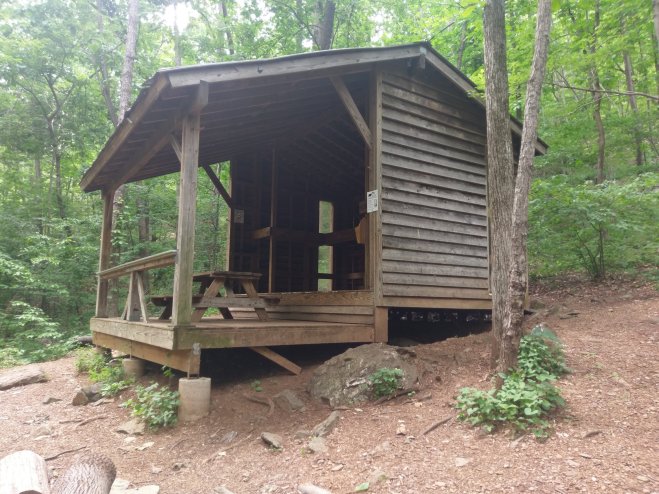 A shelter in Tennessee (I believe).
 The Overmountain Shelter, a barn converted into a shelter.
 The view from the Overmountain shelter.
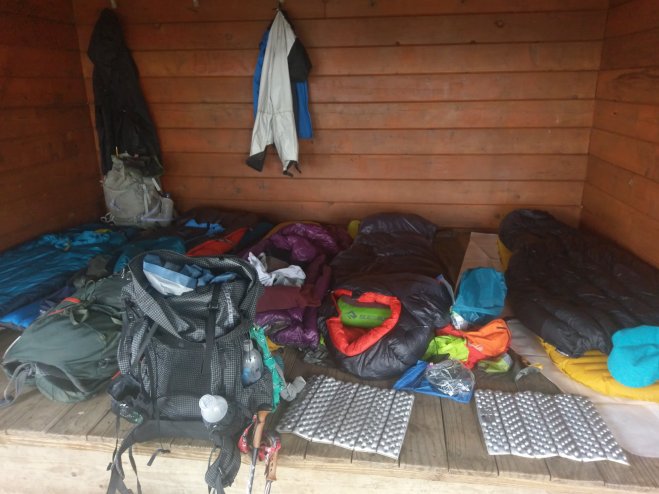
 Crowding into a shelter because rain is coming. It can get quite cozy which is why some hikers opt to tent even when at the shelters.
 Ponies in the Roan Highlands checking out a shelter for handouts.
Most thru hikers opt to tent camp, even when at the shelters. Tenting has several advantages over shelters. Where allowed, tenting is obviously more flexible than relying on shelters. You’re not tied to the location of a shelter. All you need is a flat spot with minimal rocks and roots to set up your tent. Since most shelters have one open side, in cold weather a closed-up tent is usually warmer than a shelter.
 My little home away from home.
Tenting also reduces the likelihood of interactions with wildlife of the vermin variety. Where people with food congregate, mice also tend to congregate. It’s not uncommon for shelters to have mice and the smart person hangs their pack instead of leaving it on the shelter floor during the night. And, in a demonstration of the food chain concept, where mice tend to congregate, snakes also tend to congregate. One shelter I slept in had a black rat snake sleeping in the rafters when we went to bed. It was gone in the morning. Not sure where it went but at least it keeps the mice in check. Other reasons to opt for tenting. even when at a shelter, include more privacy, less noise, and the tendency of some shelters to be shall we say, aromatically challenging. I both tent and use the shelters, depending on circumstances. If the weather is wet and nasty, or there aren’t any good tent sites, I’ll use the shelter. Otherwise I tent.
 The black rat snake in the rafters. He was there when we went to bed, but gone in the morning.
 Looking at the rain from inside a shelter.
Hostels are another sleeping option. I had an idea of what hostels were, but before hitting the trail I had never used one. Turns out, hostels are an integral part of the AT experience. I don’t think anyone thru hikes without using a hostel sometime. When the ugly weather comes rolling in, the hostels fill up.
As with anything, there’s a whole gamut of quality, cleanliness, and atmosphere associated with hostels. Some are little more than bunk rooms with a small common area, maybe some cooking facilities, and port-a-potties. Essentially, they get you out of the rain. Some offer a shuttle service for slack packing. They will take you some day hike distance up the trail and drop you off, and you hike back to the hostel, without having to carry a full backpack. Most hostels have some form of food and fuel resupply available. Some offer food, usually frozen pizzas and the like. Others, like Mountain Harbour, have a food truck to serve grilled foods, and serve a gourmet breakfast buffet that rivals anything I’ve had at high end hotel.
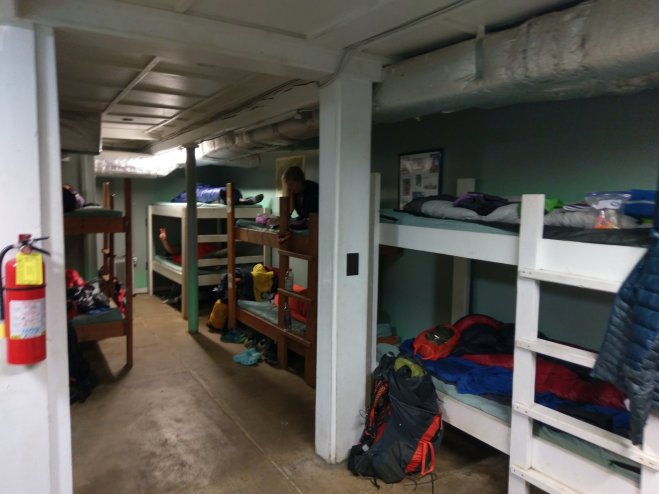 Bunk room at Neel’s Gap hostel.
The vibe at Standing Bear and Uncle Johnny’s hostels is distinctly commune, with some cult overtones. Think Hotel California. People check in, but don’t check out. When I was there, both of them had “hikers” that obviously had no intention of checking out.
 Standing Bear Hostel
 Uncle Johnny’s
 Painting a mural at Uncle Johnny’s.
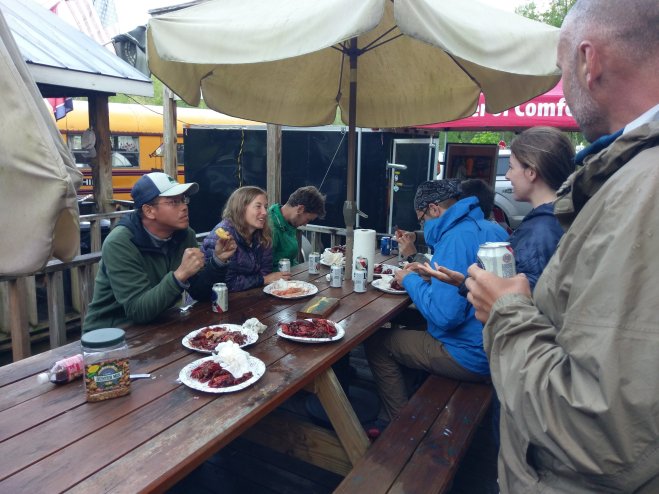 Uncle Johnny’s lowcountry seafood boil.
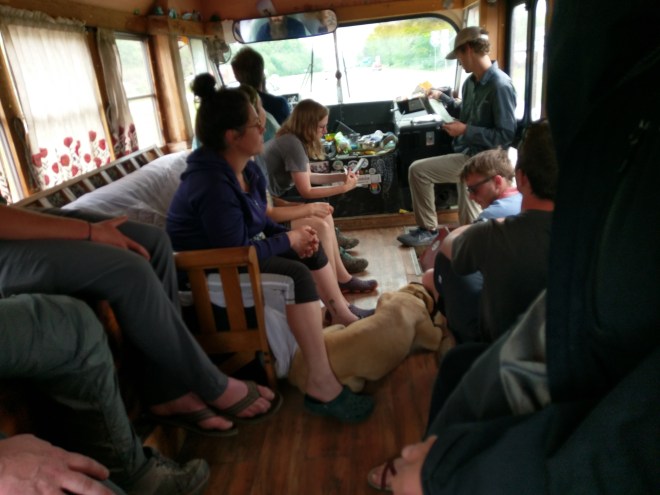 Riding the shuttle from Uncle Johnny’s to Walmart, an old bus converted to a camper. No seat belts or other safety restraints. Probably one of the most unsafe things I’ve done on the trail. The bus stopped suddenly and the three of us standing in the back went airborne.
Other hostels, like Harbour House or Quarter-way hostel have a distinctly homey vibe about them. Both are converted farms. The hostel side of Harbour House is a barn converted to a bunk room, with a couple bathrooms and a nice kitchen and eating area. There’s a small store for resupply, a food truck for grilled foods, a goat, a couple cats, and a gourmet breakfast served in the farmhouse B&B. Hikers will camp nearby and come off the trail just for the breakfast. Quarter-way is a converted 1911 farmhouse and you feel like you are in someone’s living room. And they serve a great breakfast with apple butter, jams, and jellies made from fruit collected on the farm and honey from the farm’s beehives.
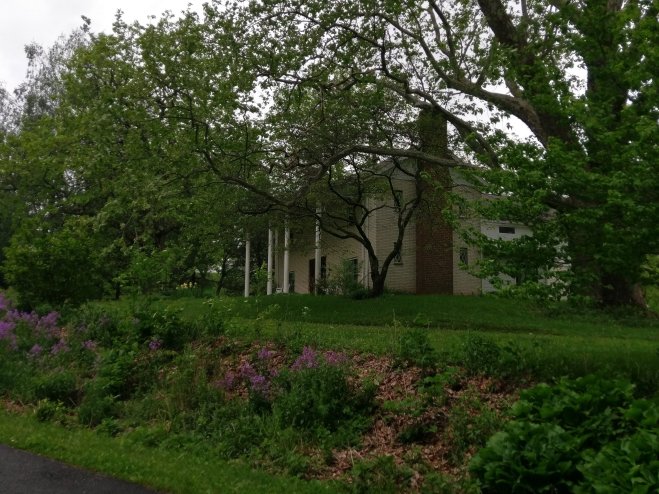
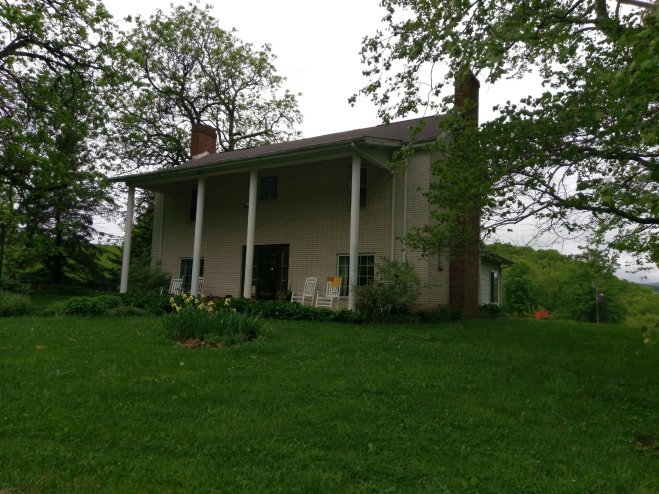 The Quarter Way hostel.
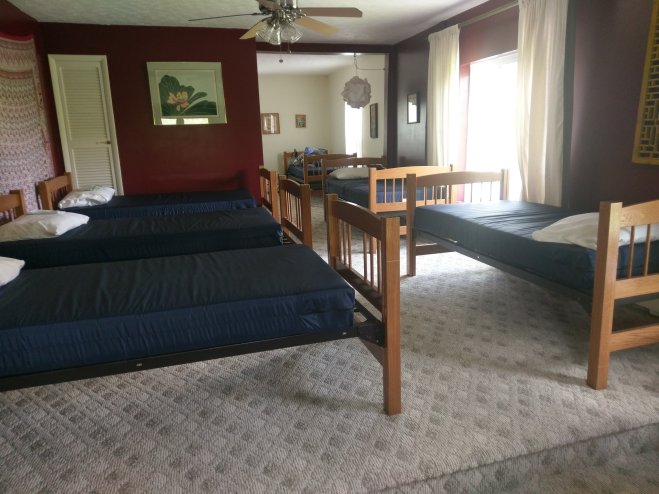 Quarter way hostel bunk room. They also have individual private rooms.

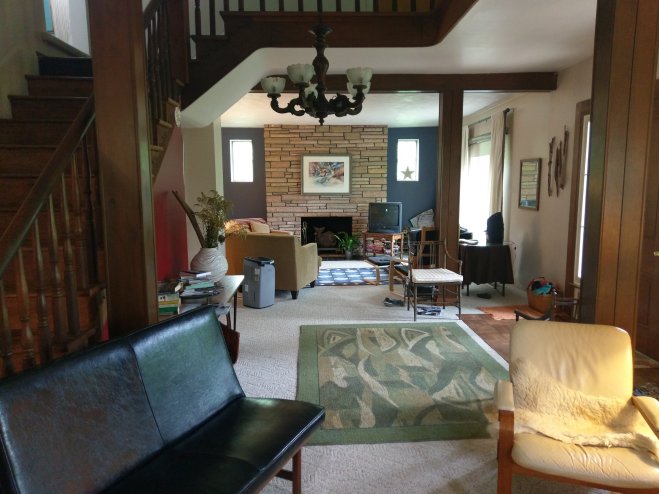 Common area in the Quarterway hostel.
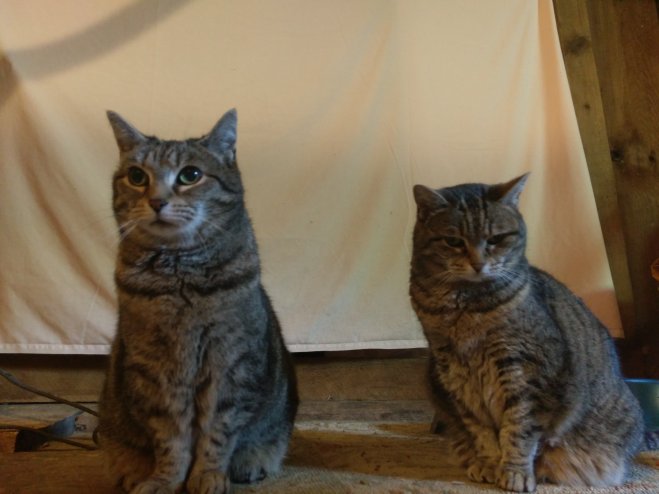 The indoor cats that are part of the Mountain Harbour hostel bunk room.
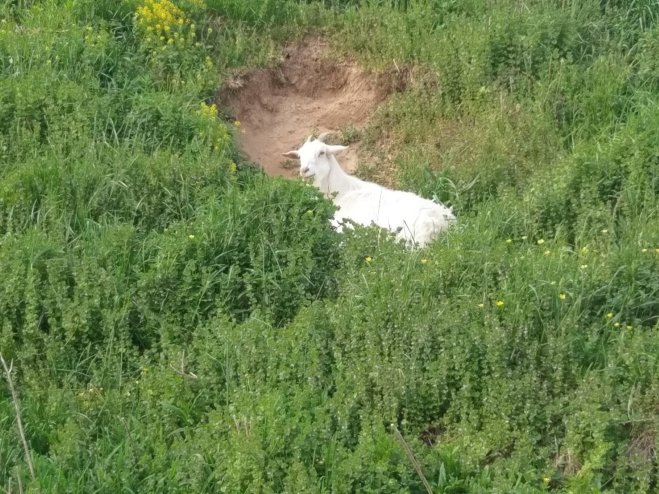 The outdoor goat that is part of the Mountain Harbour hostel.
Motels are another sleeping option. Typically, these are used when you need to go into a town for resupply or you are near a town and the weather is nasty. Hikers tend to the more affordable motels, and the ones that don’t mind that you hang out tents and sleeping bags to dry. Really good hiker motels will have a hiker box, where hikers leave unneeded gear or food for other hikers to use.

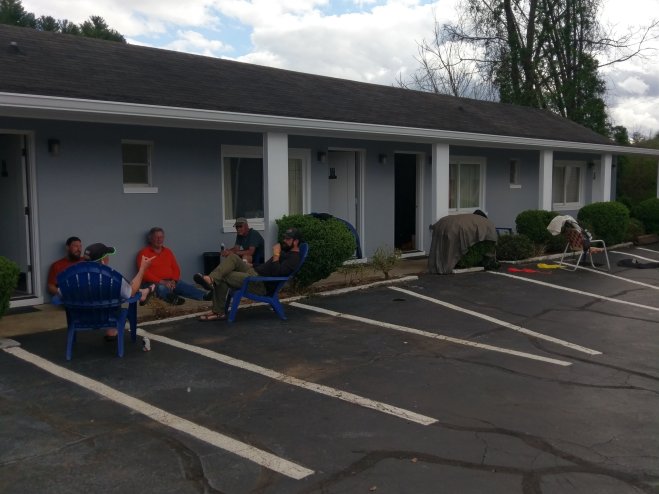 Typical scenes around a hiker motel in Franklin, NC.
 Hiker box, where you leave things you can’t use and take things you need.
There are sometimes other sleeping options, such as commercial campgrounds. Usually they have a general store where you can get grilled food or some resupply items. I used one once, when it was ungodly hot and my hiking partner decided we needed showers.
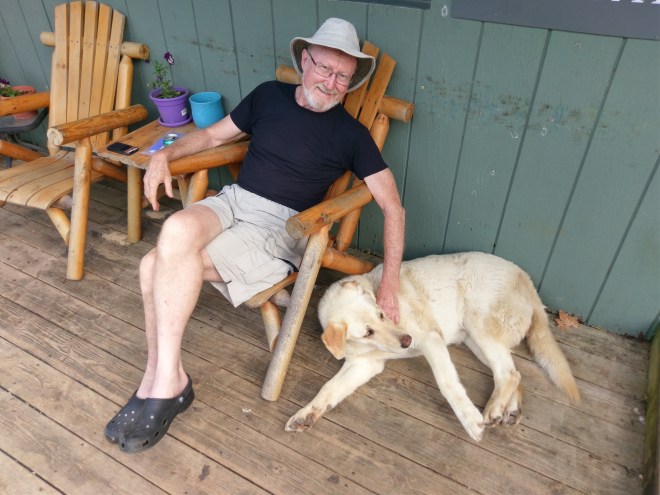
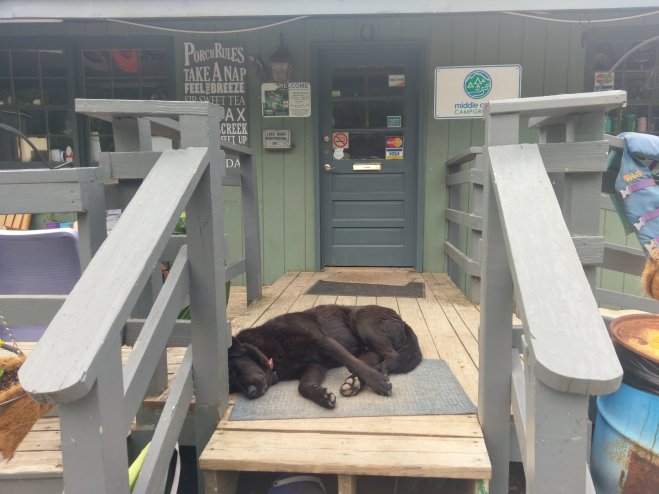 The dogs at the Middle Creek Campground general store. They weren’t much into moving.
But I think my favorite camping option was Devil’s Backbone Brewery. They have a free campground for hikers that includes showers and charging stations for cell phones. And they make really good beer. We happened to hit when they were having a music festival. Free camping, showers, great beer and food, games, and smores made with bacon, Ghiradelli chocolate, and bacon infused marshmallows. Life doesn’t get much better than that.
 Music festival at Devils Backbone Brewery.
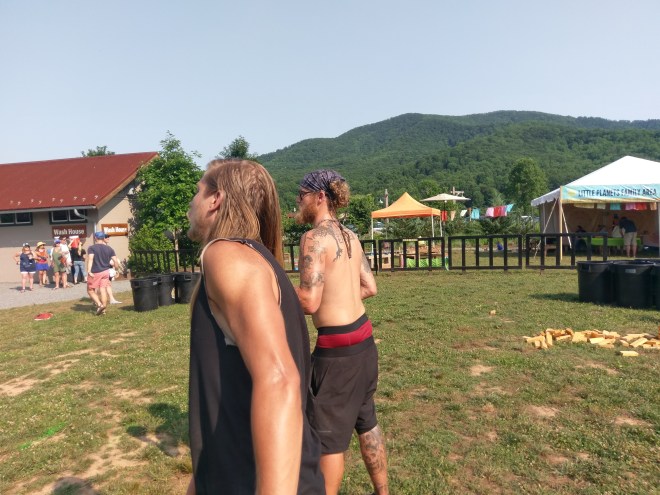 Hikers playing lawn games.
 Smores made with bacon, Ghiradelli chocolate, and bacon infused marshmallows. Can’t go wrong with that combination.
 Ed's and Lise's Biggish Years
Ed, fantastic description of accommodations along the AT. Very interesting to me and hugely useful for anyone thinking about doing a through-hike. Hope you’ve enjoyed the time with Lise!!
LikeLike
Great photos, Ed! You’re really hiking along!
I’m noticing from your photos that there seem to be more males than females hiking.
I really enjoy your Facebook posts and your blog. Thanks for sharing your journey with us!
P.S. Has the NMU hiker caught up with you yet?
LikeLike
Definitely more males than females, but I am seeing more females than when section hiking years ago. I think better equipment designed for women and cell phones have made a difference. Cell phones give a level of security not available just a few years ago.
LikeLike
What was the NMU hiker’s name?
LikeLike