Tuesday, July 9, 2024

I’ve been fighting groundhogs under my workshop for a couple years. Started innocuously. One seemingly harmless groundhog and a hole going under the workshop. The groundhog didn’t even create the hole. A raccoon was living under there first. I harassed the racoon away because of how destructive they can be. They don’t just eat the birdseed, they tear apart the feeders to get to the seed.

Sometime after the racoon left, the groundhog moved in. Didn’t really bother me too much. It ate the birdseed on the ground but didn’t seem to harm anything. Except maybe the tomatoes. Not sure if the groundhog was responsible for eating all of them. There were other potential culprits hanging around like rabbits and opossums, but the groundhog was a prime suspect.

Then came the babies. Cute little critters but they unfortunately become big critters. The next thing I know there are several tunnels going under the workshop. Most of last summer I battled them. I would pour ammonia or other vile liquids down the holes, then fill the holes, and pour more nasty liquids on top of the fill. I always left the main entrance open so they could leave. I didn’t want to trap anyone under the shop.

A couple times I thought I was successful. They appeared to have moved into my neighbor’s woods behind us. I would go a couple weeks without seeing them run under the workshop. Then the entrances would appear again and it was back to business as usual. Finally, towards the end of last summer it appears that the young ones left to find their fortunes. Then I lost sight of the big one. Once again I filled all the entrances except the main one. Just in case something was still living under there.

This Spring I thought I was free of them. We went way into the warm weather before I saw the fat one arise from under the workshop. Followed a few days later by three young ones. So it was back to the same ol’ trench warfare routine. I fill the holes, they dig them out. Then they escalated the war. They dug a new tunnel entrance under our deck.

I really am a live and let live kind of guy. I don’t care that they eat the birdseed on the ground. They don’t climb up into the feeders like the squirrels or knock the feeders down like the raccoons. But they keep digging and expanding. They’re as bad as real estate developers. I don’t want to kill them, I just want them to stop living under my shop.

Desperate times demand desperate responses. I could try piping Barry Manilow music into their tunnels or I could go chemical. I went chemical because I thought it was more humane. I bought a bottle of genuine coyote urine. And some rubber gloves to handle the stuff. It smells really, really bad. Like walking through the New York City subway system kind of bad. I don’t even want to think about how they got the stuff either. Maybe kennel some coyotes and give them all the Budweiser they want? But apparently it’s the real thing, not some chemical substitute. Just to let the record show, I did try using my own urine last summer. The groundhogs ignored it. You get what you pay or I guess. Hopefully the coyote piss is more effective than mine was.

This has got to be one of the weirder occupations I can think of. “What do you do for a living”? I pump coyotes dry “. Do they store this stuff in tanks?

I haven’t just been battling groundhogs and chasing squirrels off bird feeders since we got back from Arizona. I’ve been putting the skills I learned during my week at the Marc Adams Woodworking School into practice. I’ve been using my lathe to make cylindrical objects from the ton of not cylindrical red oak I have laying around. I do mean a ton. At the rate I make these things I have enough red oak to last a lifetime. Unfortunately it’s one of the worst woods for learning woodturning. But, that’s what I got so that’s what I go with. Now I need to start finding homes for this stuff. Like getting rid of the extra zucchinis from your garden. You just start looking for unlocked cars.
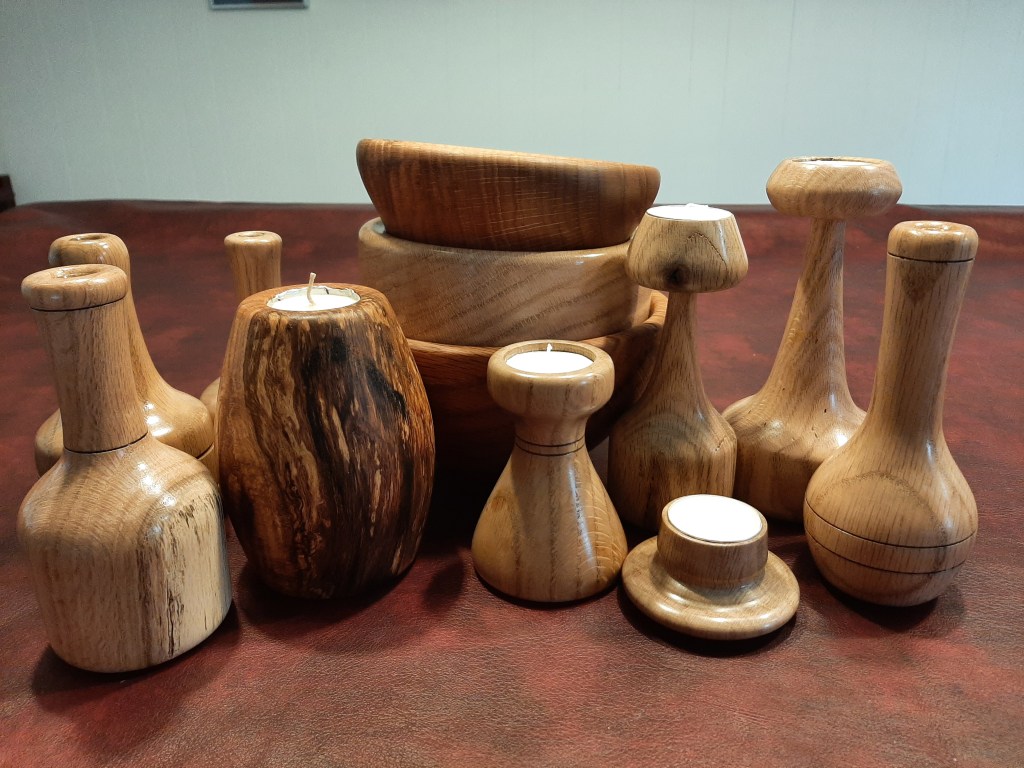
Bowls, bud vases, and tea candle holders, looking for their forever homes.

Saturday, May 25, 2024

We are now back in West Lafayette after a trip to Delaware. Good birding, some hiking and kayaking, a little photography and some great eating. This trip was mostly play time. Usually I program in maintenance time on the trailer. Not this trip. It was pretty much just go go go. 

While in Delaware a friend from Bloomington visited for a couple days. Always interesting to see a place you’re familiar with through new eyes. When she left we dropped her off at Baltimore-Washington International Airport on our way back to Indiana. Which means I hauled a ten-foot trailer loaded with kayaks and bicycles through the BWI departure area. Not recommended. Almost as much fun as driving it through the Philadelphia city center. 
Coastal Delaware is becoming highly developed. My family has had an association with the Lewes-Rehoboth area for about 50 years and the area has changed significantly in that time. At one time Lewes dried up in the winter. Think tumbleweeds blowing down the street. Now Lewes has a high end tequila bar the town is open all year. While Lewes and Rehoboth themselves aren’t growing, the immediate surrounding area has become a poster child for poor planning. I hate the over-development, but there is still the Delaware Bay, the Atlantic Ocean and miles and miles of coastline, coastal estuaries, and salt marshes. Protected by National Wildlife Refuges, State parks, and other protected areas that keep bringing us back. 
Salt marshes off Oyster Rocks Road, near Lewes, DE

We planned this trip to coincide with the Atlantic Seaboard northbound shorebird migration. Shorebirds migrate up from places south of the equator to arctic nesting areas. Delaware Bay is a key staging area for the migration. The shorebirds time their migration to coincide with the horseshoe crabs coming ashore to lay their eggs. The peak is around the full moon in May. This perfect timing has been happening for many millennia. Shorebird numbers have been declining the past couple decades but on the order of a million shorebirds will lay over in the Delaware Bay during the migration. All hoping to get enough energy from horseshoe crab eggs to make it to the arctic and reproduce. One can only imagine the numbers before human impacts caused their numbers to drop.

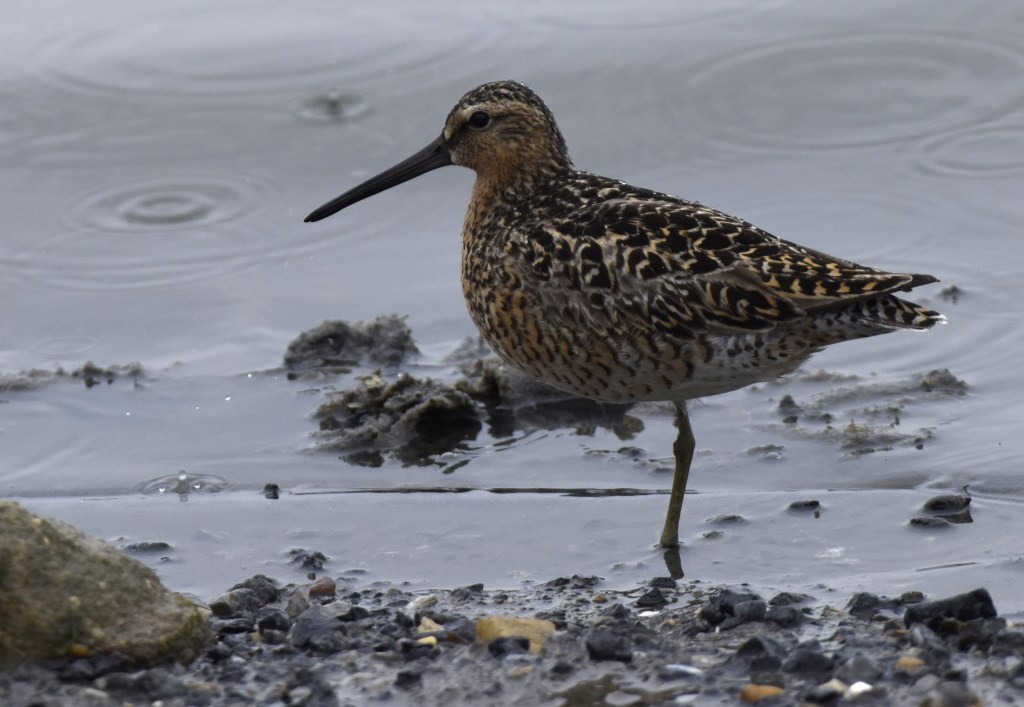
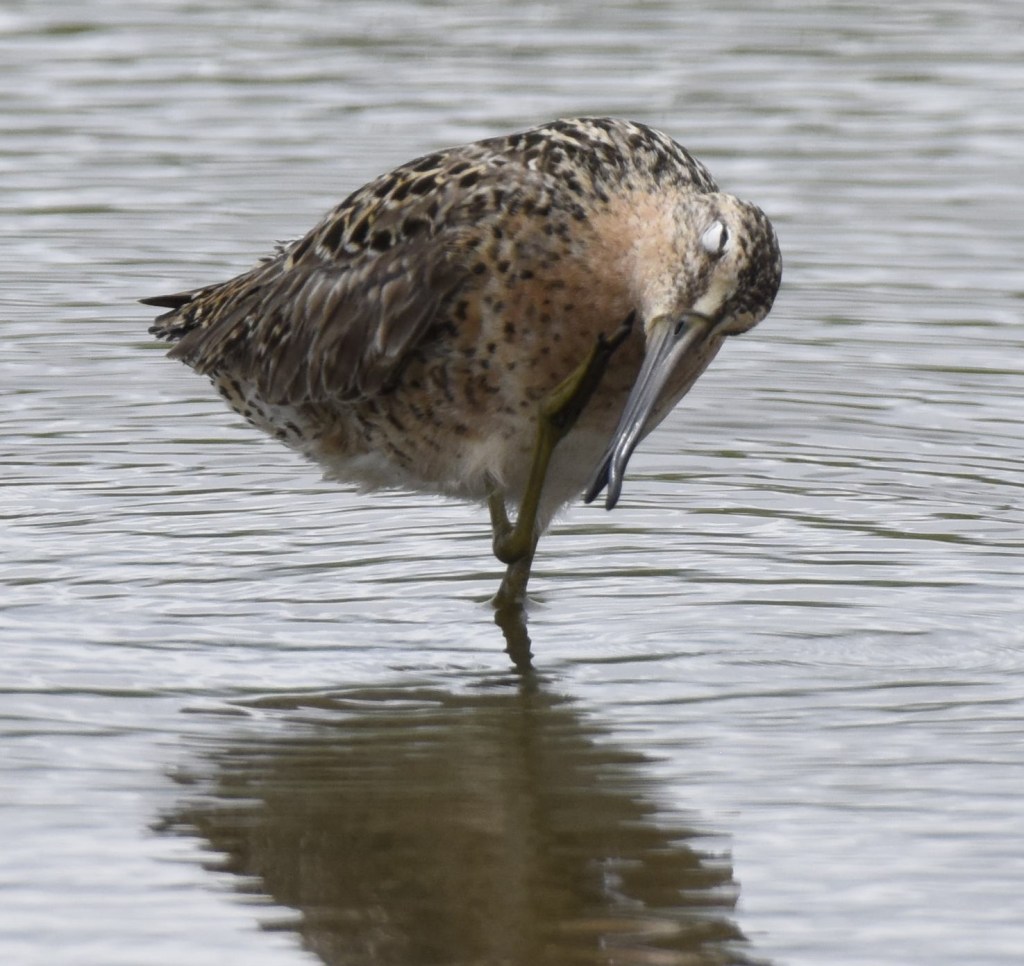
Short-billed dowitcher at Mispillion River Inlet and Oyster Rocks Road.

Ruddy turnstones at Mispillion River Inlet.

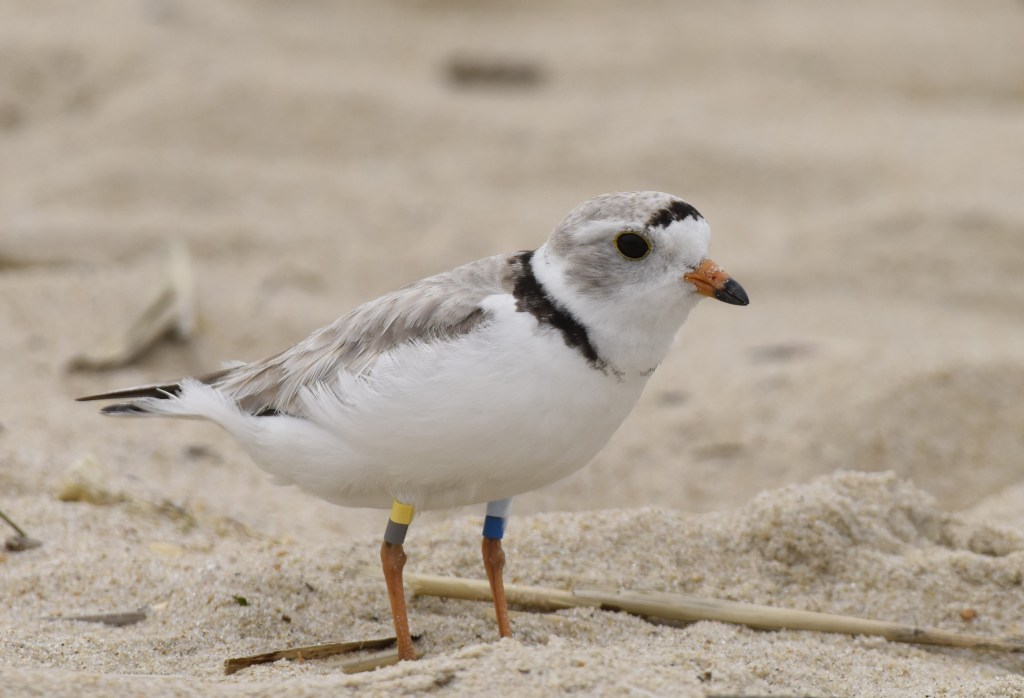
Piping plover (Federally Endangered), at Cape Henlopen State Park.

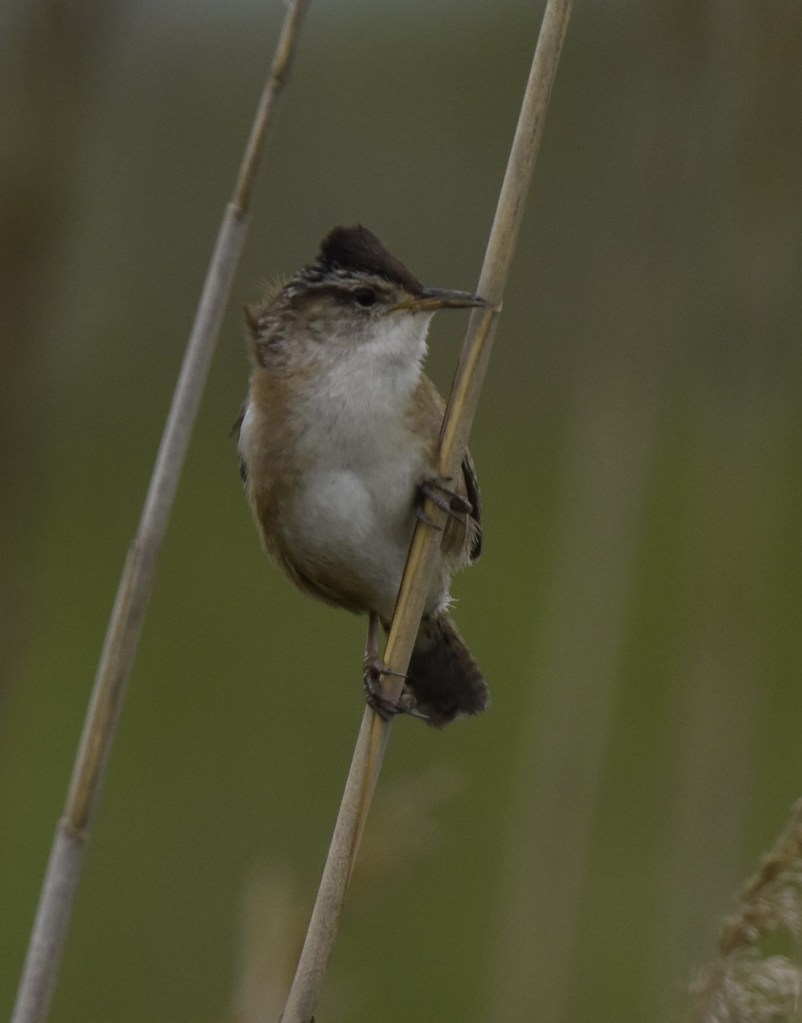
A wind-blown marsh wren, at Bombay Hook National Wildlife Refuge.

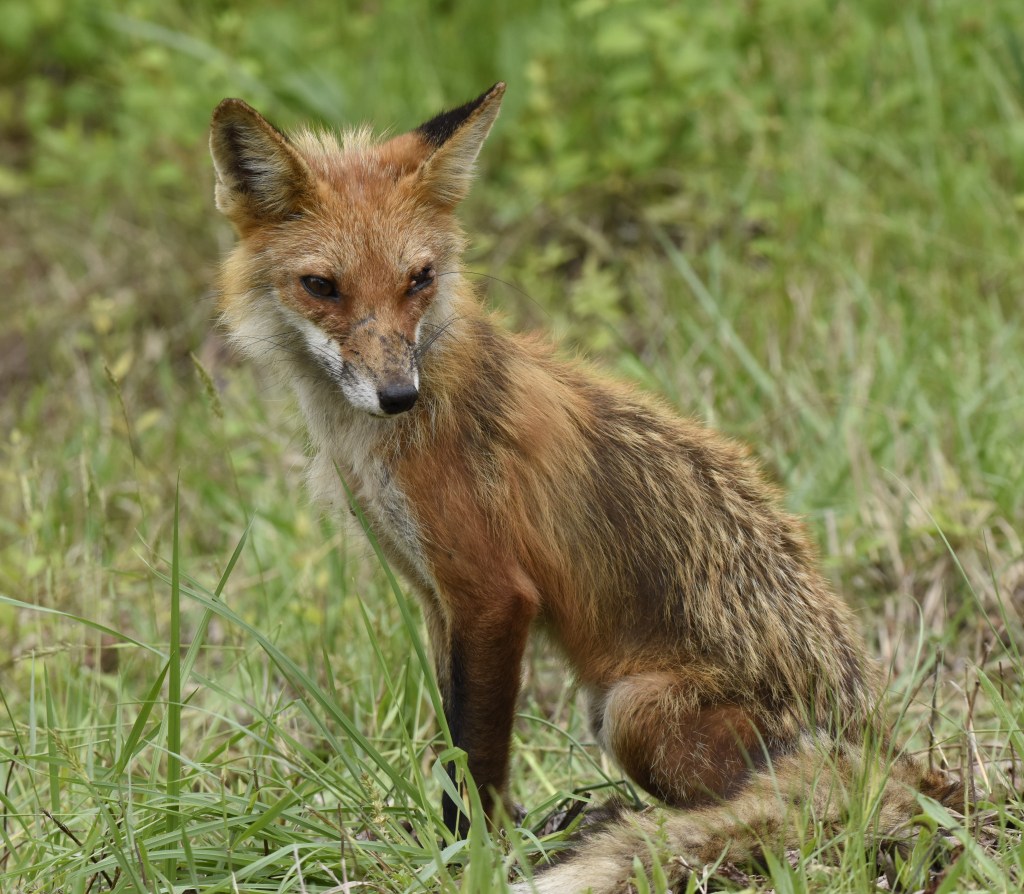
A non-bird red fox at Bombay Hook National Wildlife Refuge.

We did some hiking and kayaking too. We kayaked two places we were familiar with, Fleetwood Pond in Prime Hook National Wildlife Refuge and the Trapp Pond State Park Cypress Swamp Trail. Both places are within an easy drive for a couple million people, but we had them to ourselves. 

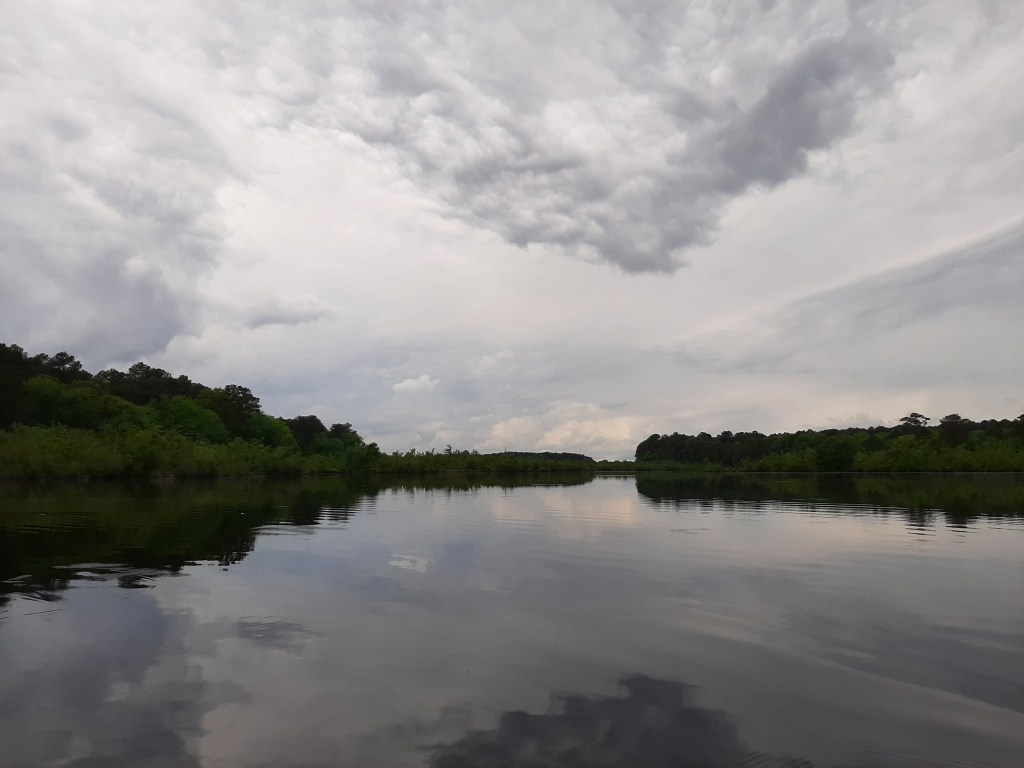
Outrunning a thunderstorm at Fleetwood Pond.

A very friendly black racer (we believe) at Fleetwood Pond.

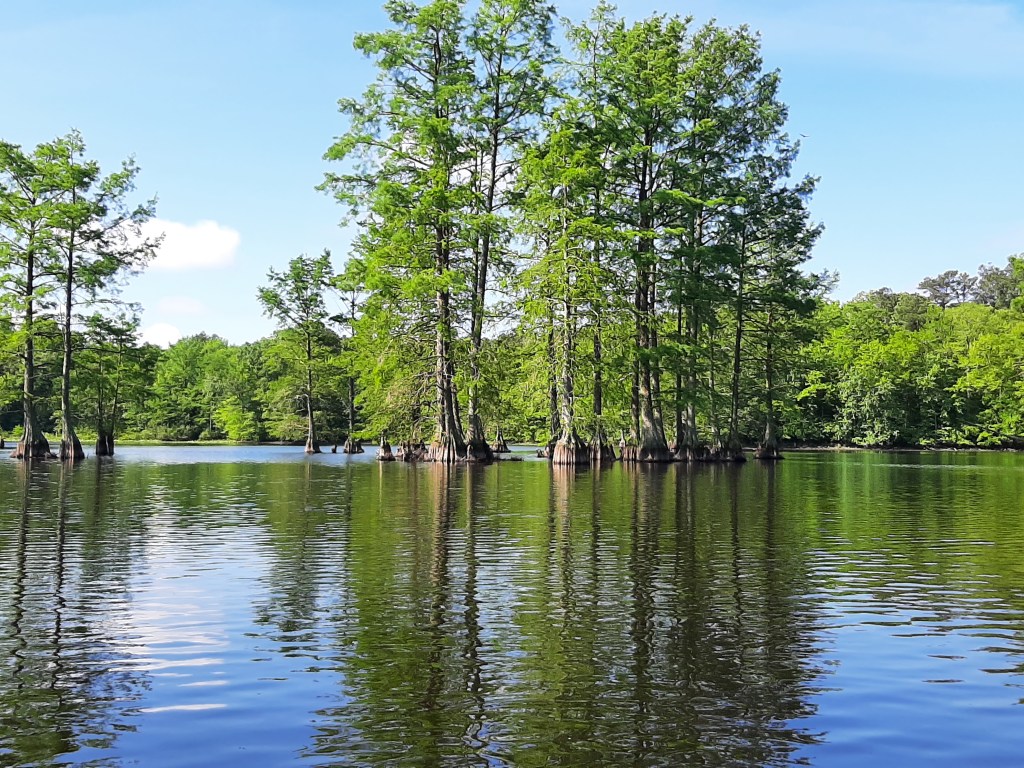
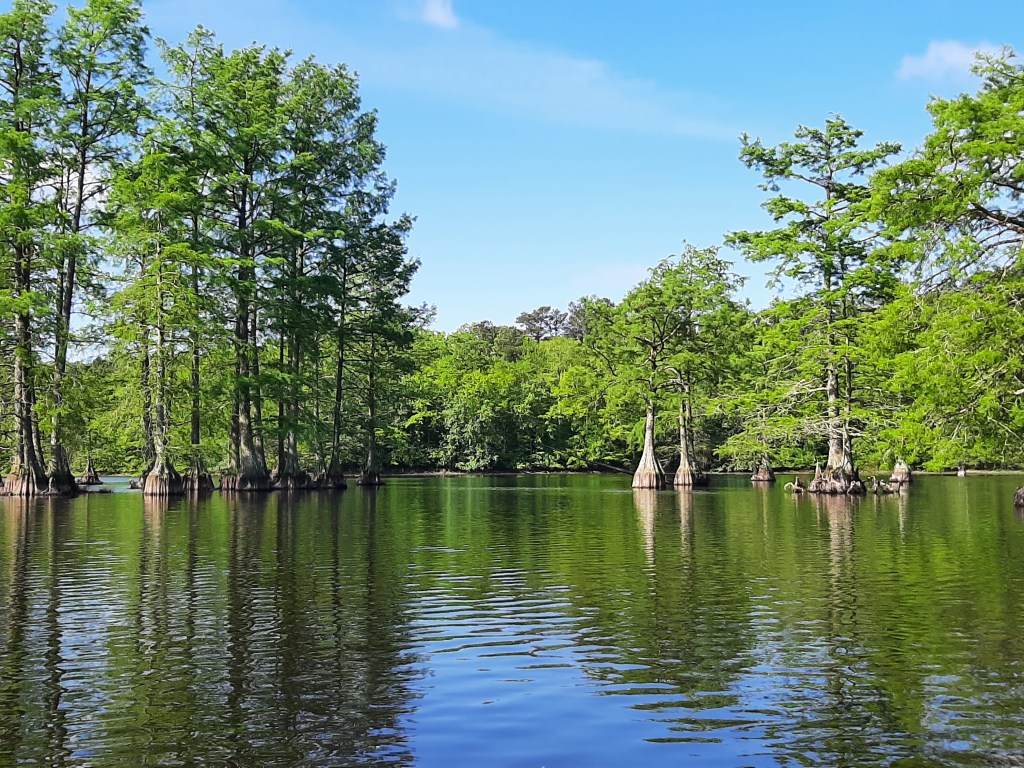
Kayaking the cypress swamp at Trapp Pond State Park. I believe this is the northernmost cypress swamp in North America.

The skeletal remains of a racoon found on a trail in Cape Henlopen State Park. We don’t know what ate it, we just know we don’t want to meet it on the trail.

And we did some great eating. With today’s interstates and refrigerated trucks I’m sure one can get crabs, clams, and oysters reasonably fresh and safe to eat in the Midwest. But I just can’t bring myself to accept that. If you want good shellfish you need to be close to the source. Indiana is not. Even with climate change and ocean rise, Indiana isn’t going to be coastal for a long, long time. Indiana can give you great breaded pork tenderloin sandwiches.They win that one. But sorry, no, I’m not buying oysters and clams in Indiana. 

Fried oysters at The Surfing Crab restaurant. Along with hush puppies and cheesy grits. Kind of a corn squared thing. The restaurant is a small cinder-block building with plain painted walls where you will find the best crabs and fried oysters in Delaware. About five minutes from our trailer.

Slo & Lo BBQ. A weekend only pop-up barbecue place in Lewes. A couple of old retired guys with nothing to do on their weekends except make some of the best barbecue you will eat. About five minutes from our trailer.

It always takes a couple days after a trip to get things back to a semblance of normal. Laundry, back mail, restocking the refrigerator, processing photos, writing blogs. We came home to a yard that looked something like an alfalfa crop.

Time to harvest the crops.

And, it looks like the groundhog war has heated up. A few weeks ago Fat Boy, the resident groundhog, emerged from hibernation under my shop. He has been hanging around for a couple weeks, finding something to eat in the yard or woods behind us. Thus far being pretty benign. During the winter I closed off all the entrances going under my shop except his main one. He seemed fine with that. We went a couple weeks with no new construction going on. I thought maybe we had come to some kind of agreement. He can live peacefully under the shop as long as the tomatoes go unmolested and  no new tunnels appear. I should have known better. We were greeted with three young groundhogs running around. And, either Fat Boy and his progeny, or their rabbit allies, have opened up the tunnels I closed off. This of course means war. 

Monday, February 12, 2024

After a dreary January things have picked up a bit in our lives. For starters, we seem to be past the sub-zero temperatures. We’ve had a few spring-like days. Kind of scary warm for February days. And, Punxsutawney Phil did not see his shadow on Groundhog’s Day, predicting only six more weeks of winter. How can you go wrong with a groundhog predicting the weather? 

Last week we got to do our annual Eastern Upper Peninsula winter bird trip. The one we tried to do in mid-January, but the weather thwarted. We drove up to St. Ignace, Michigan, and our friend Joanna came over from Marquette to meet us. 

This year was very different from the past 20 or so years we’ve done this trip. The weather was weirdly warm for this time of year. We have done this trip in single digit temperatures. There’s always a lot of snow cover. This year the temps were in the mid-thirties Fahrenheit and there was very little snow cover. We were driving on gravel roads that in the past were snow-packed. We didn’t know they were gravel until this year. On the up side, there were no snowmobiles. The warm temperatures produced fog and beautiful hoarfrost in the mornings. The fog made for low visibility and some tough birding. 

Beyond those frost-covered, fog-shrouded, trees is miles of open space. Our visibility range was maybe 20 yards at best.

Overall the birding was so-so. This area is known for snowy owls in the winter. We ran into multiple group outings and numerous individuals, looking for winter birds and in particular snowy owls. One loop we drive typically produces over 20 owls. This year there was only one known snowy owl in the area. Many people were looking for that individual. We finally saw it, with help from someone who spotted it and waited by the road to point it out. Too far away for good pictures, but we got our snowy owl for the year. 

The much sought for snowy owl. It looked better in the spotting scope.

We saw other winter species too, but we had to work for them. Overall the number of species and the number of individuals seemed to be low. Very possibly because the low snow cover didn’t concentrate the birds as in other years. And, even if we didn’t get any new species for the year, it would have been a great trip. Getting north of the Mackinac Bridge and spending time with a good friend helps rejuvenate the soul. 

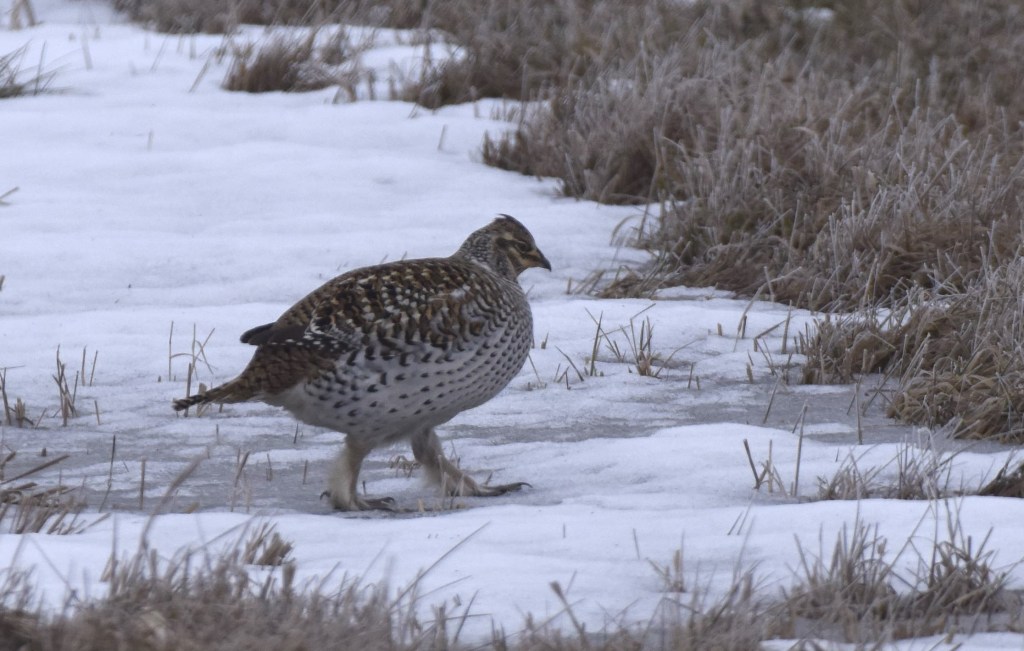
Sharp-tailed grouse.

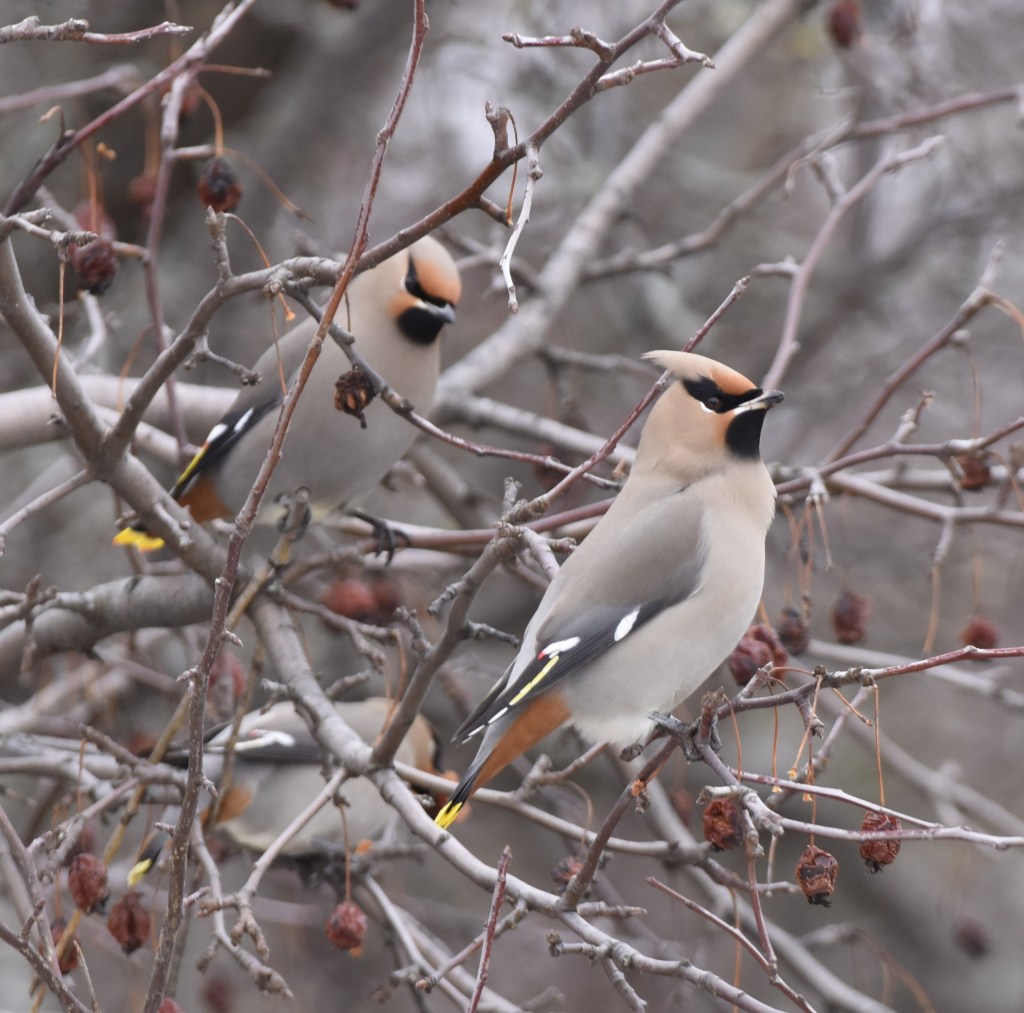
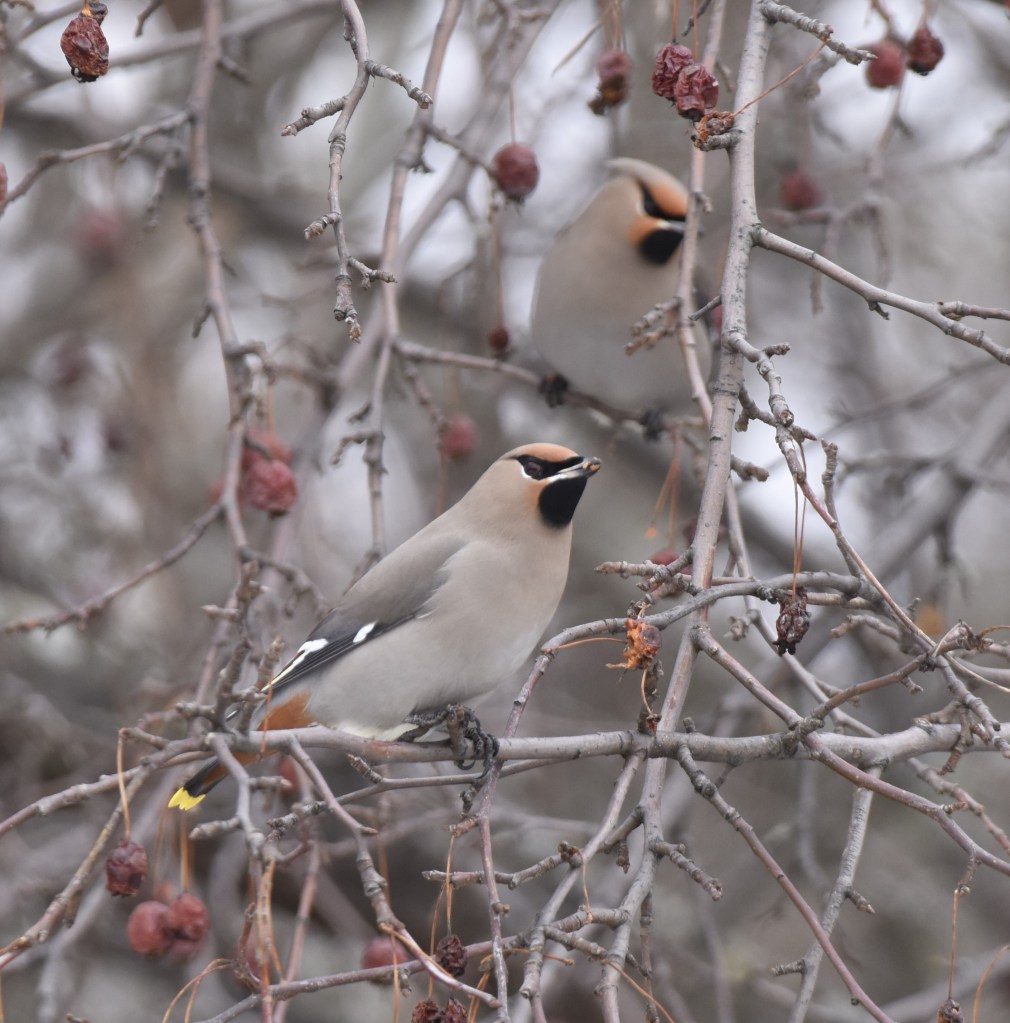
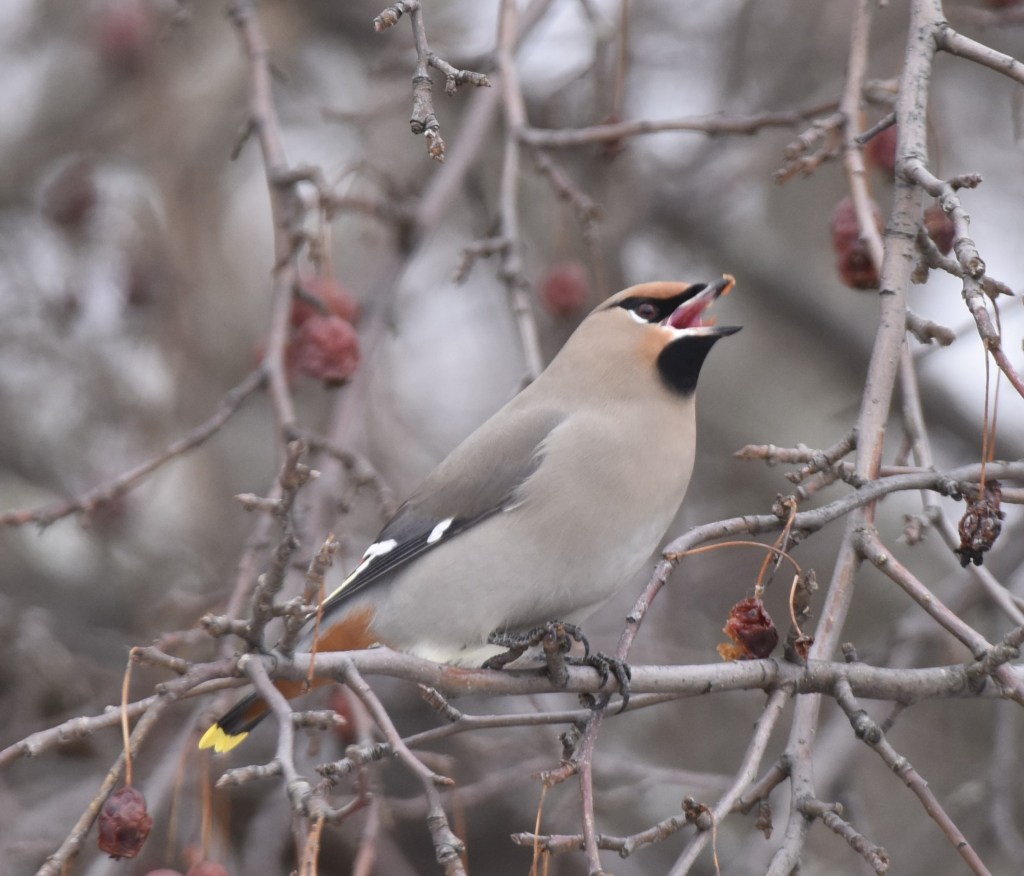
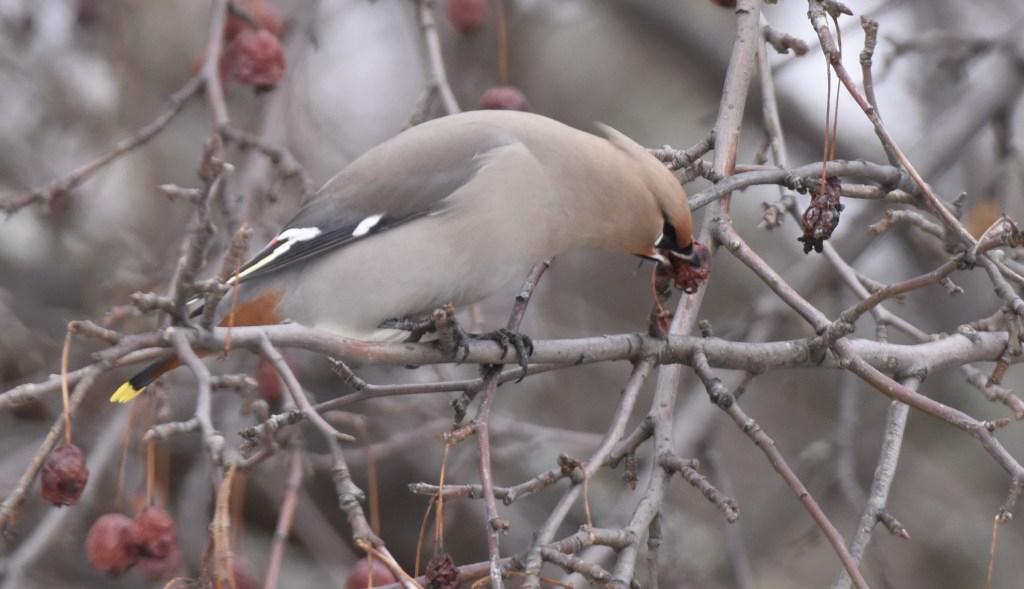
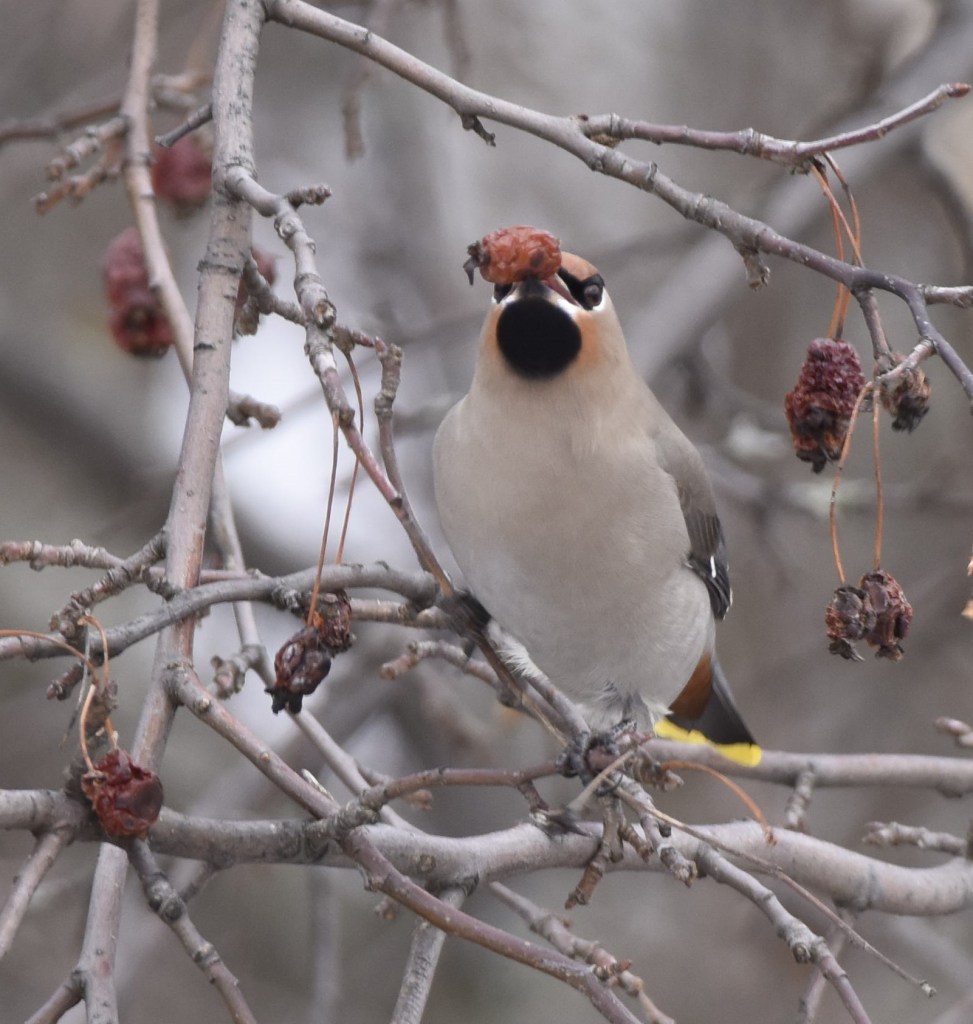
Bohemian waxwings.

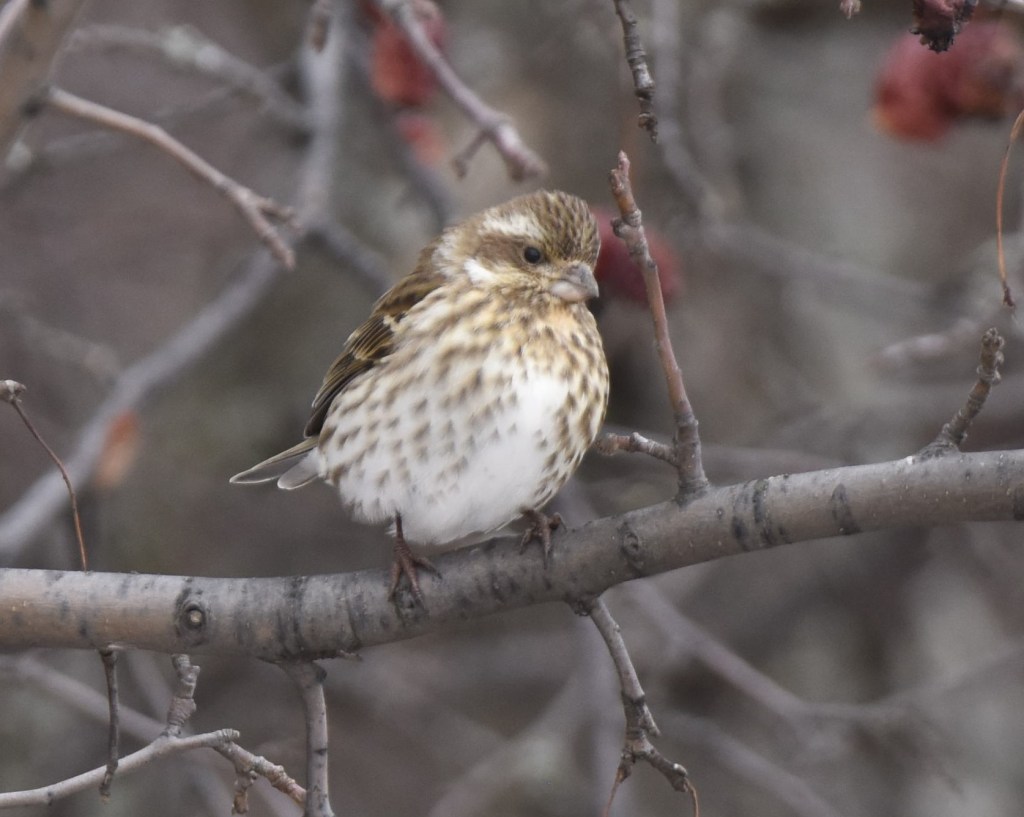
Female purple finch.

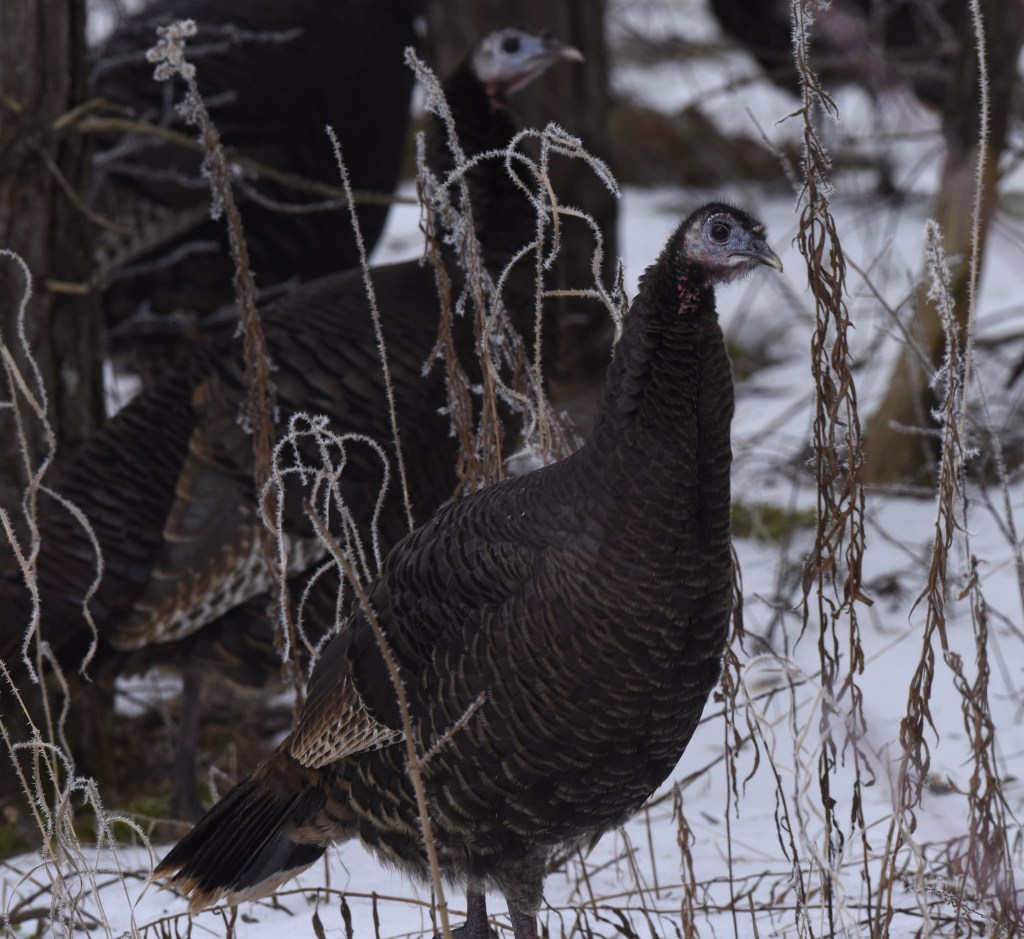
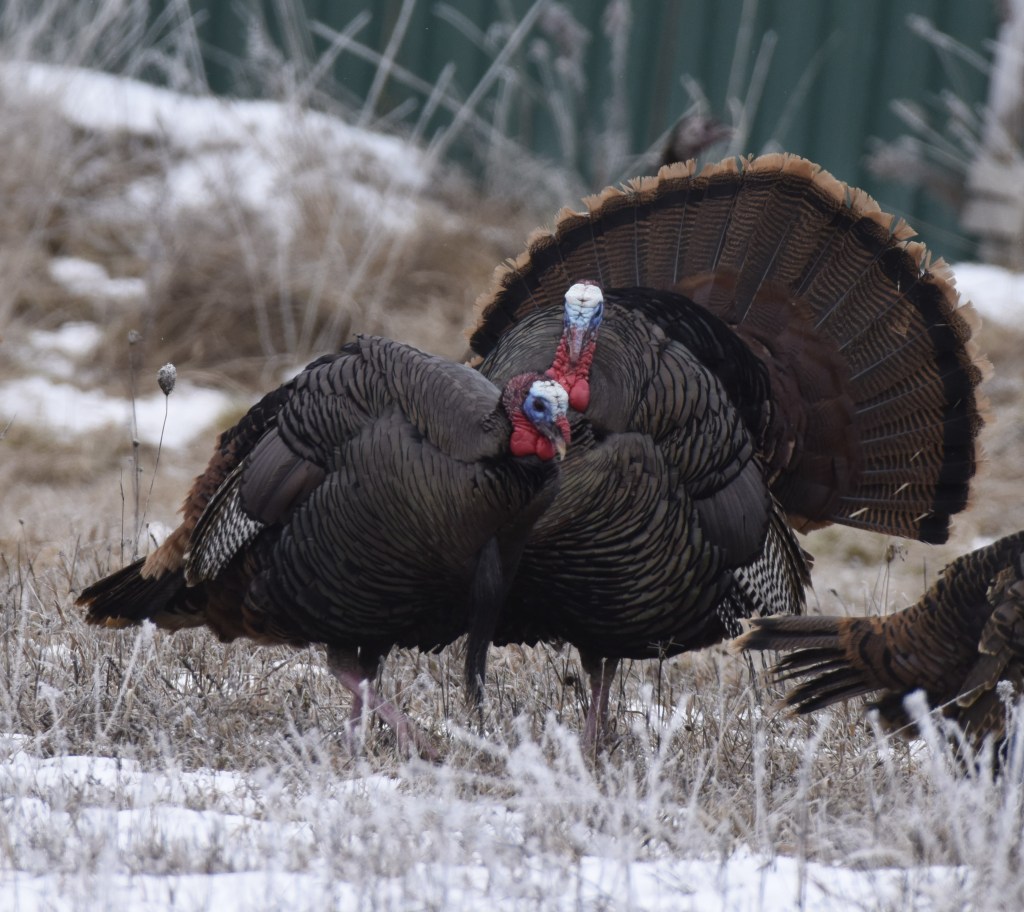
Wild turkeys.