Sunday, November 3, 2024

Yet another post where I start off talking about how overdue my post is. This one is almost criminally overdue. But, sometimes things just conspire against you. Such is life. Suck it up and move on I guess. 

I do have a medical reason for part of the delay. A note from my doctor if you will. A bit over a month ago I had cataract surgery. Cataracts, a fairly normal condition as one ages, is a clouding in the lens. The remedy is to break apart and remove the cloudy lens and replace it with a new clear lens. Instant brightness. Because I have some other eye issues they also did a little laser carving on my cornea. Which fixed my long distance vision but my close up vision is still miserably bad. Nowadays, both procedures are routine operations and event-less for most people. Emphasis on “most” people. 

The procedure is done in two stages. Do one eye and a week later do the second eye. Seems logical. So I had the first eye done. Routine operation and nothing serious. Except I had one corrected eye and one not corrected eye. Which was highly interesting. By switching which eye I looked through I could get very different views of the world. The change in color intensity and brightness was stunning but more interesting was the actual change in color I saw. Especially on the lighter end of the spectrum. With the corrected eye, whites were brighter and almost had a bluish cast to them. Maybe the Rayleigh scattering that makes the sky blue? Looking through the uncorrected eye the same light colored object had a yellowish cast. Which makes me wonder – would Van Gogh see his pictures differently as he aged? 

The vision difference between the two eyes made walking and driving difficult. So I popped the prescription lens for the corrected eye out of my glasses. My brain was still trying to process color differences between the eyes but at least the vision was now fairly similar between the eyes. In my shop I took off the glasses so I could cover both eyes with safety glasses. Which was fine until I was using a grinder to sharpen a tool. I had to look closely at the edge so I put the prescription glasses back on to look through the remaining bifocal. And then I turned around and went right back to grinding. With a missing lens. Sure enough, a few hours later my newly operated on eye was irritated. 

When I went back to the eye surgeons they looked in my eye and informed me I had a tiny piece of metal in it. Even asked if I was grinding something. To remove the offending metal fragment they numbed my eye and put me in the examining fixture with my forehead and chin braced. Then a technician came up behind me and put her hand on the back of my head. No warm fuzzy feeling there. Next I saw the end of a stick coming at my eye and the doctor said, “I got it”. Then she looked again and said there was a rust trail in my eye that had to be removed. So she pulled out an eyeball dremel tool. Not much different than what a dentist uses in your mouth. Only this one requires a technician applying even more pressure to the back of your head to hold it in place. 

Anyway, a couple days later I had the second eye operated on. Things seemed OK until a day later when  Lise managed to elbow me in my newly operated on eye. Her pointy little elbow fit perfectly into my eye socket. It hurt. A lot. Nothing permanent, but it hurt. 

As my eyes have been recovering from the surgery an interesting phenomenon has occurred. My eyes are cloudy when I get up in the mornings. Like I’m looking through a haze. By about noon the fog clears a good bit. The cloudiness is bad enough, but with increased light getting to my retina it can be blinding. For several weeks I couldn’t safely drive in the mornings. Or look at a bright computer or phone screen. My eyes would start watering. Your eyes have a layer of cells that transport fluid out of the eye. During the day, when your eyes are open, fluid can evaporate. All good. When you’re sleeping this layer of cells has to carry the fluid away. Lucky me, I have a very, very thin layer of cells and they can’t carry away the fluid. Not good. The fix is to have donor cells transplanted into your eyes. That just sounds like a lot of fun. Right now the condition seems to be slowly improving so we are in a wait and see mode. No pun intended. 

Other than eyeball problems, our lives have been pretty hum-drum. Working around the house like building access ramps or painting the deck cover. I’d almost rather have eye surgery than do the painting. We’ve gotten a few short trips in and have entertained some visiting family and friends. The kinds of things that don’t allow time for writing blogs. We did get a trip back to Delaware for a week or so. Playing around in that artery clogging part of the country we enjoy so much

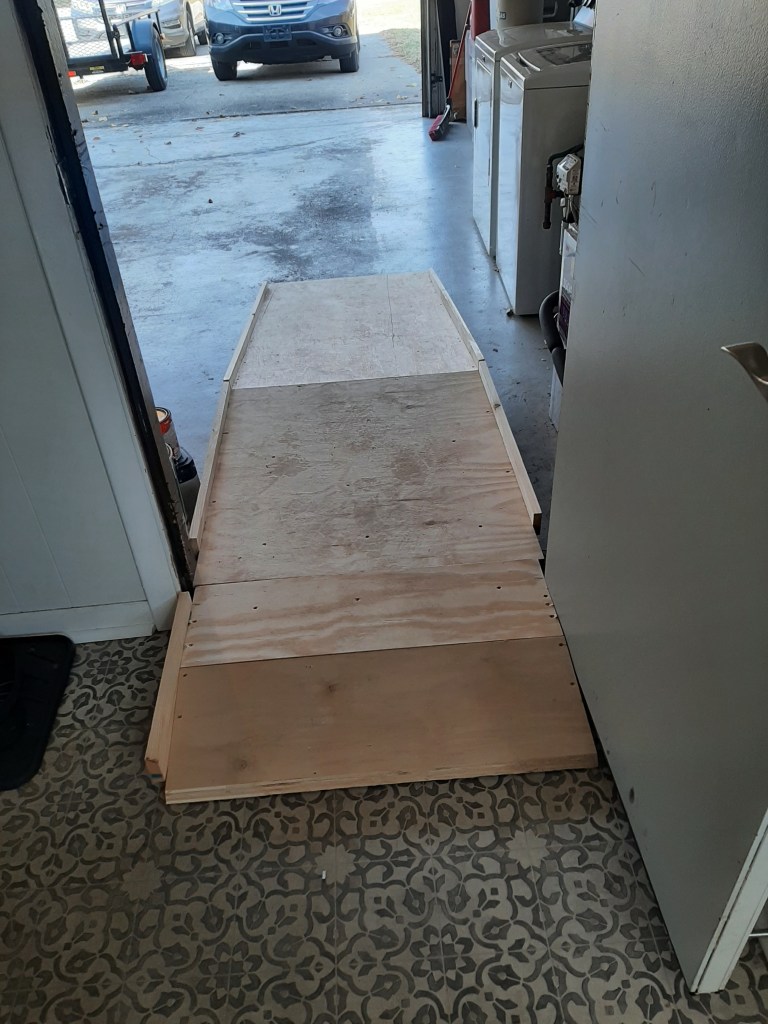
Handicap access ramp I built for the house

Lise painting the deck cover.
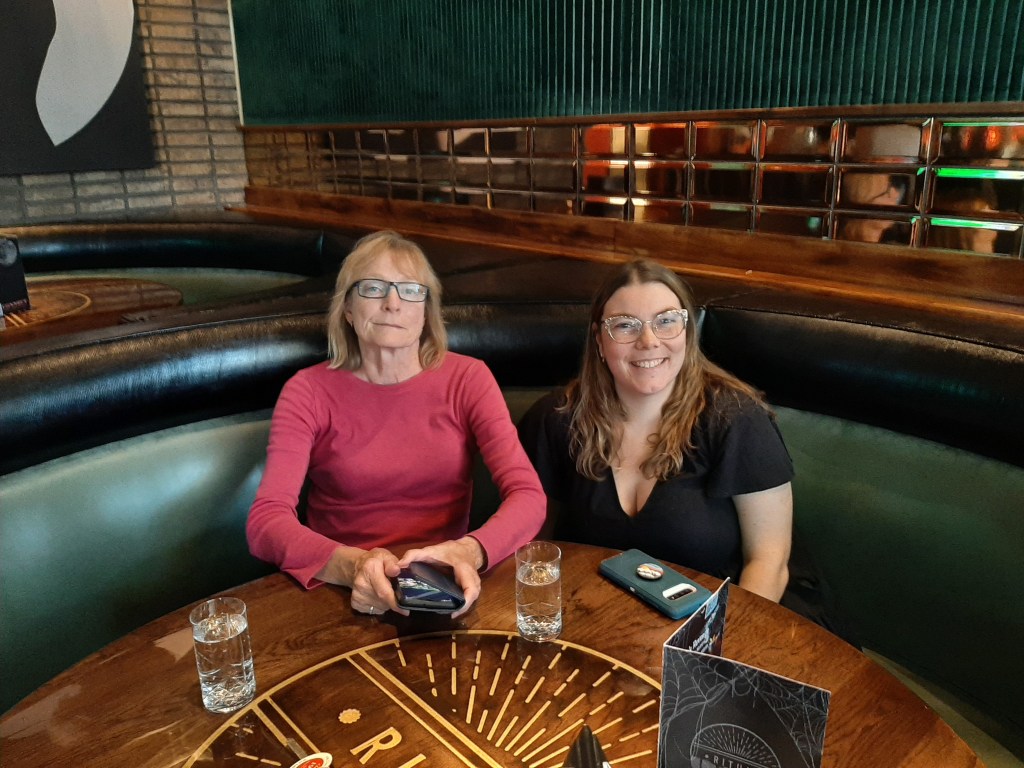
Entertaining our visiting friend Lindsay at Ritual cocktail bar, Lafayette, IN.
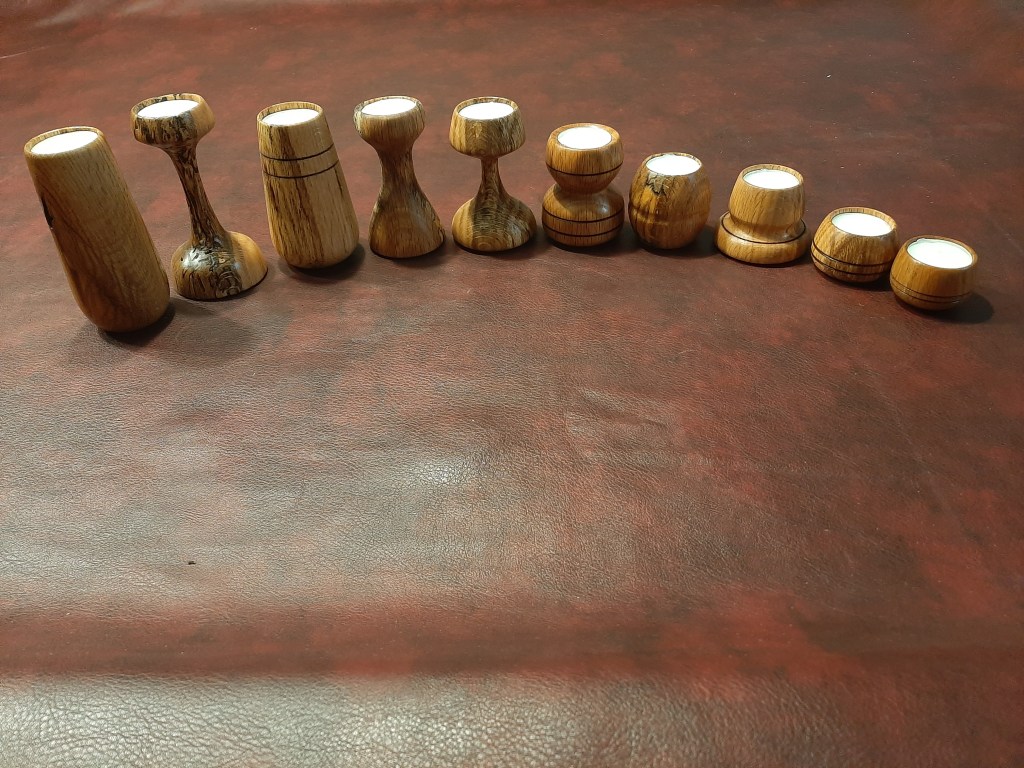
Tea candle holders I made for Lise’s annual Natural Gals trip.
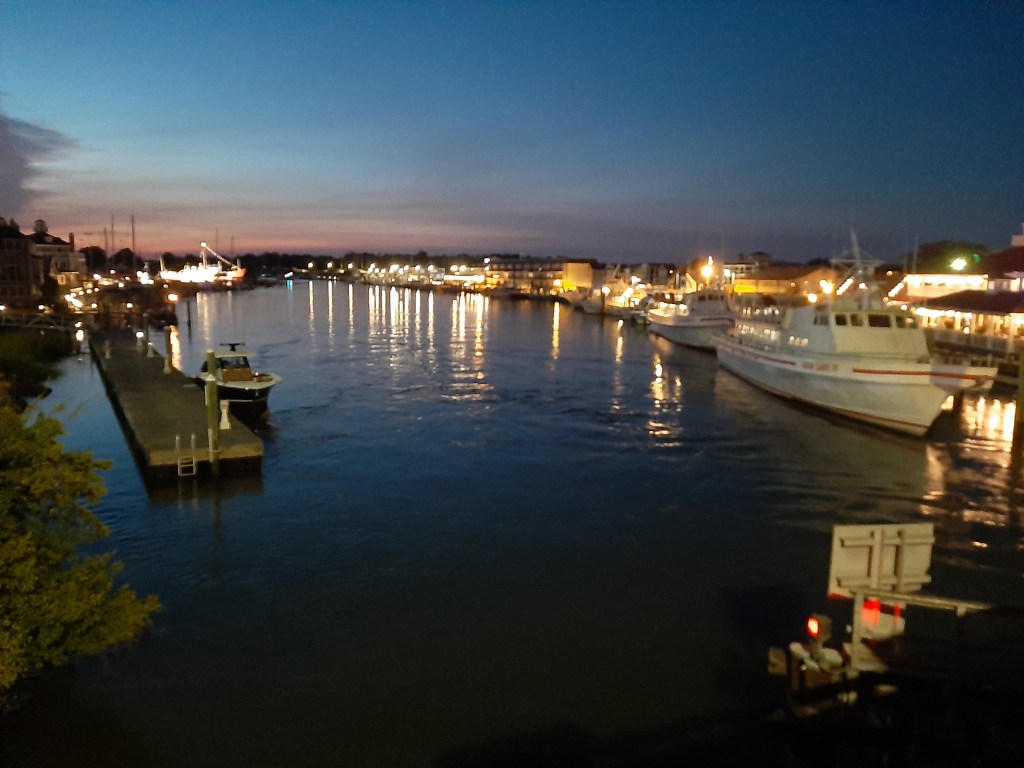
Looking down the Lewes – Rehobeth Canal in Lewes, DE.

Cape Henlopen State Park. The Delaware Bay to the left of the lighthouse, Atlantic Ocean to the right.

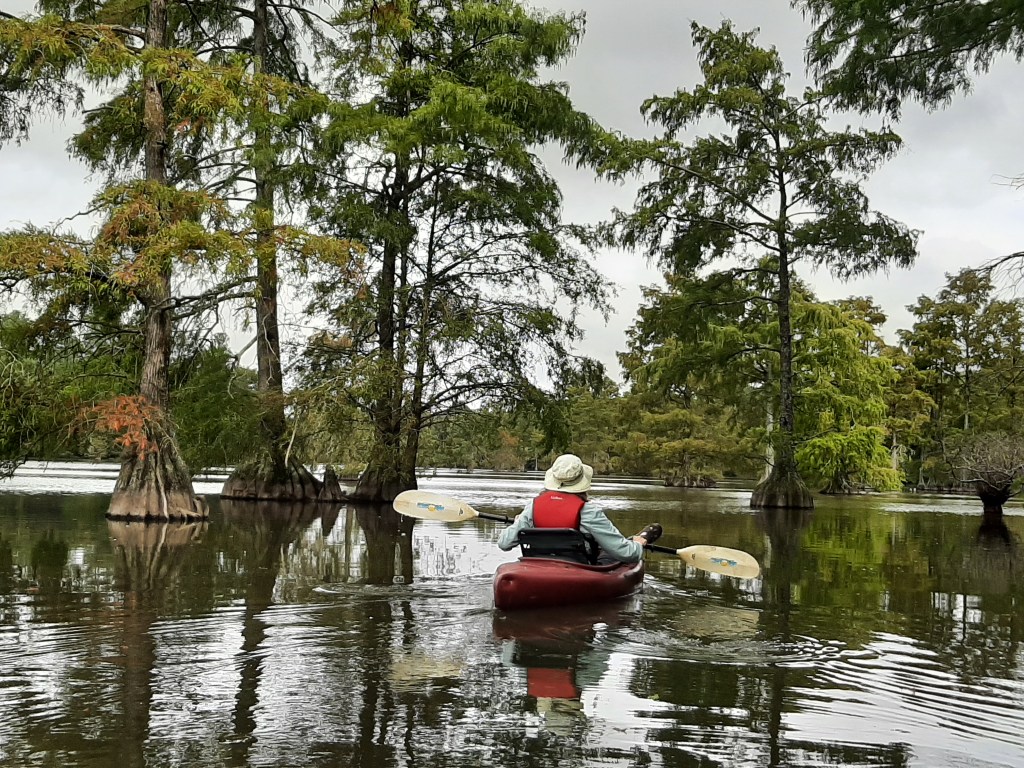
Paddling through the Cypress trees in Trap Pond State Park, DE

The regular breakfast guys at Heisey’s Diner, Lebanon PA. We stop in Lebanon to visit family when driving between Indiana and Delaware.

Then there’s the groundhog wars. Either I won or we are in a waiting mode until spring. Likely the latter. I had been putting cotton balls soaked in coyote urine around the shop and deck trying to scare them off. After an application they would disappear for a couple days. Then we would leave for a day and they would have re-excavated their entrances. Sometimes just a trip across town was enough for them to do their excavations. In early September, when we got back from our Delaware trip, they had naturally reopened their entrances. I switched to a spray urine application instead of the cotton balls. There was no activity for a week until I left the house for a couple hours. They reopened one entrance but they did it from the outside, not the inside. I sprayed again and after two weeks of no activity I filled the hole back in. I do leave one entrance in the back of the shop open so they are not trapped underground. There has been no sign of them since then. Either they have departed the area or have gone into hibernation. But September seems early for hibernation. Still a lot of light, warm weather, and plenty of tomatoes to ravage. I can hope the war is over but I need to wait until next spring to find out. 

Going nuclear.

Tuesday, June 18, 2024

We are back home after a ten day trip to Arizona. It was a good trip, mostly focused on birding. We had some time around Tucson and Green Valley but most of the trip was spent in the Portal area. 

Lise and Anita in West Lafayette’s own Triple XXX diner for breakfast before heading to the Indy airport. 

We flew a Boeing aircraft and it looked like they put duct tape on a hatch window. Doesn’t give one warm fuzzy feelings. 

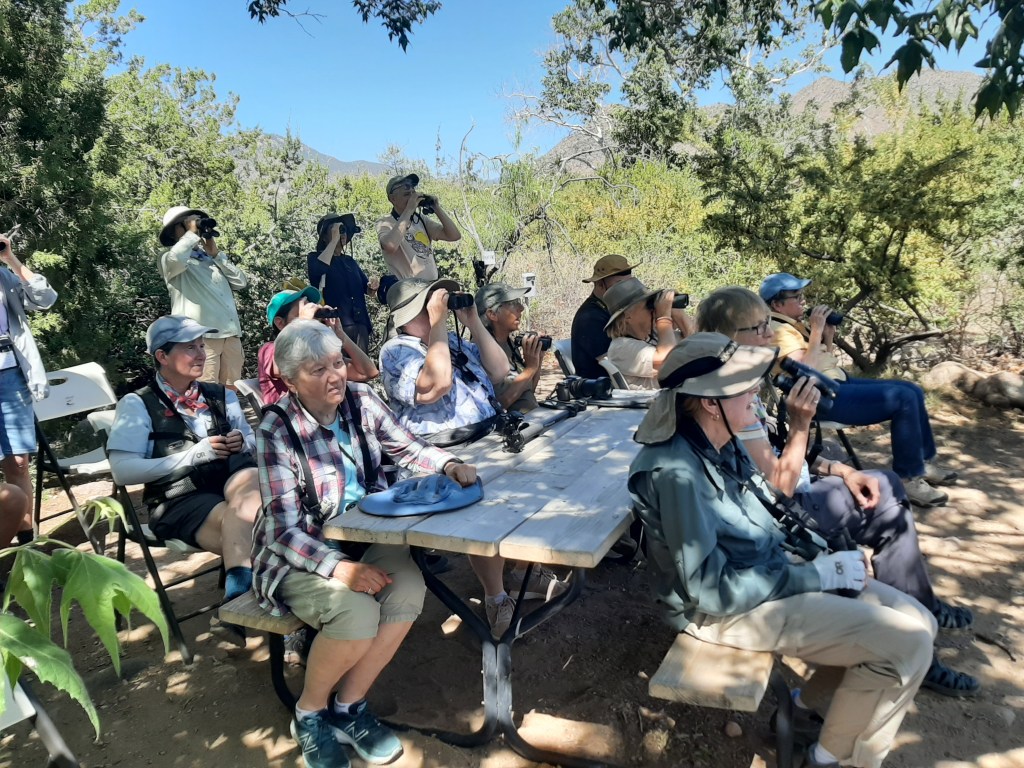
This was a Road Scholar trip. Road Scholar was once called ElderHostel so that should give you a good idea of the clientele. Nothing too strenuous. Not our typical birding excursion but my sister Anita wanted to do the trip so we joined her. There were 17 participants and two guides. Temperatures were on the high side. High as in, hovering around 100+ Fahrenheit every day. One day we were going up to about 8,000 feet and were told it would be 20 degrees cooler. It was cooler but it was still 85 degrees. 

Birding Road Scholar style. Only thing missing is gin and tonics.

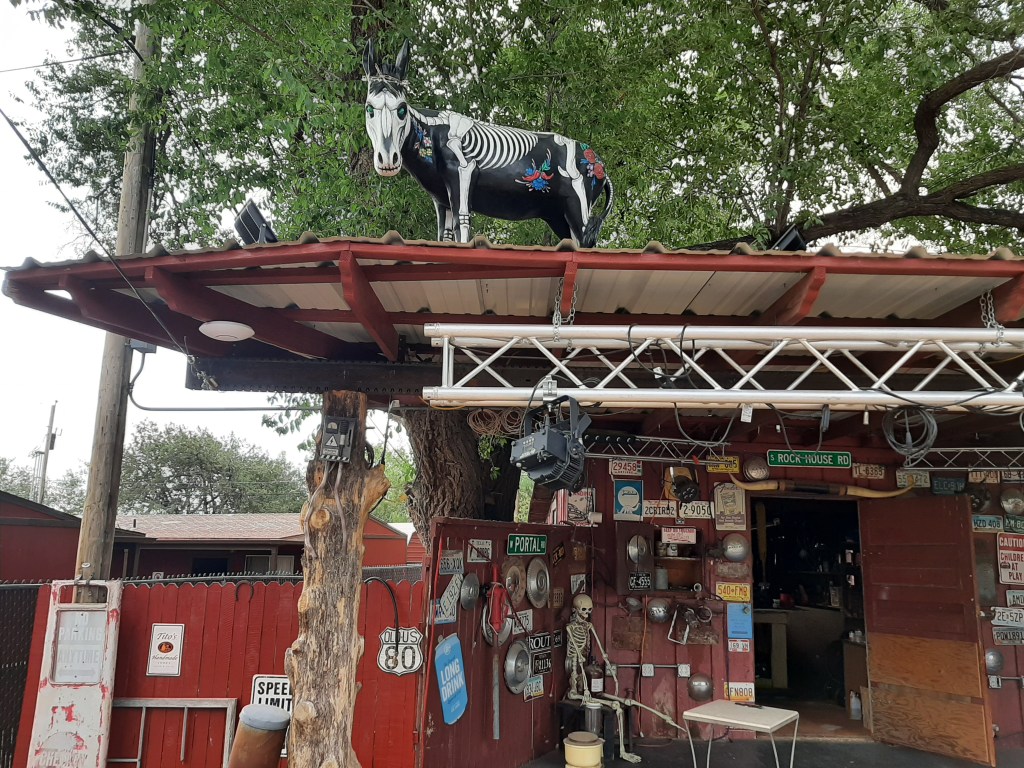
Portal is way out in southeastern Arizona, just a couple miles from New Mexico. Think of wide open spaces and a really tough environment. Not everyone would want to live there. The nearest grocery store to Portal is over fifty miles away. God knows how far it is to a Starbucks. On a busy day Portal has a population of around 700 if you include the larger metropolitan area. It’s in the Chiricahua Mountains, at an elevation of about 4,760 feet, right at the mouth of Cave Creek Canyon. Up the canyon a bit is the Southwest Research Stations where I spent a little time in 2012. One of the Portal “neighborhoods” is a dark sky community of about 40 people living on 400 acres. They have no outside night lights and have celestial telescope observatories built in their homes. 

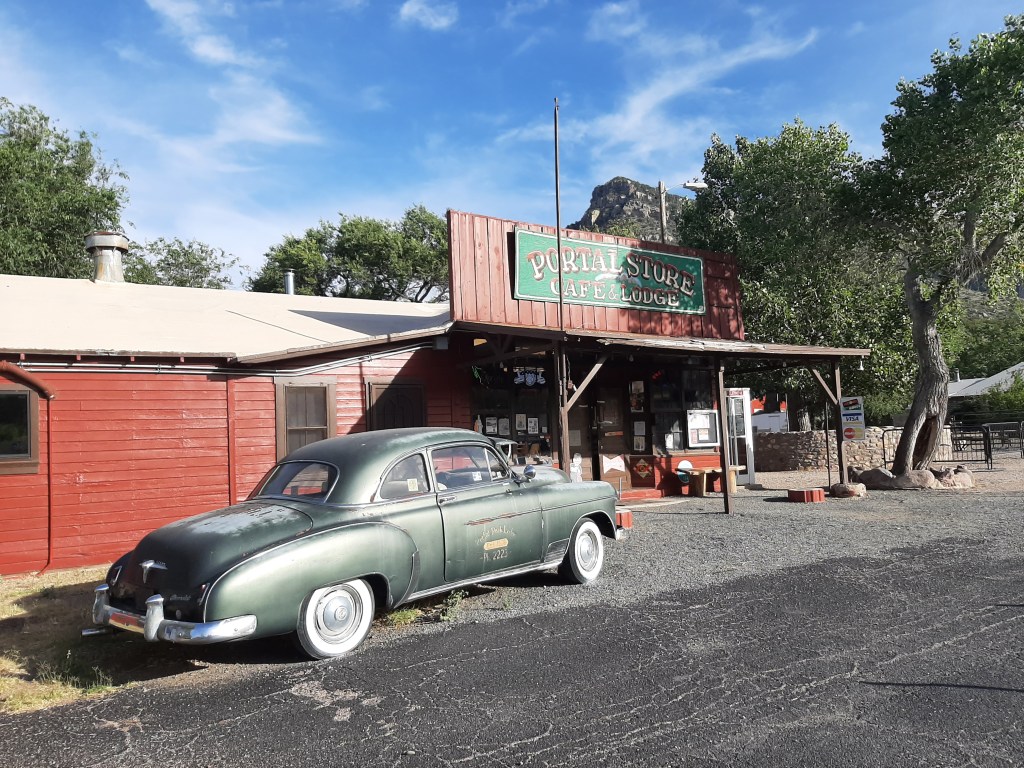
The social center of Portal is the Portal Store, Cafe, and Lodge. Which was our lodging while we were there. Simple, but quite adequate. While it looks humble, they fed well and did a great job of catering to a variety of dietary restrictions. Portal residents would drift in and out for a meal or drink. There was usually someone working on a car. I’m guessing the lodge had the only pair of jack stands in Portal. Mostly though, it was birders staying there. 

The Portal Cafe and Lodge

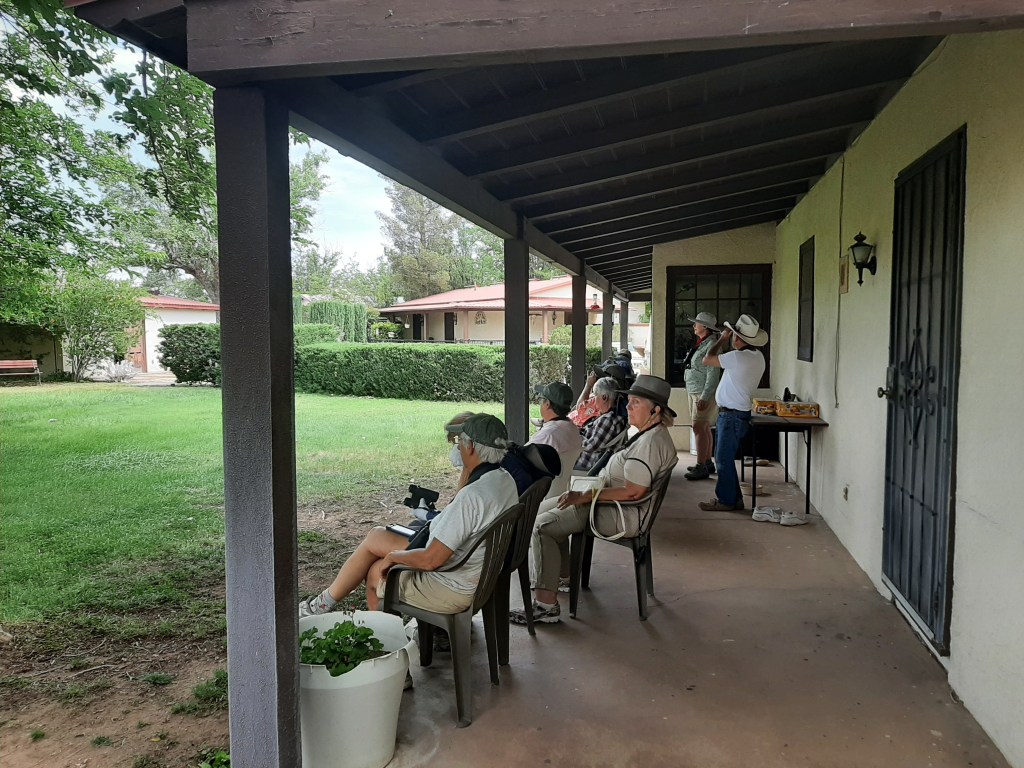
Portal is a birding mecca. There are a number of eBird birding hotspots in the Portal area including Bob Rodriguez’s yard (Dave Jasper’s old yard) and the Jasper/Moisan feeders. Which is Dave Jasper’s new yard. Both of these yards are world famous birding hotspots. Birding tourism is a major income stream for Portal and numerous other feeder spots are in easy walking distance from the lodge. The locals don’t bat an eye when they see people with binoculars and spotting scopes walking up the street and looking in their yards. 

Bob Rodriguez’s yard. I recognize the table holding a feeder as an old Craftsman table saw.

Our tour also took us to Paradise, AZ, about five miles and a half hour drive from Portal. At the turn of the 20th century, Paradise was a mining boom town with close to a thousand  miners, stores, bars, and a red-light district. The mining lasted only a bit over a decade and the town was eventually  mostly abandoned. Now the permanent population is somewhere under ten residents. But we did get an extremely rare white-eared hummingbird there, compliments of the George Walker House bird feeding station. And they rent rooms to birders. 

We also did a trip to the Slaughter Ranch (San Bernardino Ranch), about 17 miles east of Douglas, AZ. A good nine of those miles are on rough dirt road. It’s named Slaughter Ranch for “Texas John”  Slaughter, a legendary lawman that bought 65,000 acres in the 1880s. Two-thirds of the original ranch was south of the border with Mexico. The ranch buildings are now owned by the Johnson Historical Museum and most of the north of the border acreage is part of the San Bernardino National Wildlife Refuge. And, being right on the border, the border wall runs along the back of the ranch buildings. This part of the wall was built with louvers so the Border Patrol can drive along it and see through it into Mexico. The migrants have figured out that a motorcycle tire can be jammed into the louver. Then you stand on that tire and jam another one on top of it. You stand on the second tire and jam another one on top of that. Continuing to the top. Essentially we built a couple hundred miles of potential ladders over the border. 

Slaughter Ranch with the see through border wall right behind it.

Birding wise, I would say we had a successful trip. We got around 80 species for the year. Lise and I both got some lifers. Not much time for photography when shuffling people in and out of tour buses, but the birding was good. In addition to birds we saw various insects, reptiles, and mammals that can live in a harsh environment. 

Birds and other critters. 

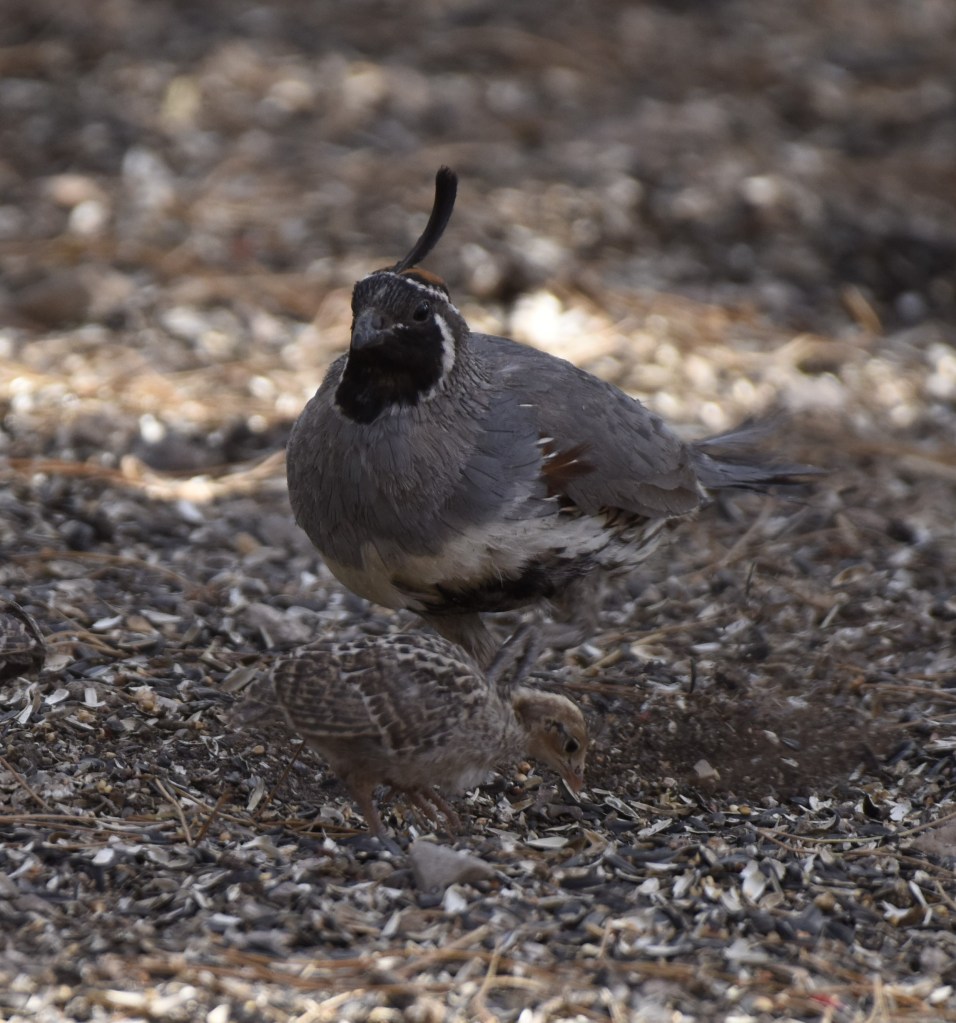
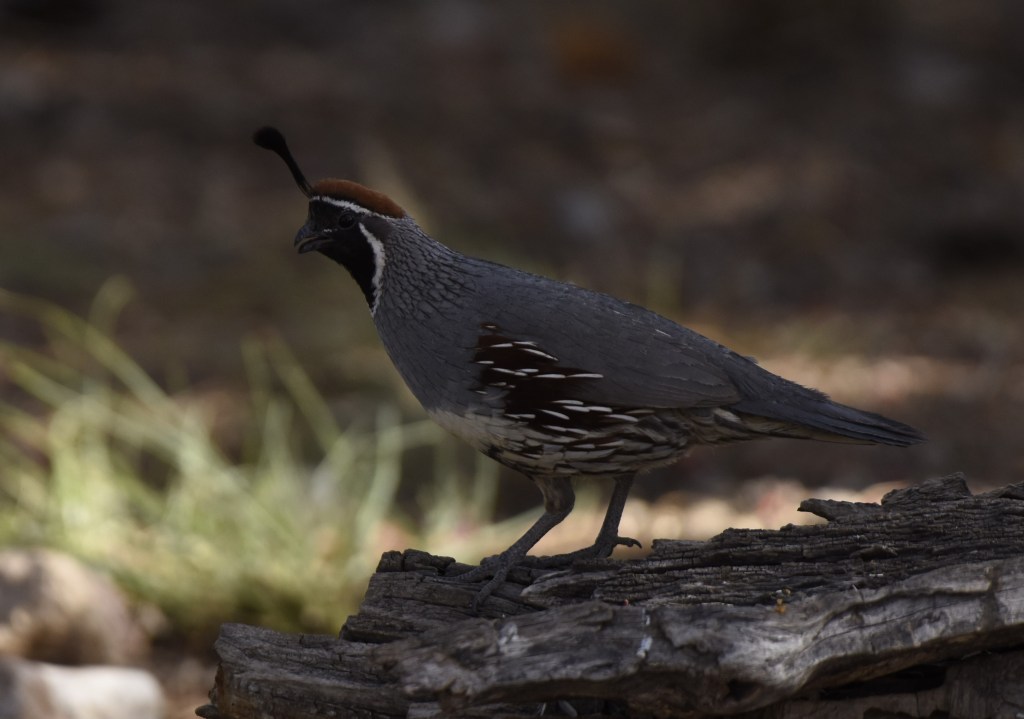
Gambel’s quail

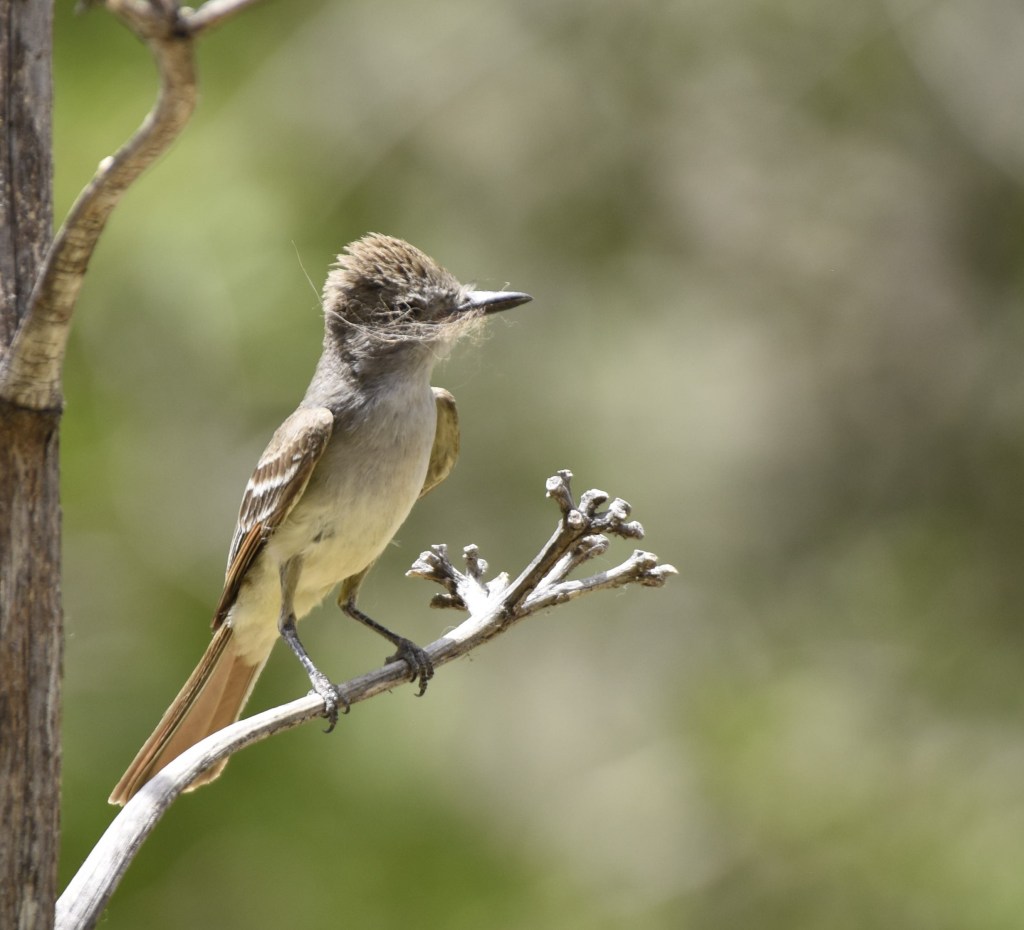
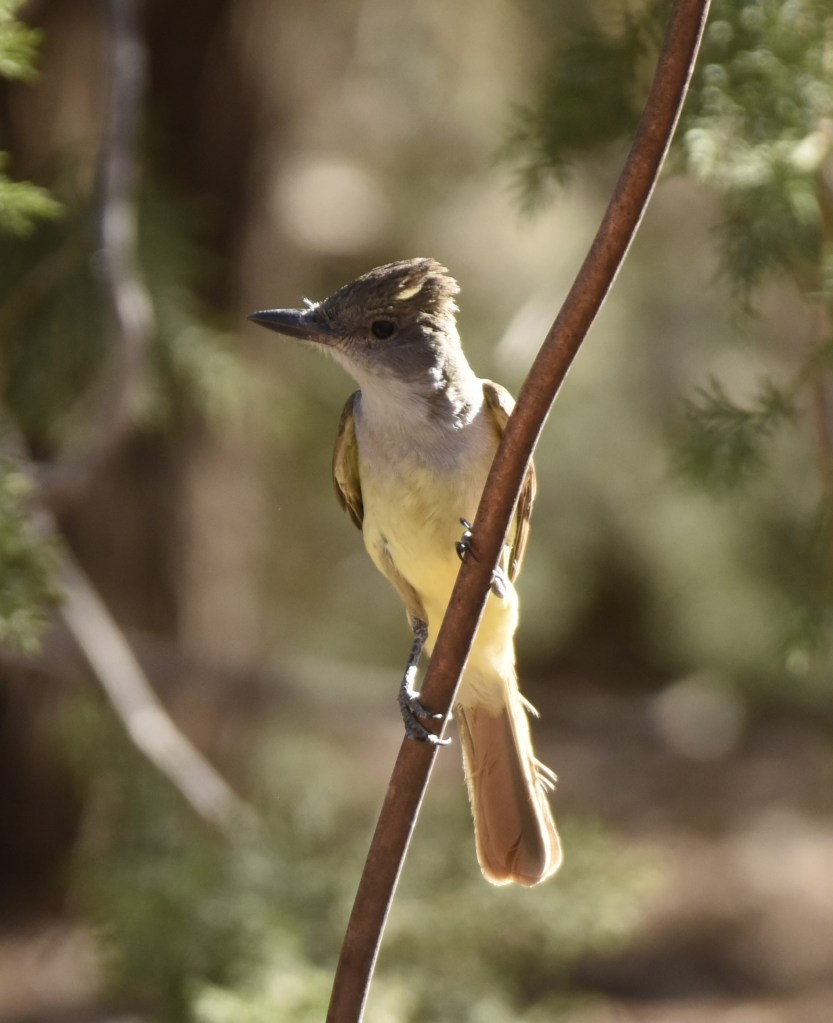
One of the flycatchers

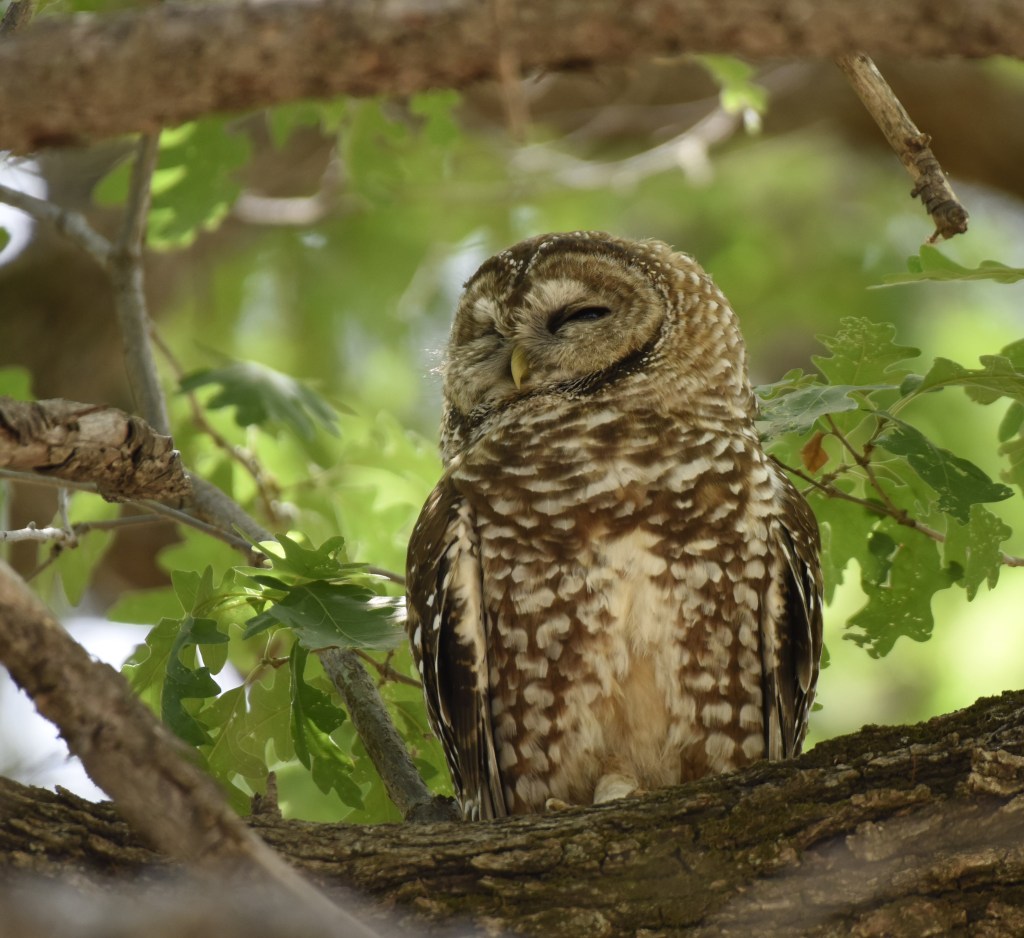
Mexican spotted owl

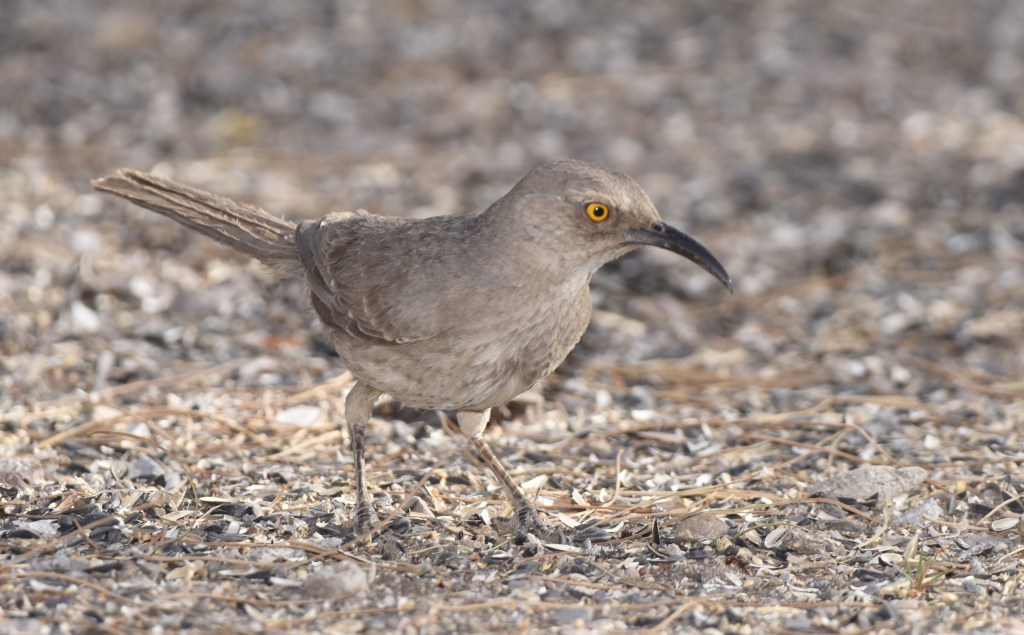
Curve-billed thrasher

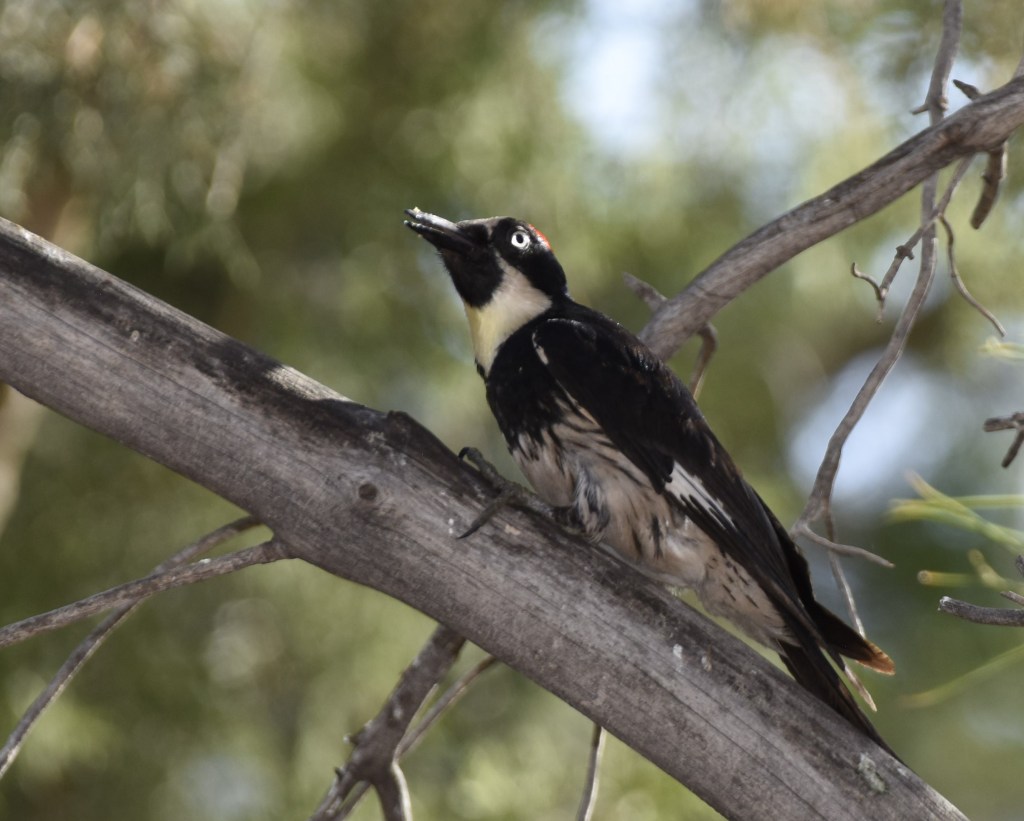
The ubiquitous acorn woodpecker.

Desert firetail damselfly

Familiar bluet.

Some kind of lizard, out looking for a babe.

Some kind of chipmunk or ground squirrel.

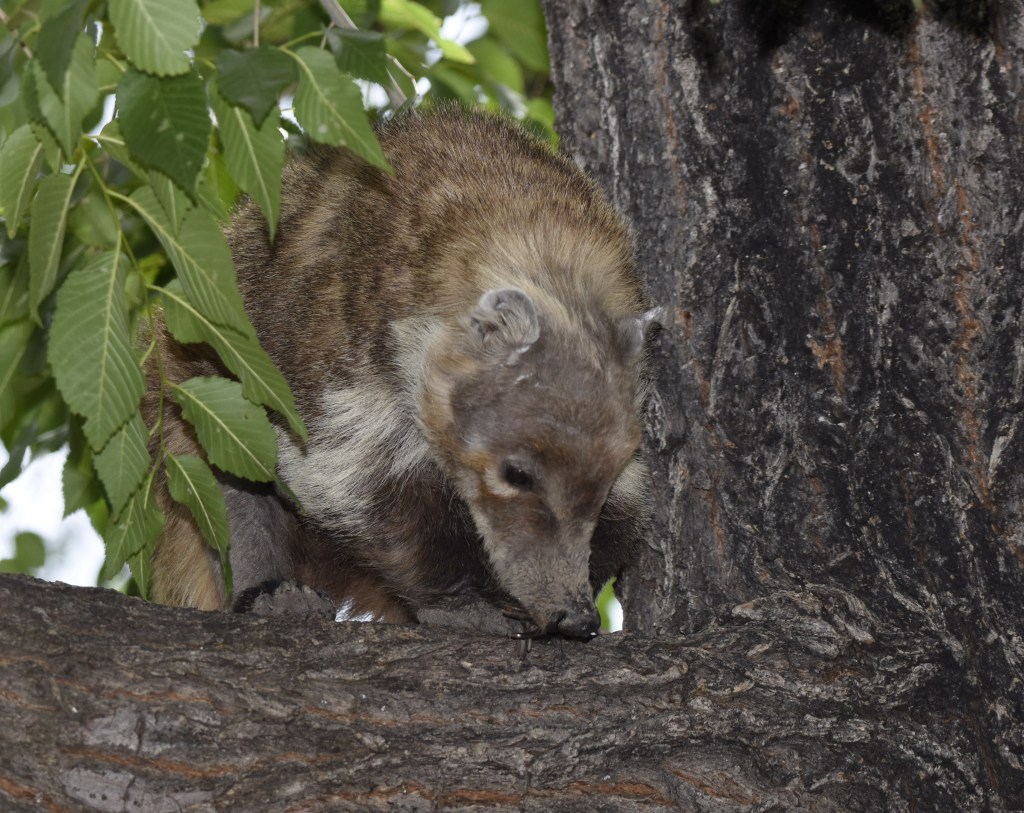
Coati. These guys got some mean looking claws and an attitude. You don’t want to try petting one.

And we got some time in very different terrain than here in Indiana. Living east of the Mississippi one can get spoiled. You’re rarely far from a gas station or a good cup of dark roast coffee. It’s hard to comprehend the open spaces and the tough environment of a place like Portal. No Starbucks on every corner. It takes a special kind of person to live in a place like that. Someone with a sense of humor. 

The Minions – lit up at night for your enjoyment.

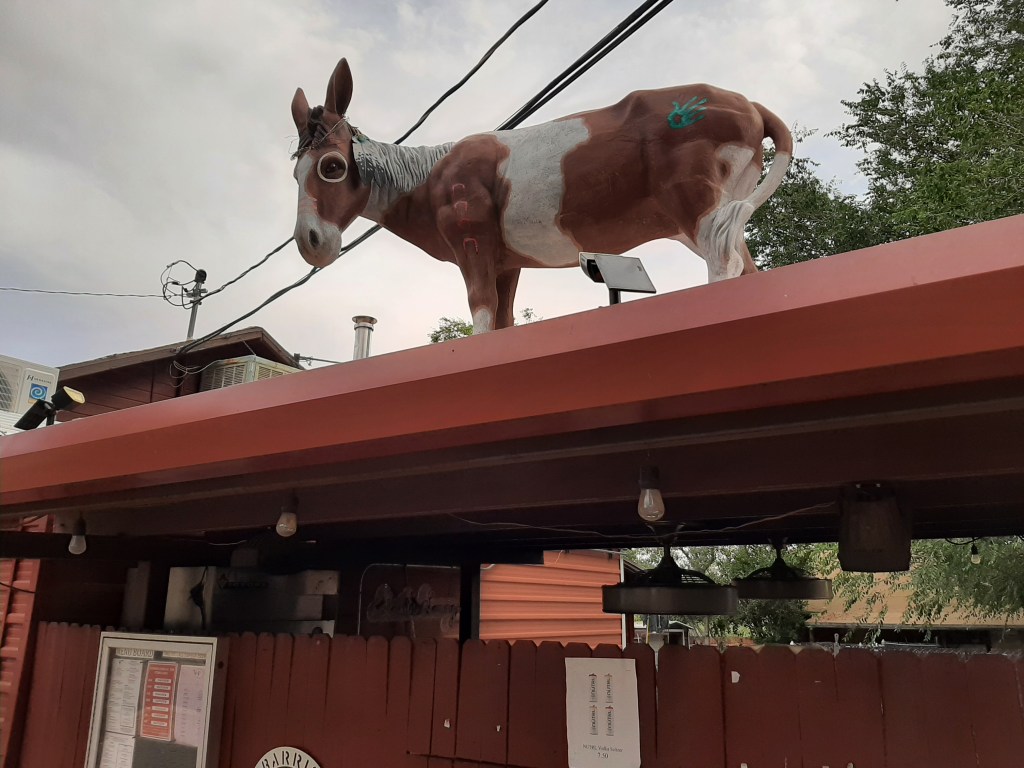
Pony rides. On the way to Slaughter Ranch.

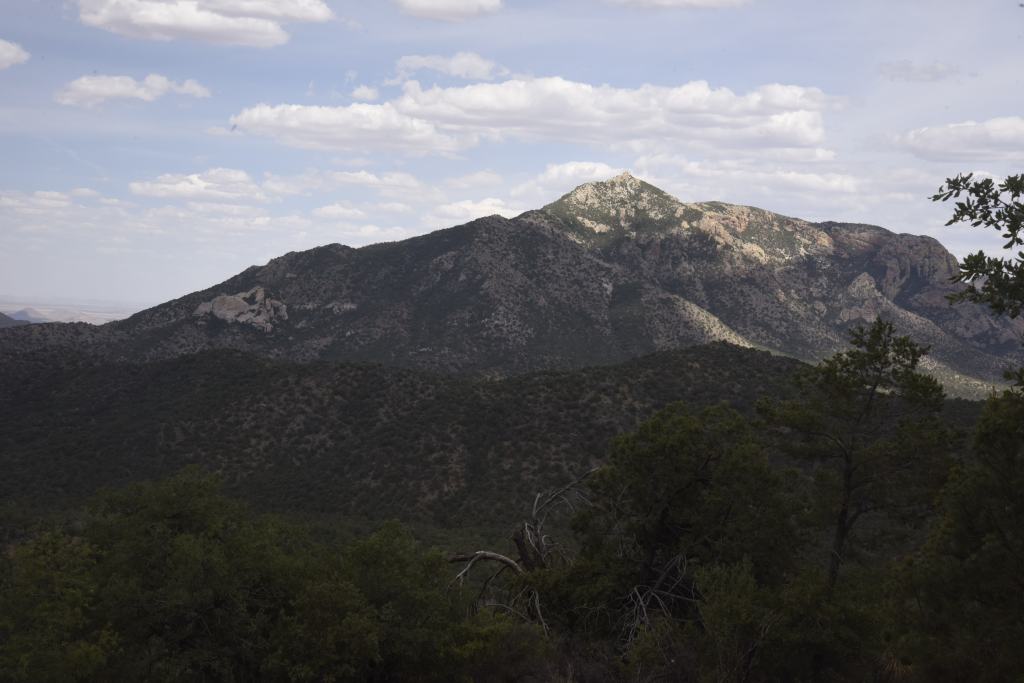
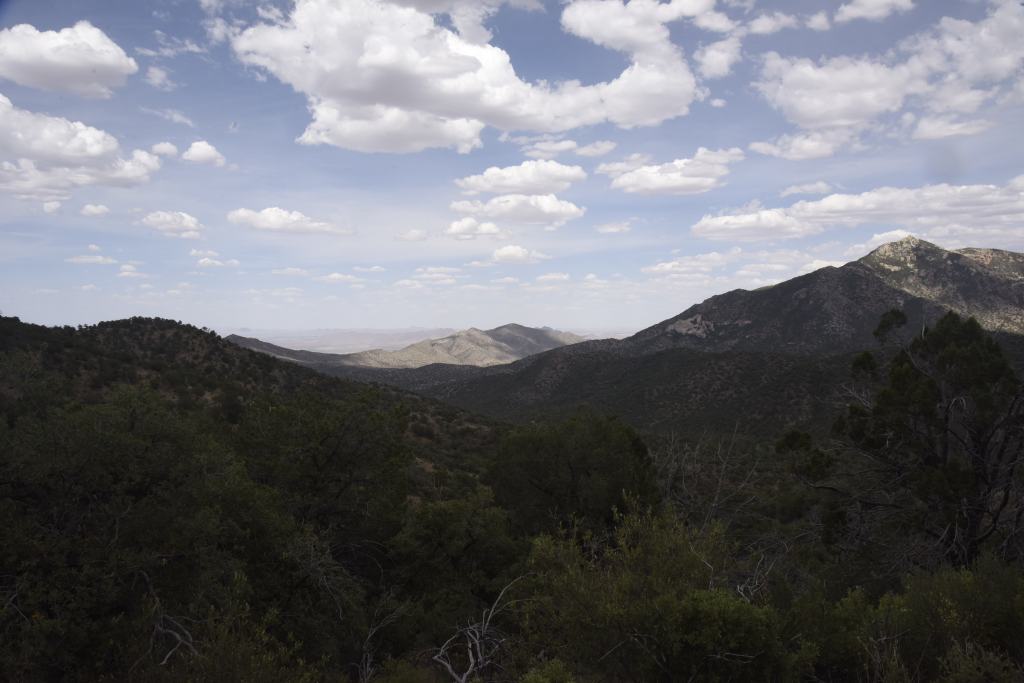
Chiricahua Mountains

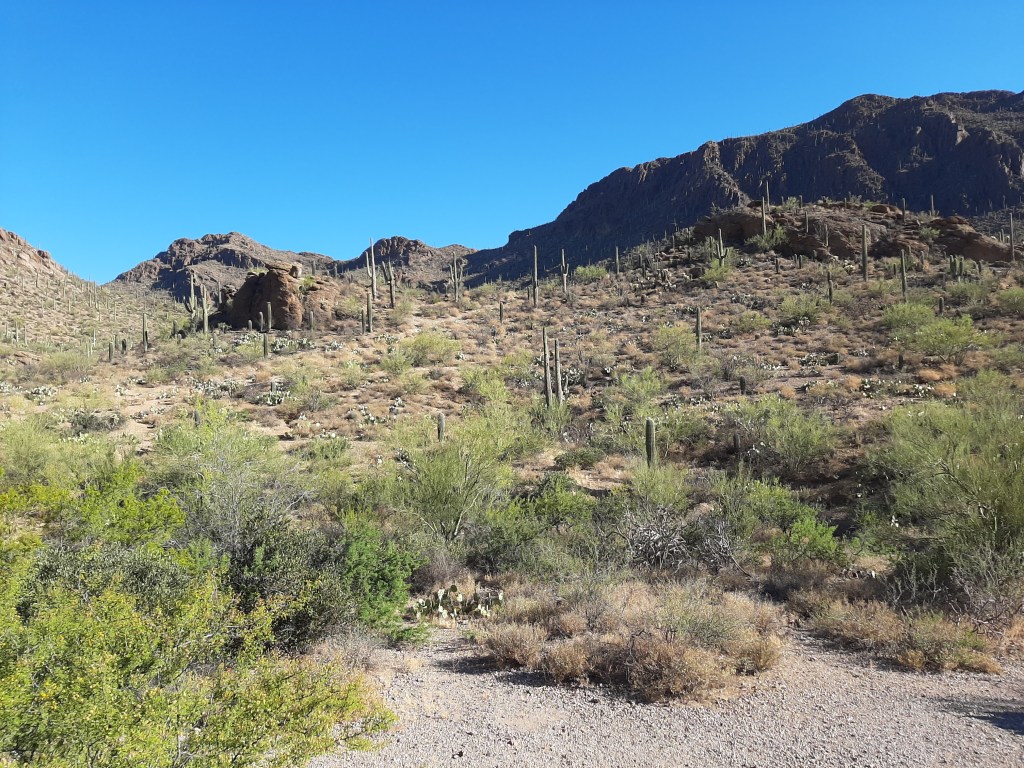
Desert around Tucson

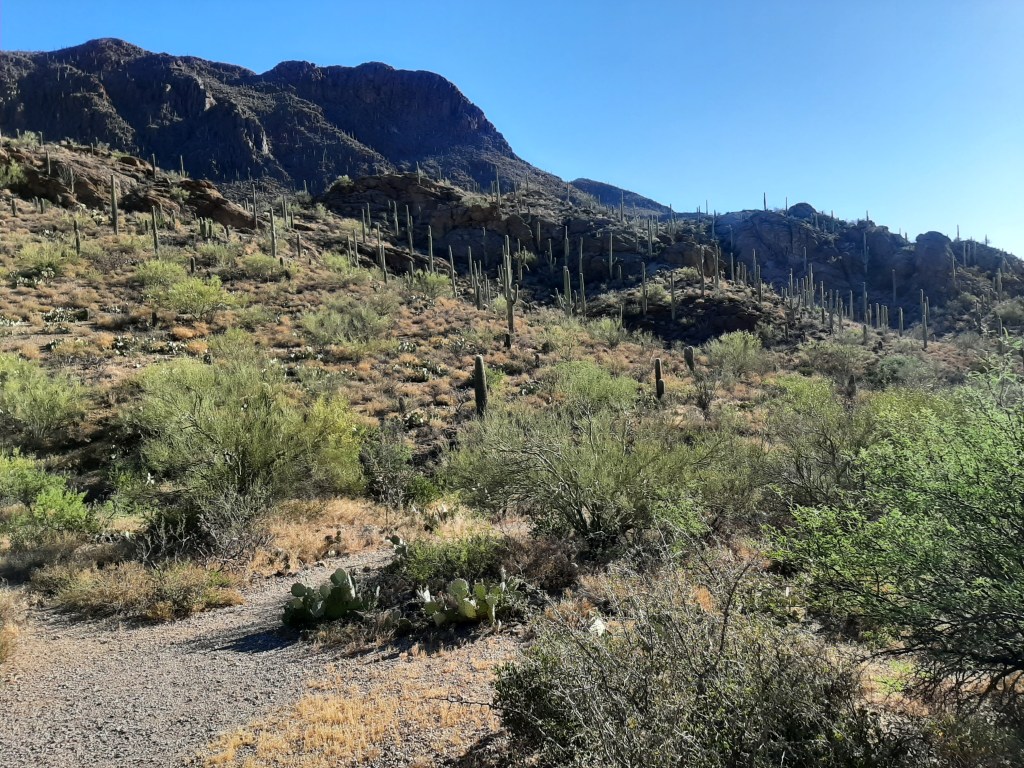
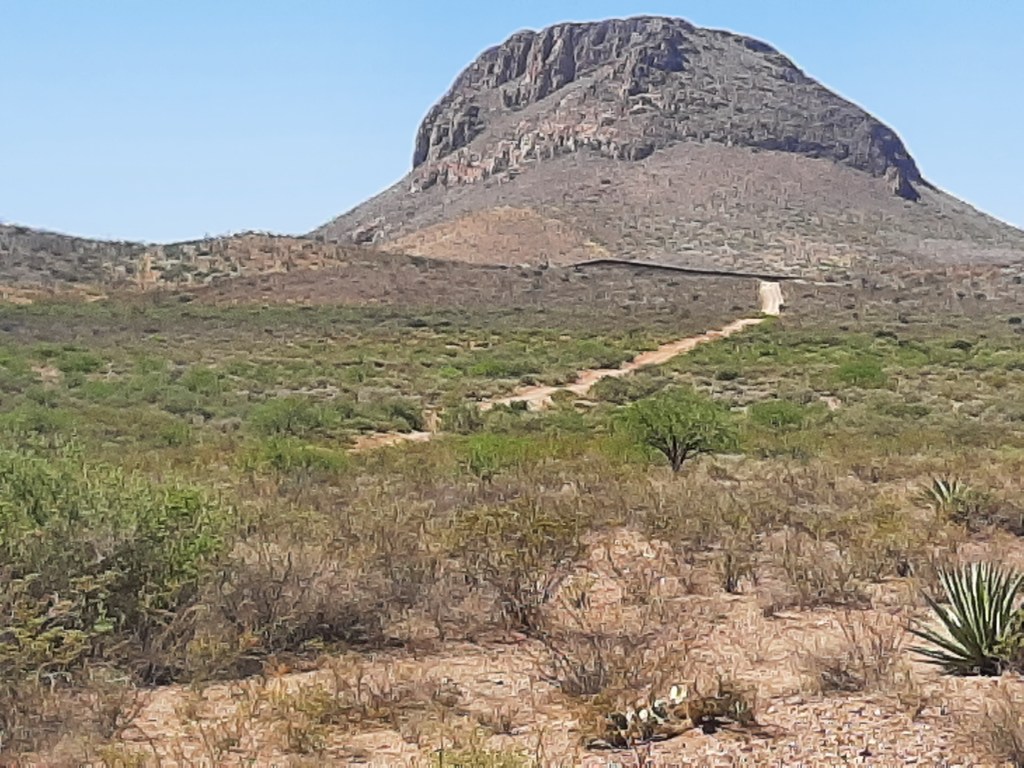
Somewhere out in the desert.

A cactus I liked.

While we were gone the groundhogs residing under my workshop dined quite well. The hostas by my workshop were nibbled into leafless stalks. Some garden plants were munched into non-existence. There was a hole where a pumpkin plant once resided. I sprayed the plants with a varmint repellant before we left. Apparently it served as Cajun seasoning to the groundhogs. Might be time to get serious on these guys.

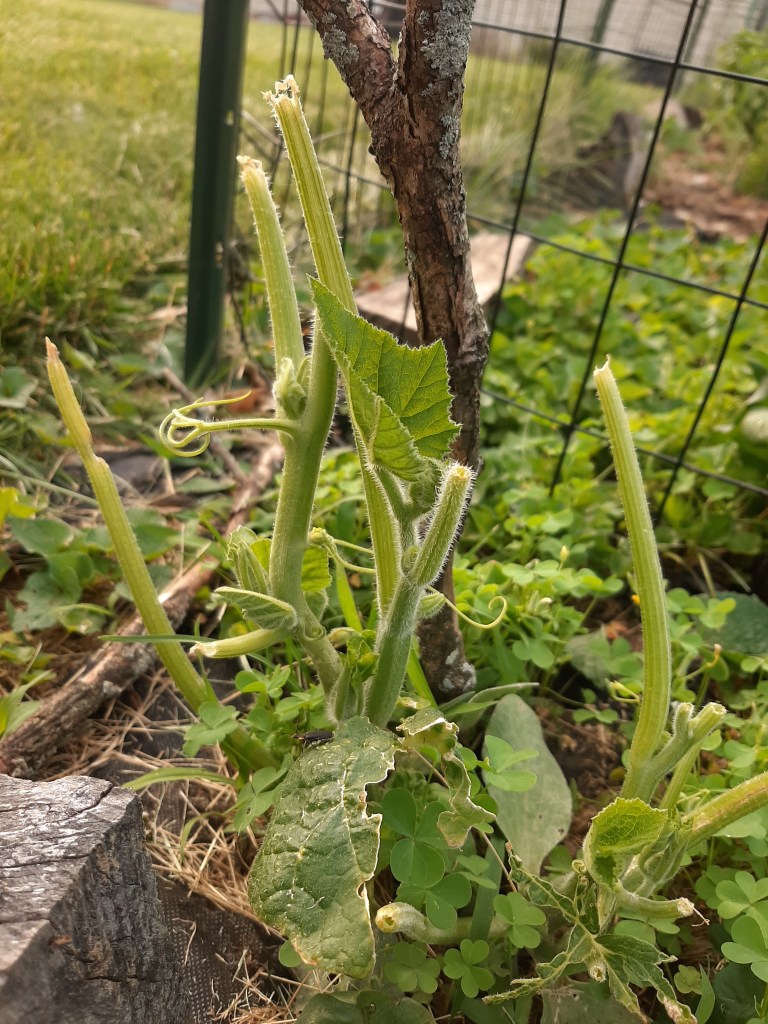
Munched on pumpkin plants.

Hosta stalks.

In the weird wonders of wildlife category – a brown booby has shown up in a southern Indiana State Park pond. Brown boobies are tropical seabirds. Not sure how the pond at Spring Mill State Park could be mistaken for the Atlantic Ocean but I guess anything is possible. It seems quite happy there too. No sharks, salt free, and lots of bluegills easy to catch. Maybe that’s better than fighting tropical storms. Needless to say, birders and non-birders alike were flocking to see it.

Brown booby at Spring Mill State Park.

Widow skimmer at Spring Mill State Park.

Eastern pondhawk at Spring Mill State Park.

Monday, February 12, 2024

After a dreary January things have picked up a bit in our lives. For starters, we seem to be past the sub-zero temperatures. We’ve had a few spring-like days. Kind of scary warm for February days. And, Punxsutawney Phil did not see his shadow on Groundhog’s Day, predicting only six more weeks of winter. How can you go wrong with a groundhog predicting the weather? 

Last week we got to do our annual Eastern Upper Peninsula winter bird trip. The one we tried to do in mid-January, but the weather thwarted. We drove up to St. Ignace, Michigan, and our friend Joanna came over from Marquette to meet us. 

This year was very different from the past 20 or so years we’ve done this trip. The weather was weirdly warm for this time of year. We have done this trip in single digit temperatures. There’s always a lot of snow cover. This year the temps were in the mid-thirties Fahrenheit and there was very little snow cover. We were driving on gravel roads that in the past were snow-packed. We didn’t know they were gravel until this year. On the up side, there were no snowmobiles. The warm temperatures produced fog and beautiful hoarfrost in the mornings. The fog made for low visibility and some tough birding. 
Beyond those frost-covered, fog-shrouded, trees is miles of open space. Our visibility range was maybe 20 yards at best.

Overall the birding was so-so. This area is known for snowy owls in the winter. We ran into multiple group outings and numerous individuals, looking for winter birds and in particular snowy owls. One loop we drive typically produces over 20 owls. This year there was only one known snowy owl in the area. Many people were looking for that individual. We finally saw it, with help from someone who spotted it and waited by the road to point it out. Too far away for good pictures, but we got our snowy owl for the year. 

The much sought for snowy owl. It looked better in the spotting scope.

We saw other winter species too, but we had to work for them. Overall the number of species and the number of individuals seemed to be low. Very possibly because the low snow cover didn’t concentrate the birds as in other years. And, even if we didn’t get any new species for the year, it would have been a great trip. Getting north of the Mackinac Bridge and spending time with a good friend helps rejuvenate the soul. 

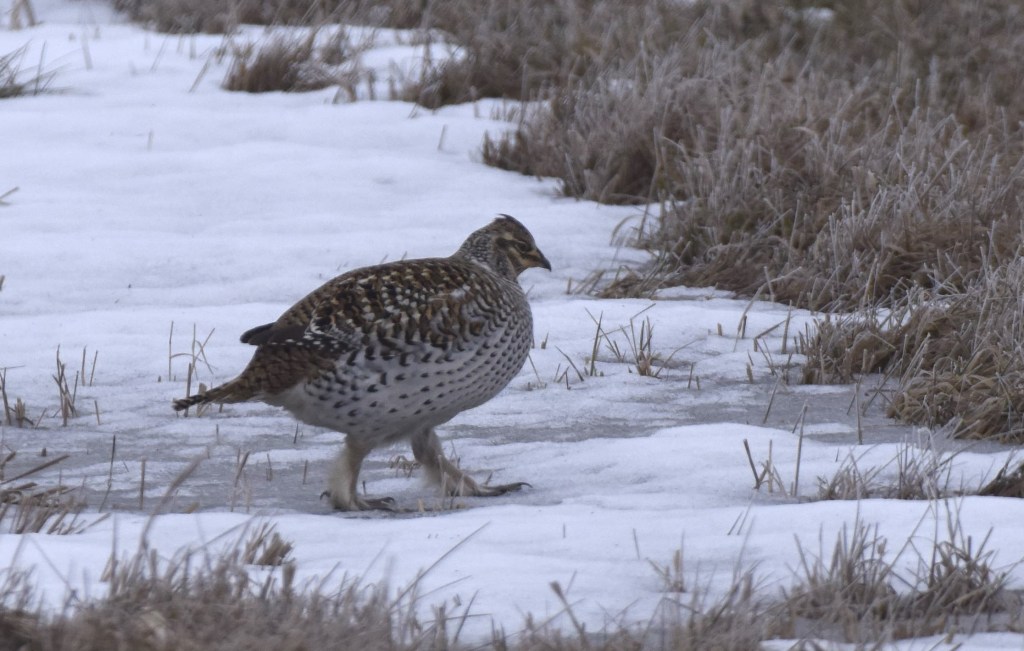
Sharp-tailed grouse.

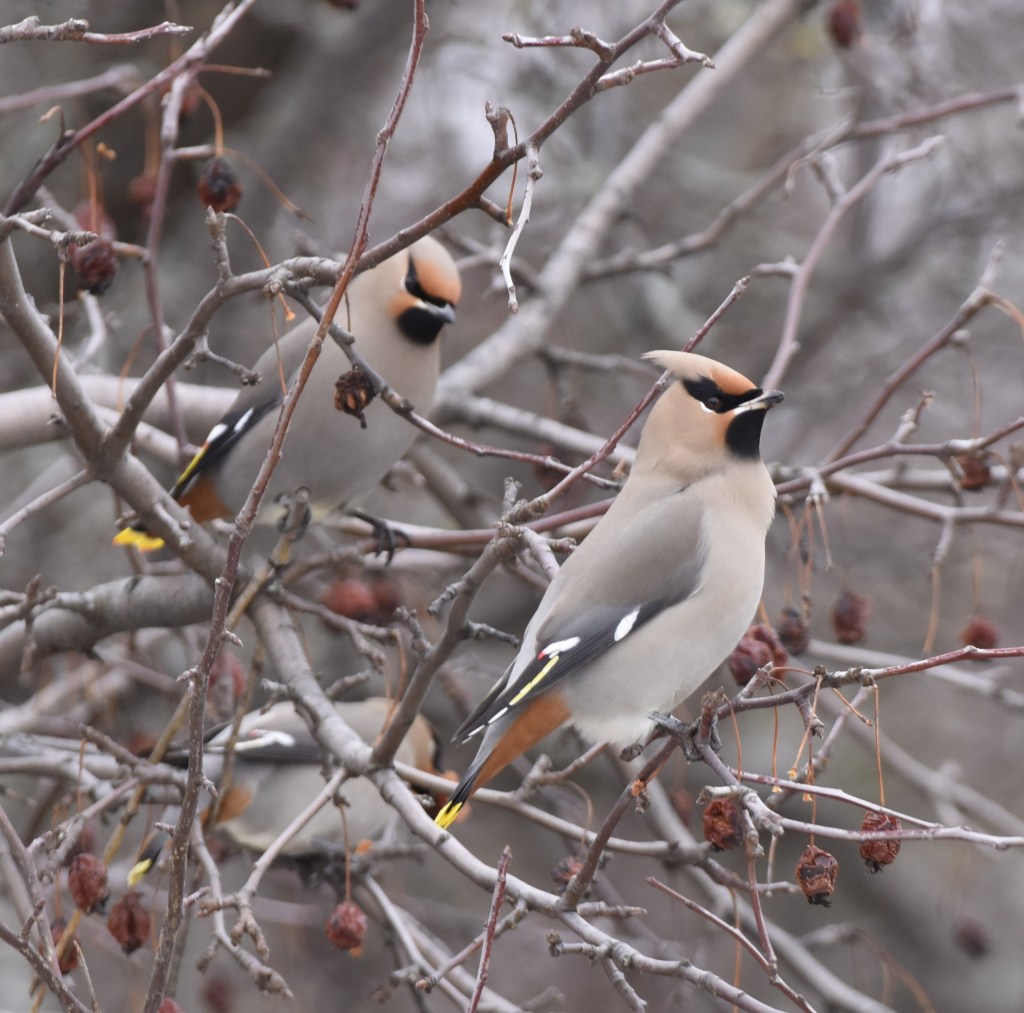
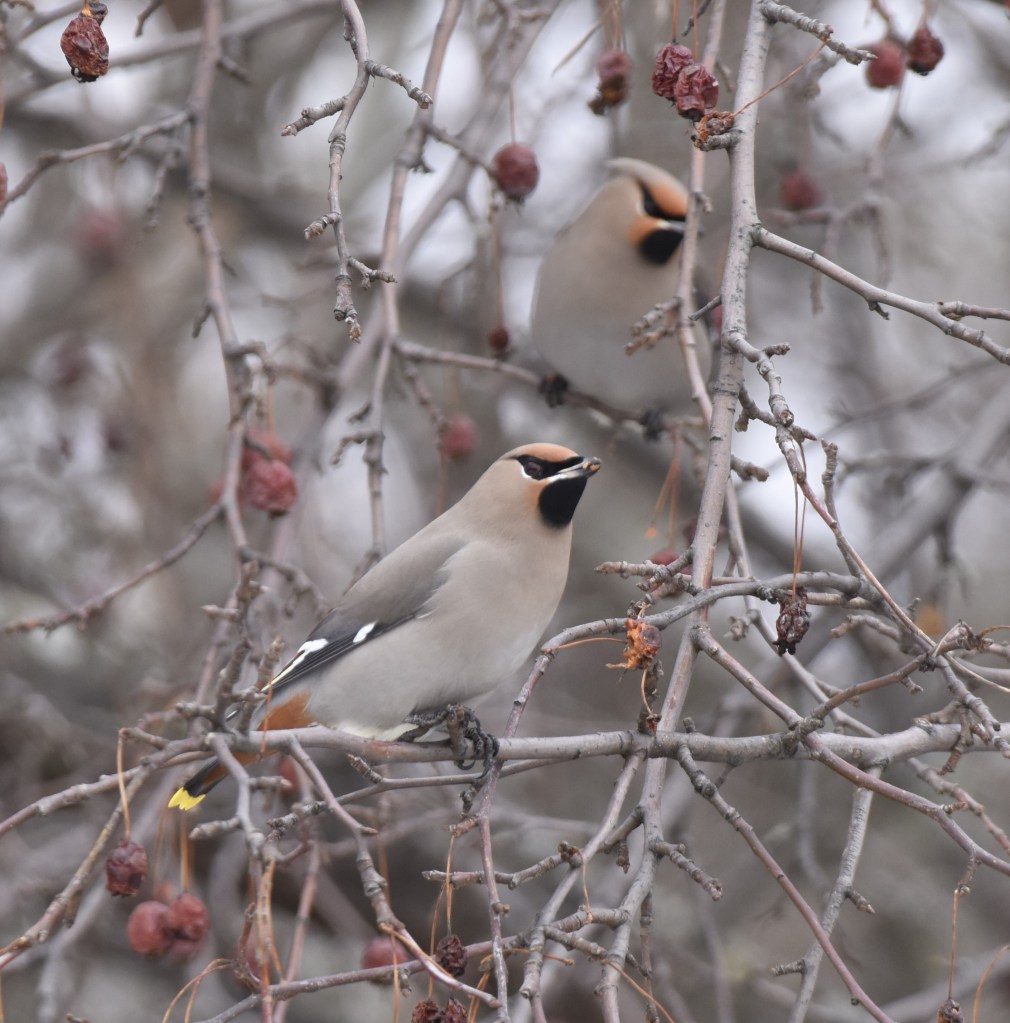
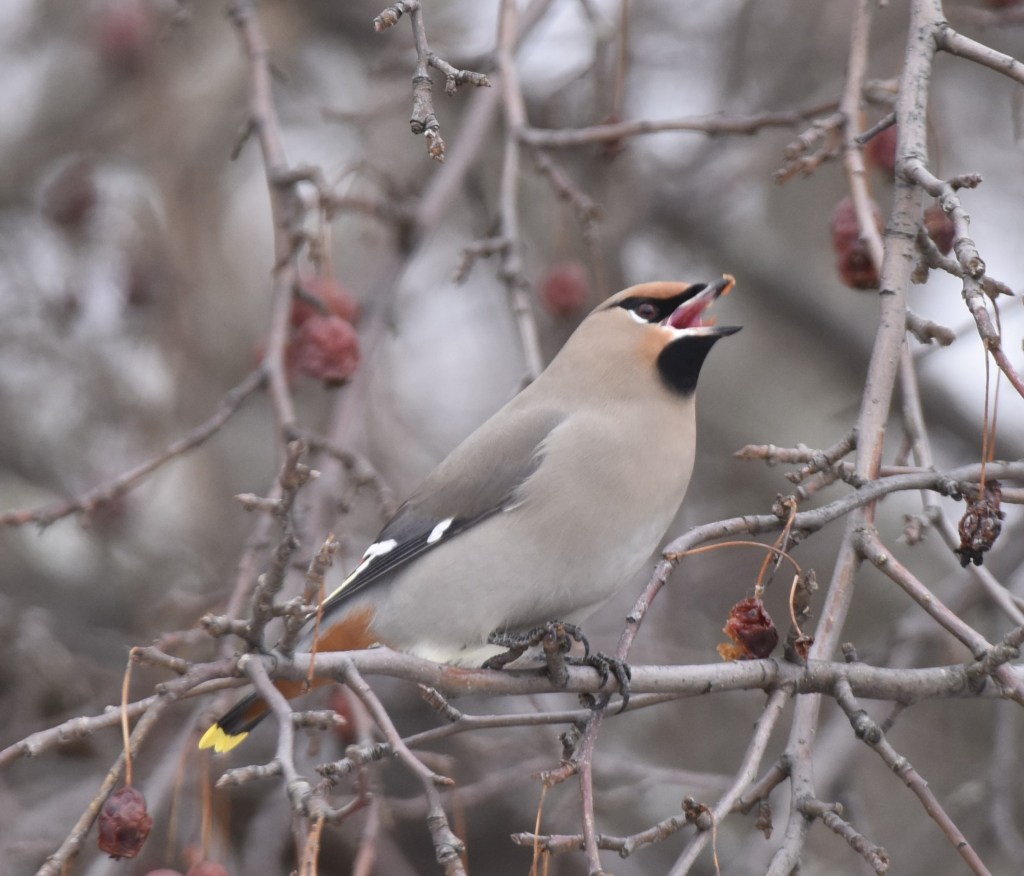
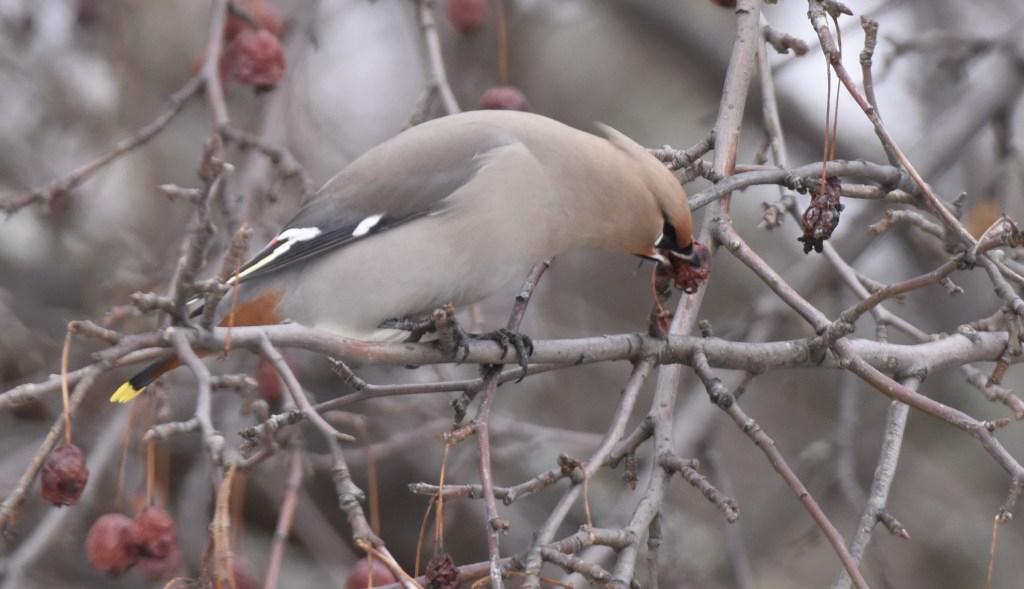
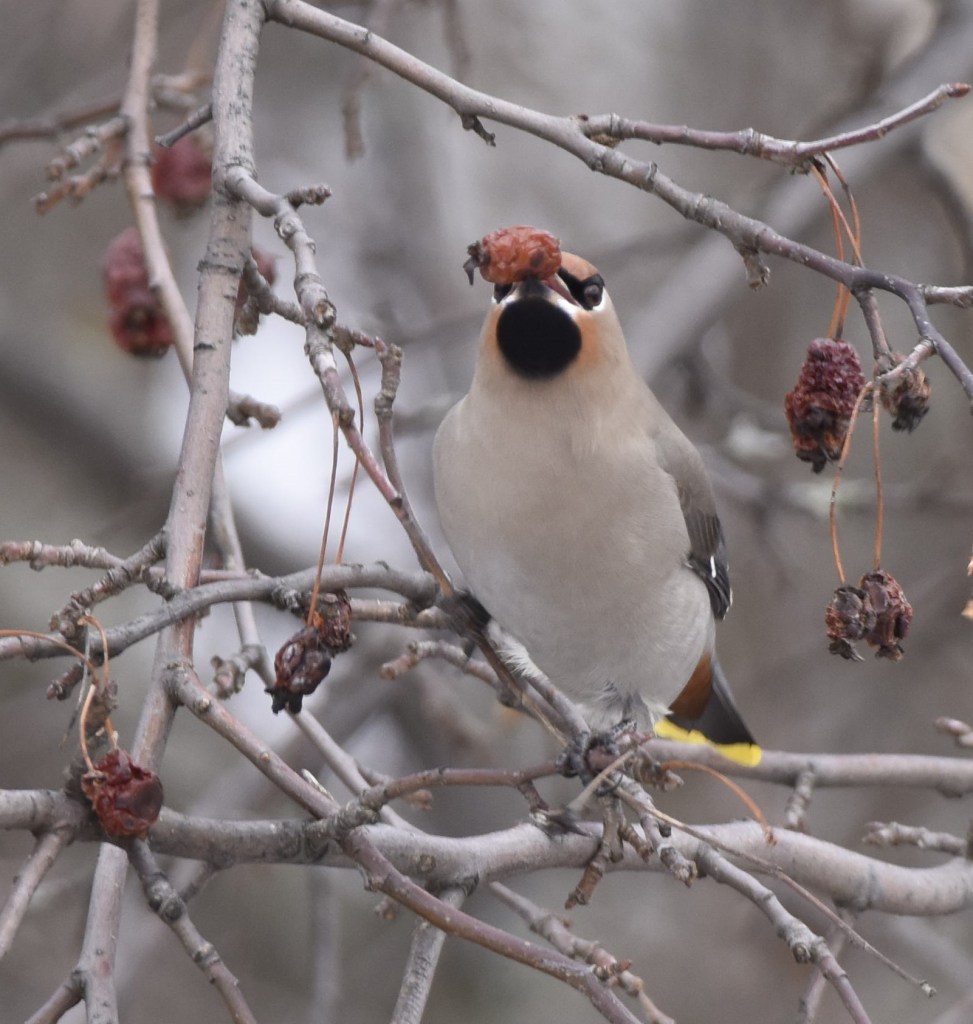
Bohemian waxwings.

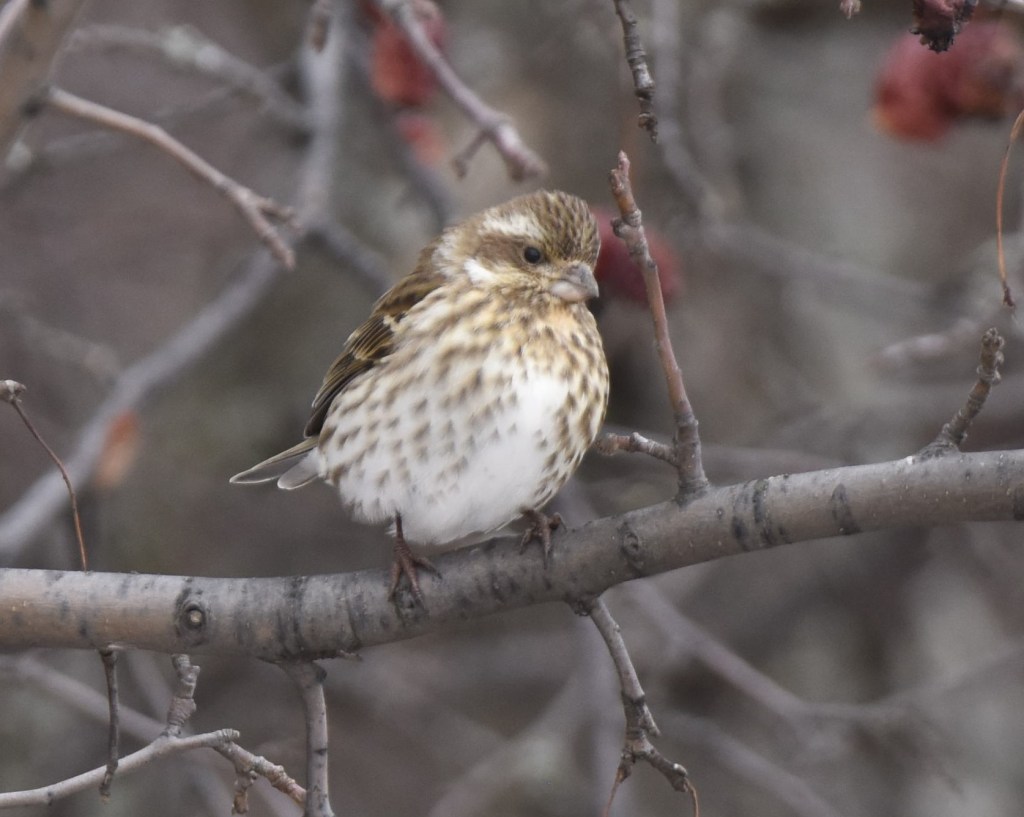
Female purple finch.

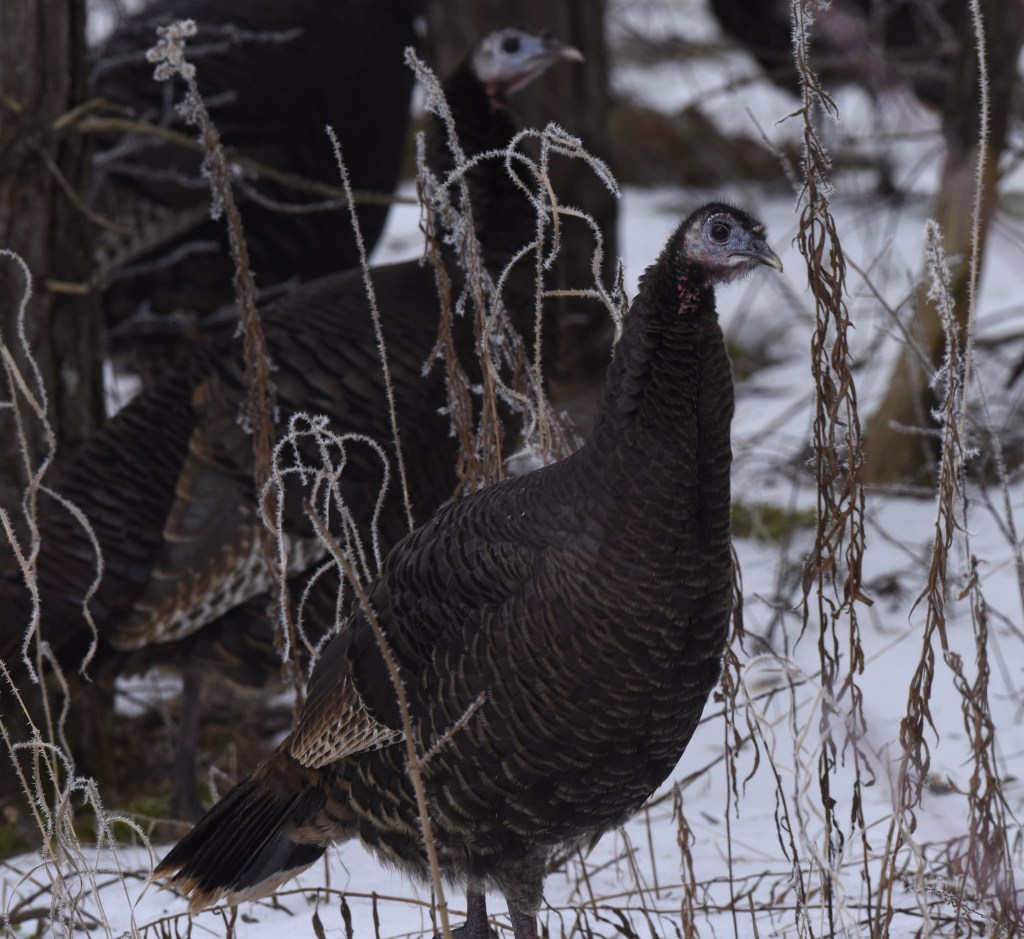
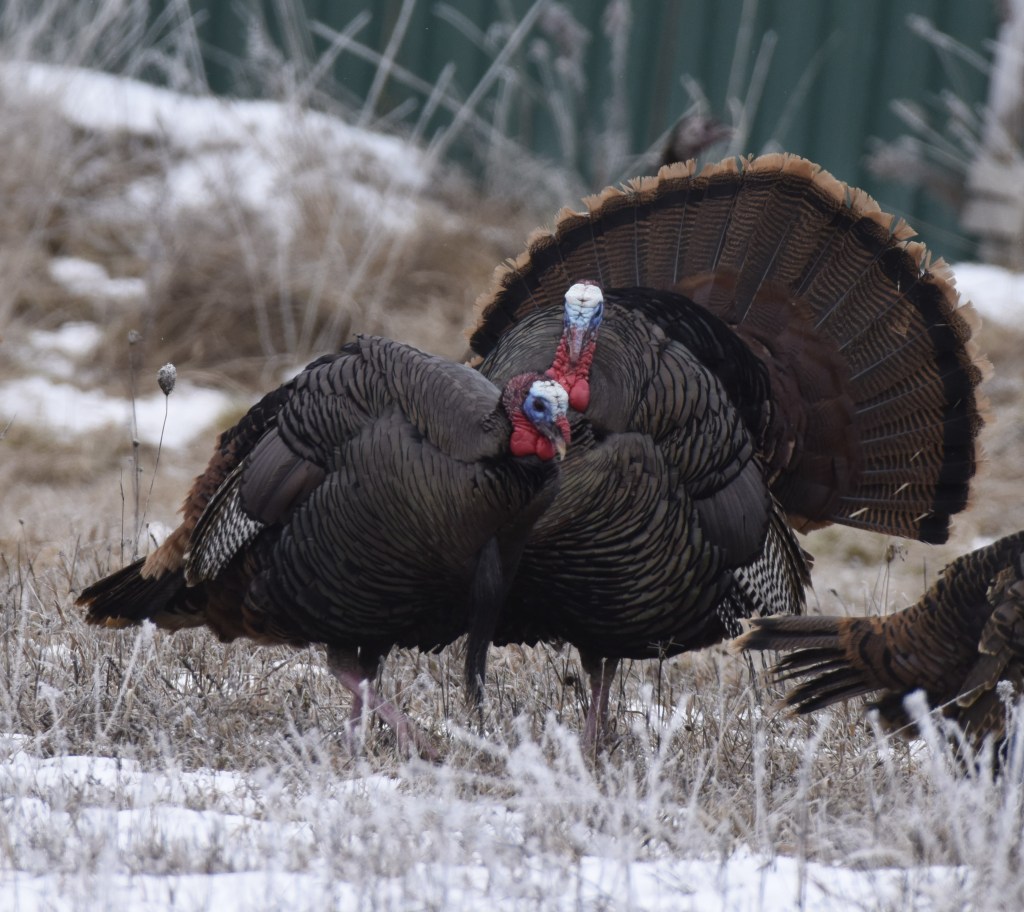
Wild turkeys.