Yesterday we did the hour and a half drive up to the Indiana Dunes area to chase a fork-tailed flycatcher. This is a South American bird that likes to make occasional wanderings northward. Most years one shows up somewhere in North America with no rhyme or reason to where it appears. This year’s bird was in the Great Marsh of Indiana Dunes National Park. We heard about the bird on Friday but couldn’t break free until Sunday. Unfortunately, it decided to leave Saturday night. Talk among the other chasers was that the bird was harassed by a Cooper’s hawk Saturday evening. Not liking the Hoosier hospitality, it took off for parts unknown. We and other hopeful birders hung around the area for a couple hours, but it never showed up. We “dipped on the forked flycatcher” in birding terms.

Searching in vain.

The big guns.
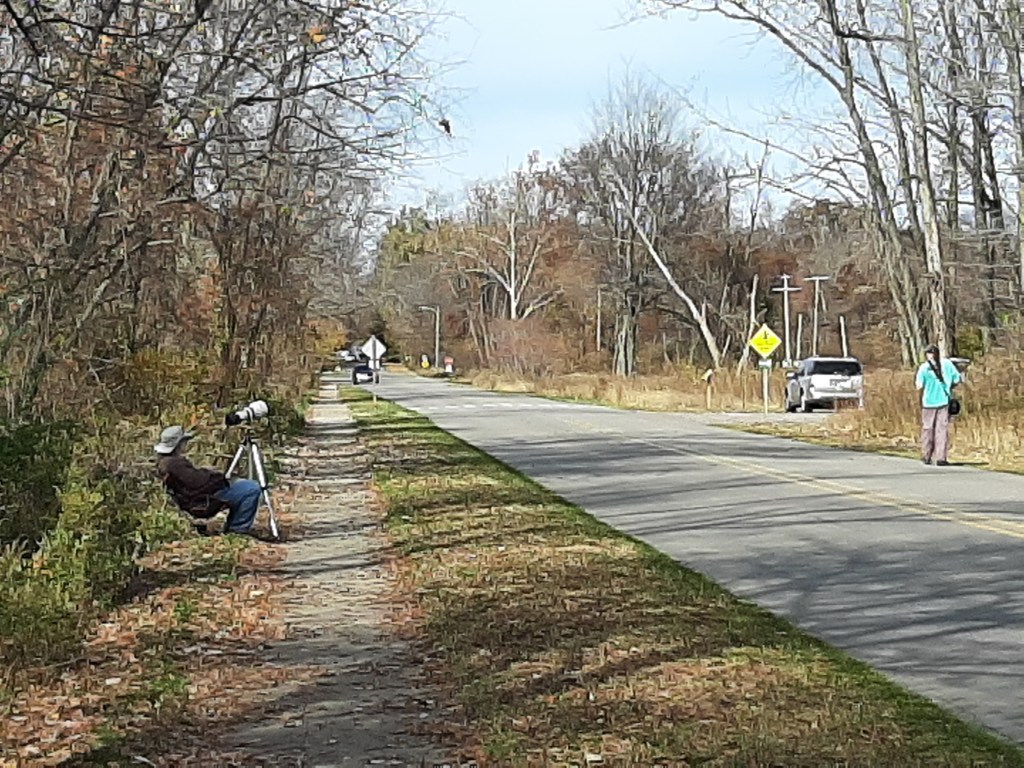
Hope springs eternal.
The Indiana Dunes area is an interesting place. This is where Henry Cowles did his pioneering studies on ecological succession. Cowles was the first American to use the term ecology and demonstrate ecological succession in natural communities.
The Dunes are located in what is affectionally called “da region”. This is a densely populated area right next door to Chicago with a lot of heavy industry. Gary, Hammond, La Porte, Michigan City…., all those lovely cities. So, it’s surprising to find any natural areas. It’s really surprising to find intact wetlands. Indiana has tried it’s best to drain every wetland in the State. There’s only something like 4% of the original wetlands left. If it’s wetland you can’t farm or build houses on it. I’m guessing the soils were too poor for agriculture to make it worth the effort to drain them.
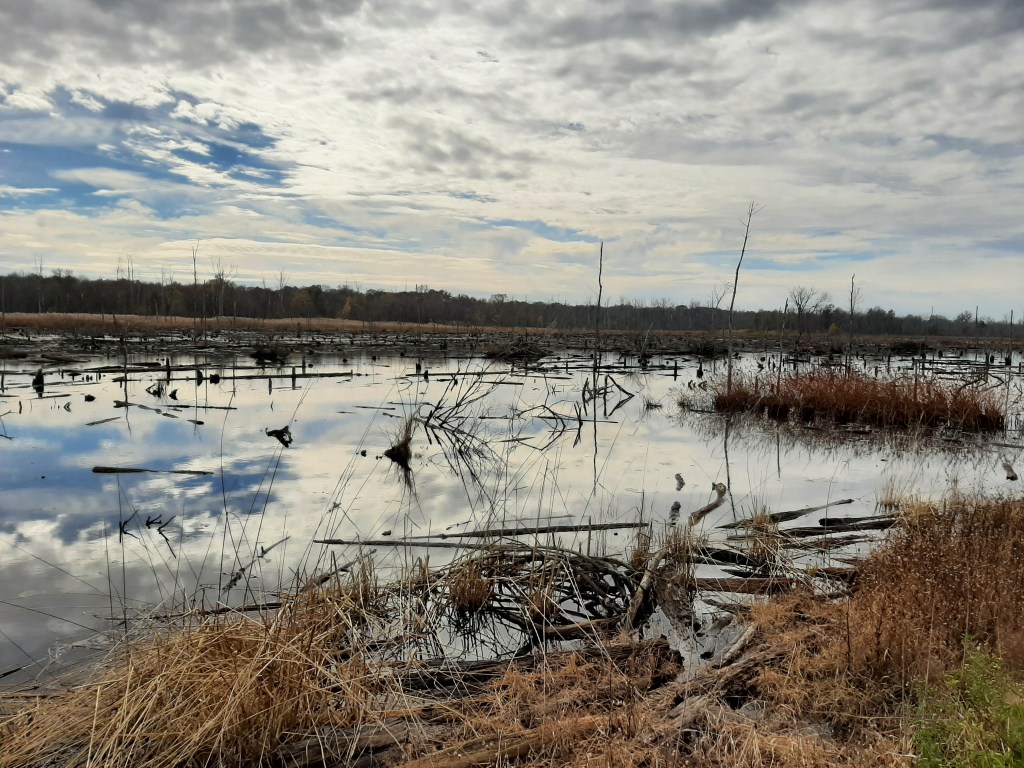
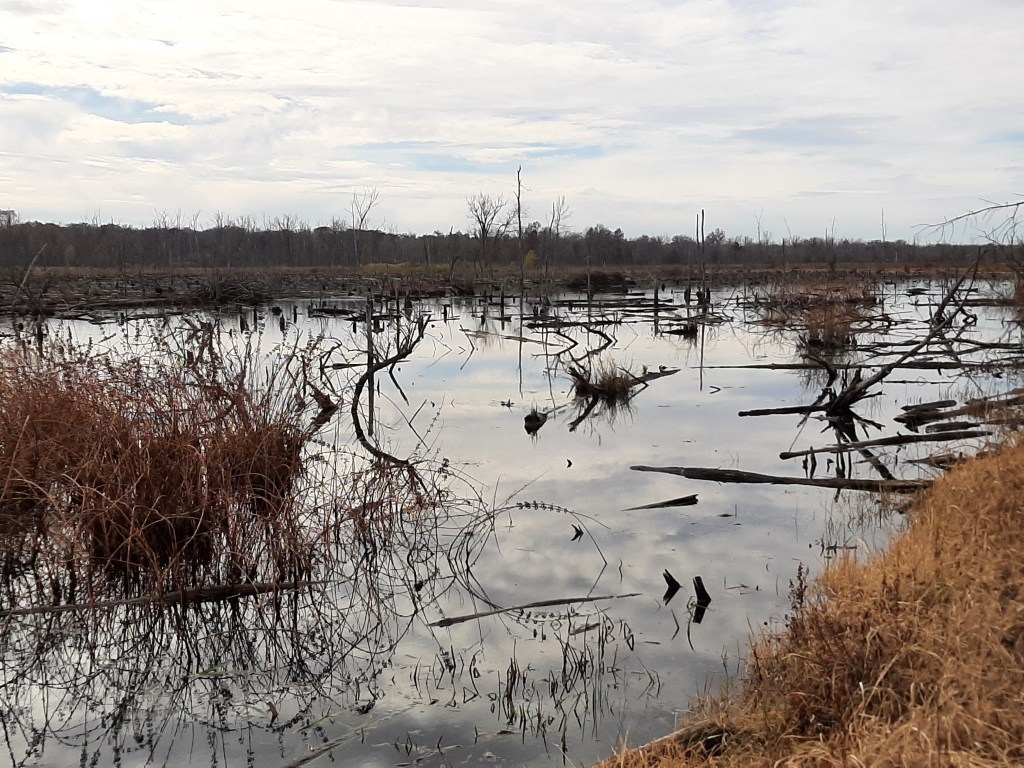

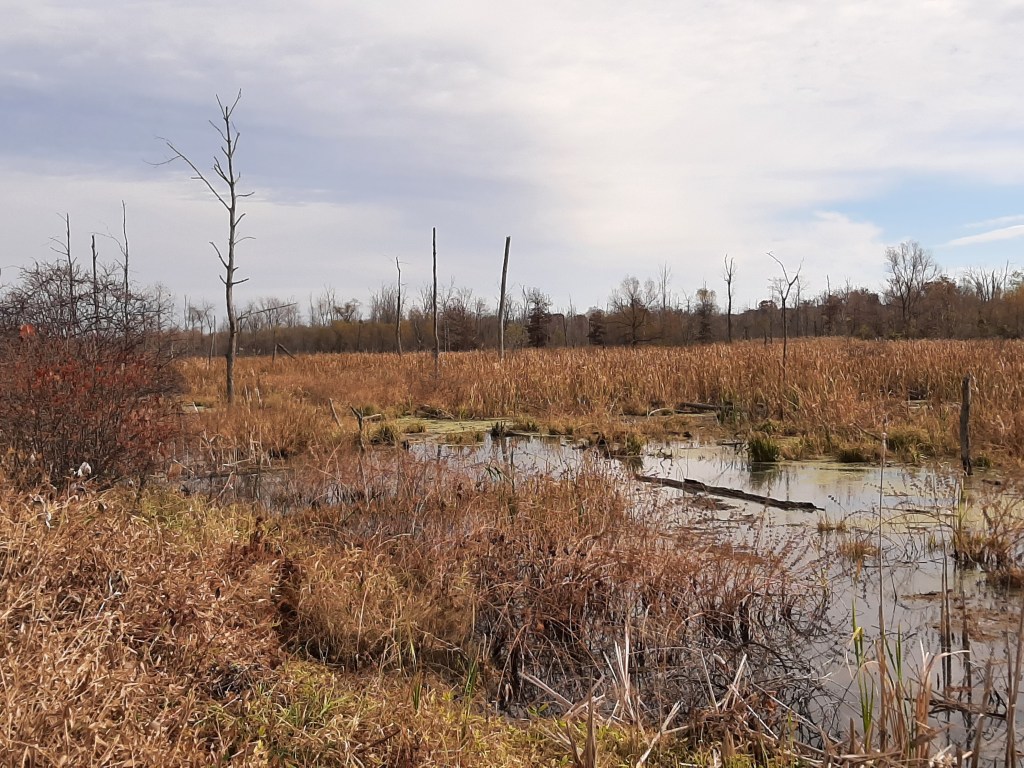
Some views of the Great Marsh.
Not only did we dip on the fork-tailed flycatcher, but our favorite restaurant in the area was closed. Like boarded up closed. Probably another victim COVID. To console ourselves we drove back and went to the Teays River Brewery. The Teays River is a huge pre-glacial river system that was as large as the Ohio River system and ran through the Lafayette area. The last ice age wiped it out. I’m guessing the brewery was started by a couple of out of work geologists. They make good beers and hey, how could they not be good with a mammoth in their logo.

 Ed's and Lise's Biggish Years