We are kicking back at the trailer in Delaware. Okay, maybe kicking back isn’t the appropriate terminology. We’ve been getting in some birding, photography, and kayaking which qualifies as kicking back. But we also hosted Molly and Mitchell, along with our friend Lindsay for a couple days, following that with a whirlwind trip to Philly to stay with the aforementioned folks, following that with a day trip to Lancaster and Lebanon on our way back to the trailer.
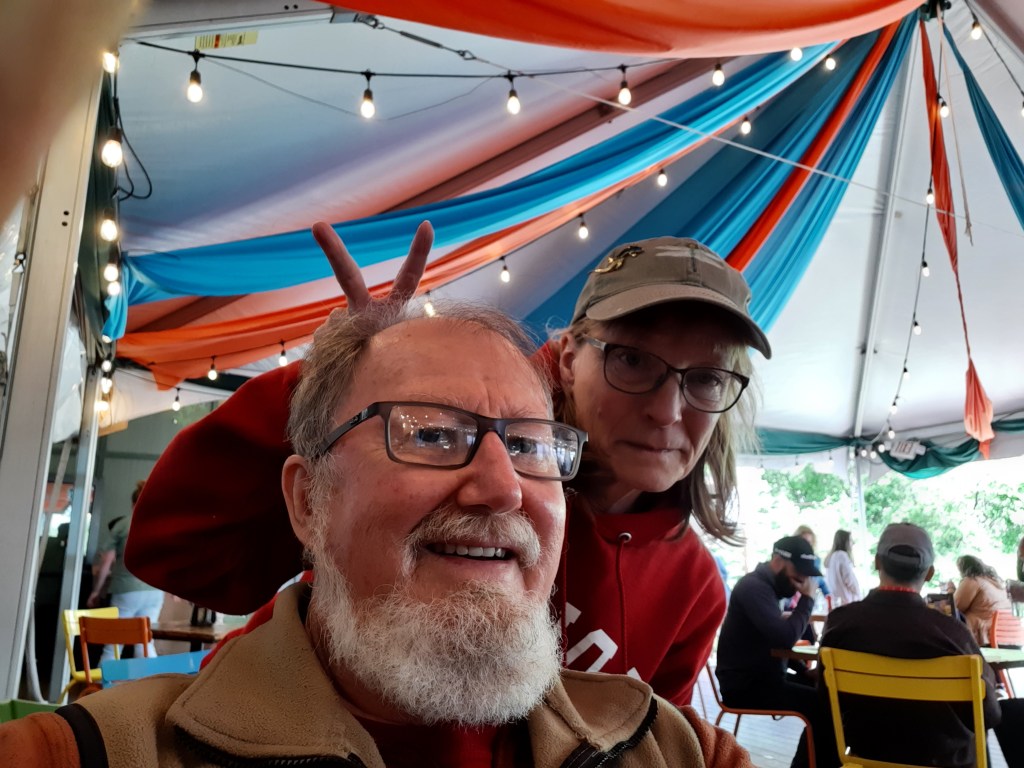
Chilling at Crooked Hammock brewery.


Bathing short-billled dowitcher.

Singing song sparrow.

Seaside sparrow checking us out.

Seaside sparrow singing for the babes.
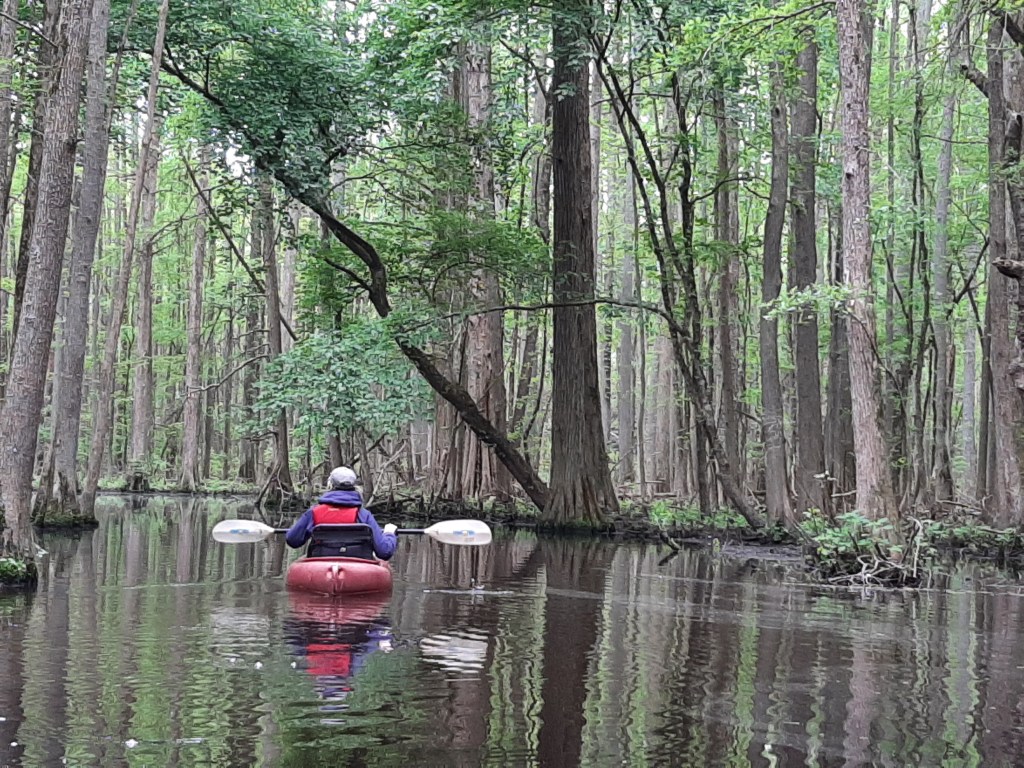
Lise kayaking through a cypress forest at Trapp Pond State Park.

Philadelphia skyscrapers.


Building reflections in Philly.
We had two reasons for our Lancaster visit. One was to load up on Weaver’s bacon, which I think is some of the best bacon in the world. This artery liner is to die for.
The other reason was to continue our Lewis and Clark expedition. When last we left our intrepid explorer, Meriwether Lewis was given command of the Corps of Discovery and went to Philadelphia. There he met with members of the American Philosophical Society who trained him in the scientific and medical skills required for the expedition. But prior to going to Philly, Lewis spent several weeks in Lancaster, Pennsylvania. There he stayed at the home of Andrew Ellicott, one of the leading frontier surveyors and mapmakers of the time and also a member of the American Philosophical Society. Ellicott helped to extend the original Mason-Dixon line marking the borders of Delaware, Maryland, and Pennsylvania, mapped the western boundaries of Pennsylvania and New York, produced the first topographic map of the Niagara River and Niagara Falls, surveyed the boundaries between Spanish territories and the U.S., and marked what would become the boundary line between the States of Alabama and Florida. From Ellicott, Lewis learned how to make latitude and longitude measurements and use the measurements to create maps.

Ellicott home in Lancaster.

Typical home from the time of Lewis’ visit.
Lancaster has a place in American history. When Lewis visited Lancaster in 1803, it was one of the largest U.S. inland cities. Lancaster was part of the original William Penn “Penn’s Woods” charter of 1681. The town was established in 1734 and incorporated as a borough in 1742. When the British occupied Philadelphia during the Revolutionary War, the Continental Congress fled first to Lancaster before moving on to York, Pennsylvania. The first long distance paved road in the U.S. was a turnpike going from Lancaster to Philadelphia. Completed in 1795, it was made of laid stones covered with gravel. Most likely Lewis traveled this road on his trip between Philly and Lancaster. Modern roads follow the course of the original turnpike, and we traveled parts of these modern versions. While traveling these roads through Lancaster County, one is traversing the heart of Amish country. Sharing the roads with horse and buggies, it isn’t hard to make the jump back to when Lewis made the trip.
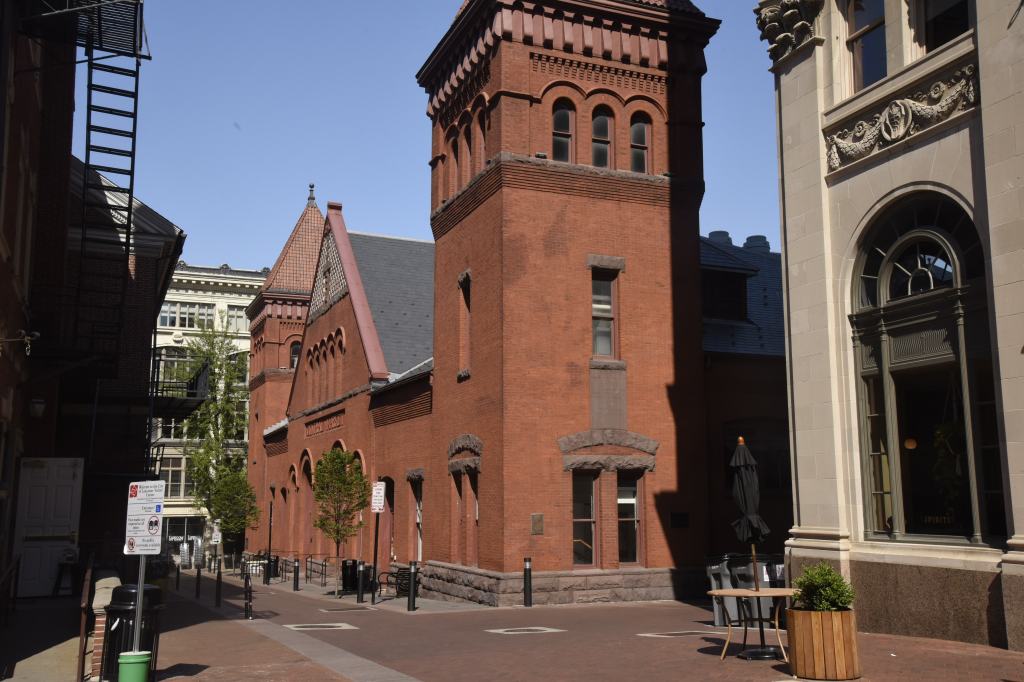
Site of the oldest continuously running Farmers’ market in the U.S.

Military tribute at the site that was the Lancaster courthouse, and used as the U.S. capitol for a short time.

Some period buildings in need of gentrification.
Other Lancaster residents of U.S. historical note are President James Buchanan, Robert Fulton of steamship fame, and lawyer and U.S. Representative Thaddeus Stevens. An ardent abolitionist, Stevens was considered a “Radical Republican”, back when Republicans actually had a moral backbone. His work led to the passage of the Thirteenth Amendment banning slavery.

When Lewis visited Lancaster, the building on the left with two entry doors was an inn and distillery. The building was later purchased by Thaddeus Stevens and served as his home and law office.
 Ed's and Lise's Biggish Years