Lise and I took a little R&R time and went back east to Delaware, with a side trip to Lebanon to buy bacon and visit family, and to Philly to see Molly and Mitchell. In Delaware we did a couple little projects around the trailer but mostly went to see the ocean, go birding, and relax a bit. Birding was good and I got a blue corporal, my first dragonfly of the year.
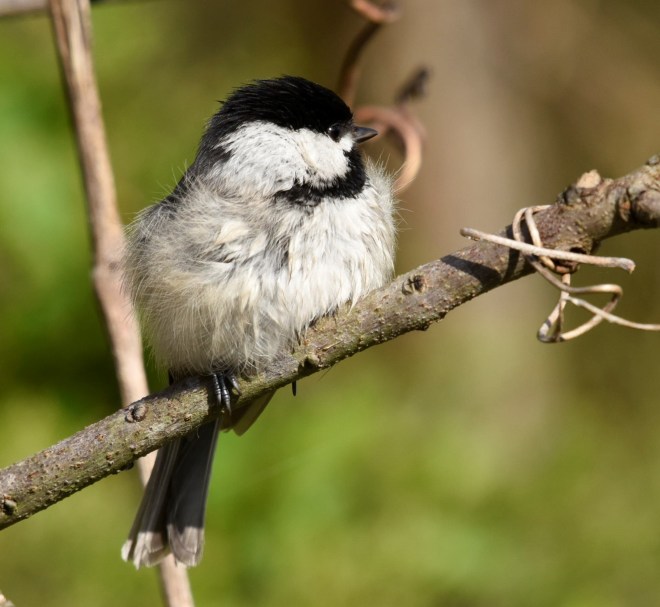
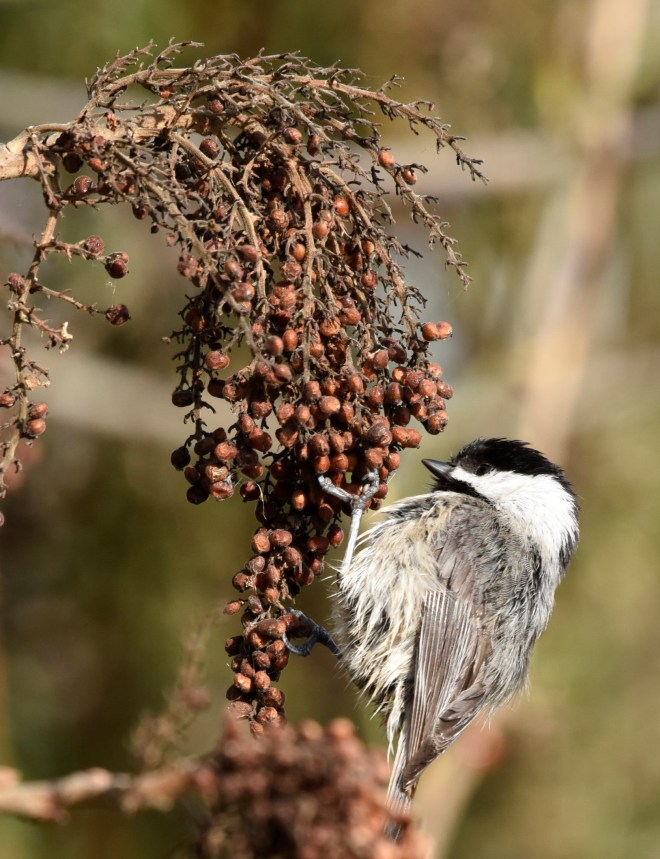
A ruffled but cooperative Carolina chickadee at Prime Hook National Wildlife Refuge.

Bald Eagle at Bombay Hook National Wildlife Refuge.

A rare pink-footed goose, with a snow goose in the rear, near Slaughter Beach.

Blue Corporal dragonfly at Prime Hook National Wildlife Refuge.
We also initiated a new adventure this trip. We wanted to give our travels a goal, so we decided to retrace the Lewis and Clarke expedition. Retracing the exact route is impossible since it has been highly altered since the expedition. We’re just going to visit as many documented points along the expedition route as possible.
The Corps of Discovery was muscle-powered. They paddled or walked around 8,000 miles. We will not. Hopefully some walking and paddling will be involved but our main means or transport will be powered by the internal combustion engine using fossil fuels. Nor is this something we will complete this summer. Like the Corps of Discovery Expedition, this will be a multiyear adventure. And, bowing to practicality and opportunity, we will not be doing the route in the same order Lewis and Clark did.
We started our little adventure this trip in Philadelphia. We’re lucky in that we have great a connection in Philadelphia. Molly and Mitchell live an easy walk from the historic part of Philly. While Philly technically wasn’t the starting point for the Corps of Discovery, the city played an important role in the expedition’s success. Once tasked with leading the expedition, Lewis came to Philadelphia for training and a major shopping trip. After the expedition’s completion, specimens collected during the expedition were sent to Philly for identification and cataloging.
Philadelphia has an interesting history. It has a well-justified reputation as a tough, gritty city. You pick a fight with Philly, you get your tit in a wringer. This is the town where sports fans snowballed Santa and celebrated victories by climbing light poles greased up specifically to prevent climbing. That’s chutzpah. Philly has had some rough times. When I was a kid, Philly was a place to be avoided unless you were traveling in a crowd. But after a long hard slog, Philly is seeing a renaissance, thanks to investment and gentrification. We enjoy visiting Philly. It’s not the same city I visited as a kid and definitely not the same city Meriweather Lewis visited in 1802 and 1803.

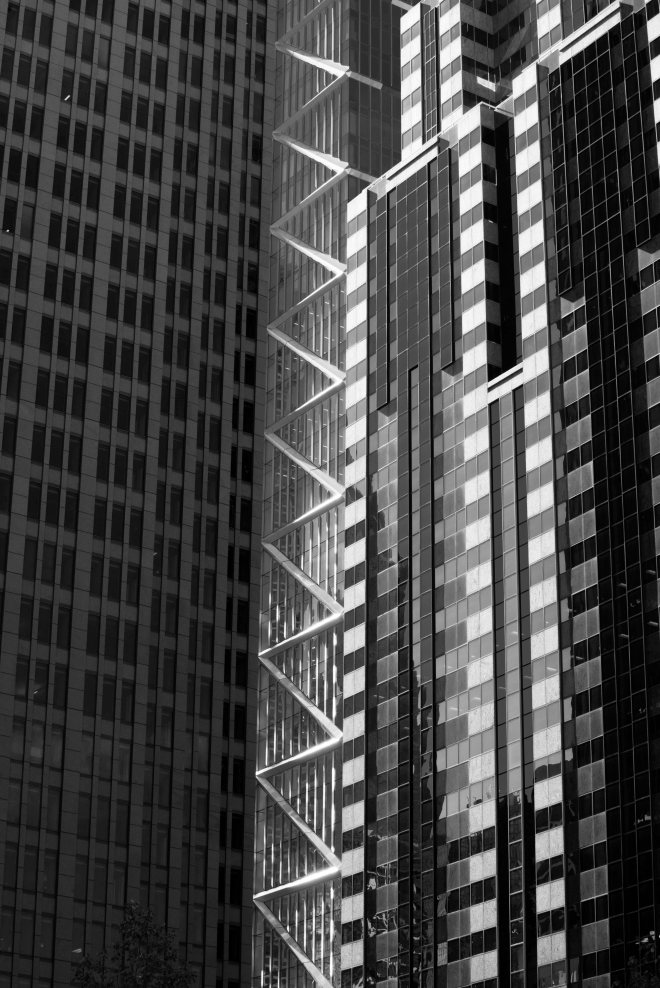


Philly skyscrapers in color or black and white.

A gentrified Philadelphia neighborhood.
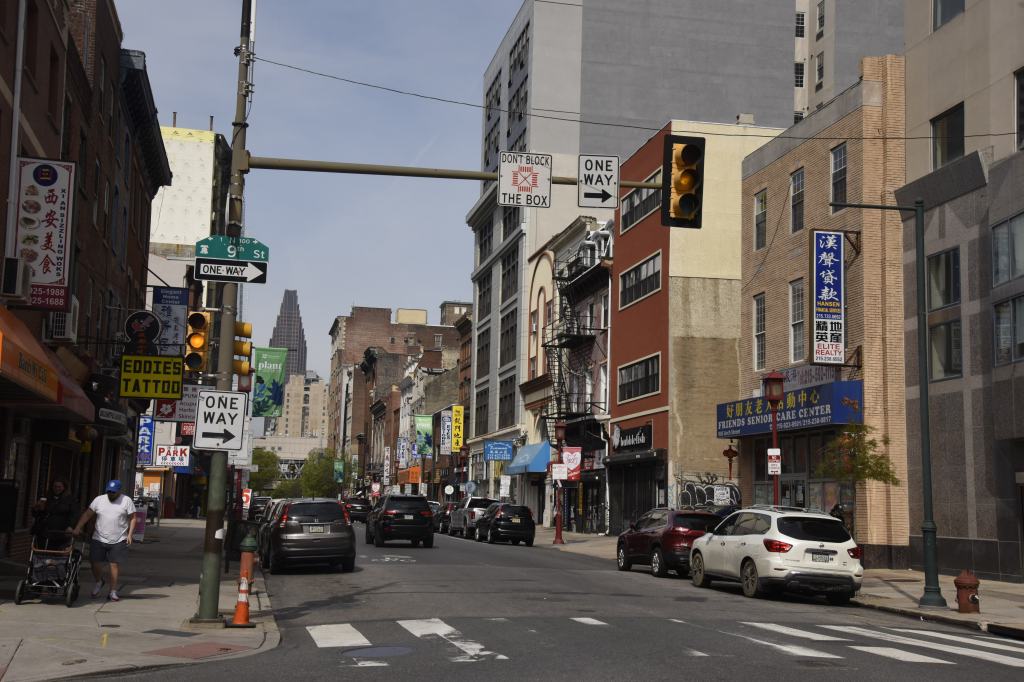
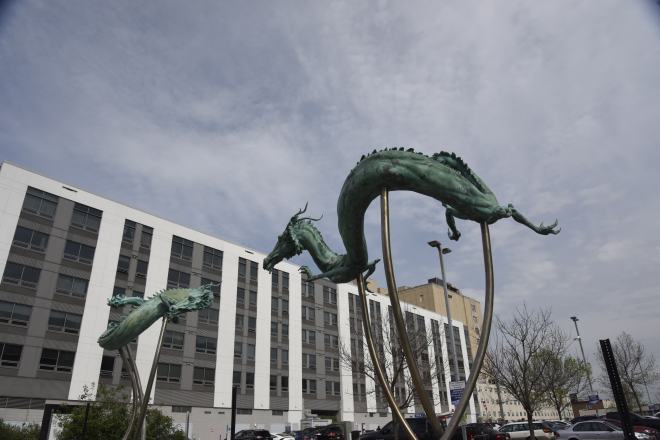
Chinatown. Philadelphia may have been cosmopolitan for the colonies, but a Chinatown is not something Lewis would have seen.
When Lewis came to Philly it was the largest city in the U.S. and the intellectual and scientific center of the country. This is the city where the Declaration of Independence and the U.S. Constitution were written. Where the first two Continental Congresses were held. Where Thomas Paine’s “Common Sense” and the first U.S. newspaper were printed. The first public hospital, the first volunteer fire company, and the first post office were formed here. The U.S. Marine Corps was founded in Tun Tavern. Ben Franklin and others founded the American Philosophical Society, the first U.S. organization dedicated to advancing science and philosophy. The list goes on and on. To use a Mark Twain phrase, you can’t swing a dead cat in Philly without hitting a historical marker of some sort. Nowhere else in this country will you find so much early U.S. history all within easy walking distance.

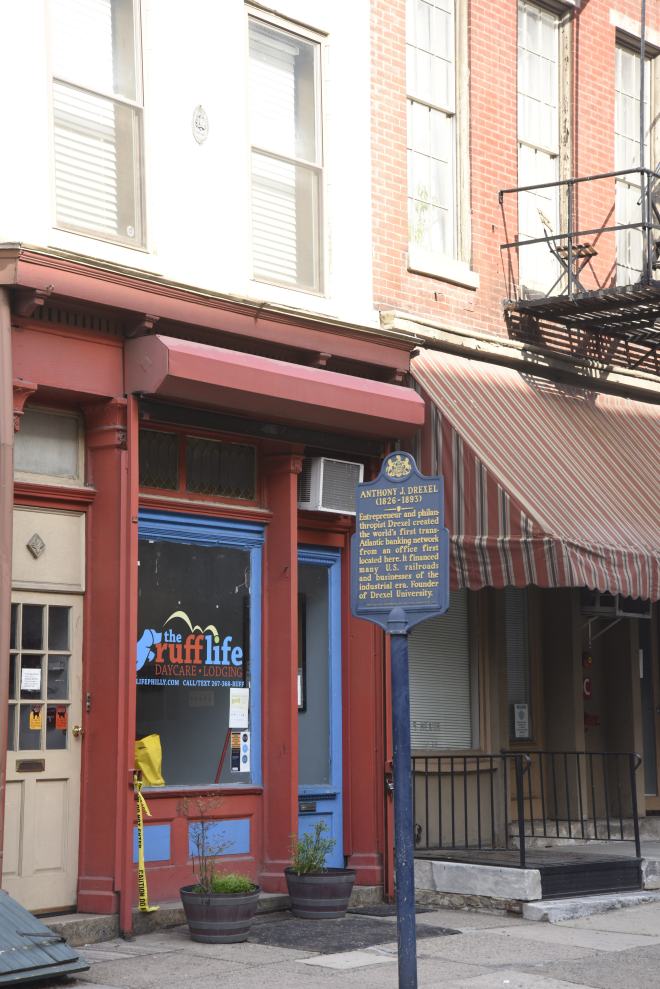
Typical historical marker you see while walking neighborhoods in Philly.
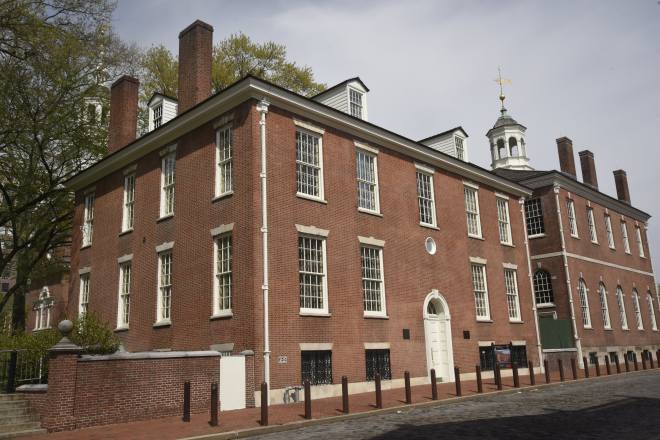

The American Philosophical Society.
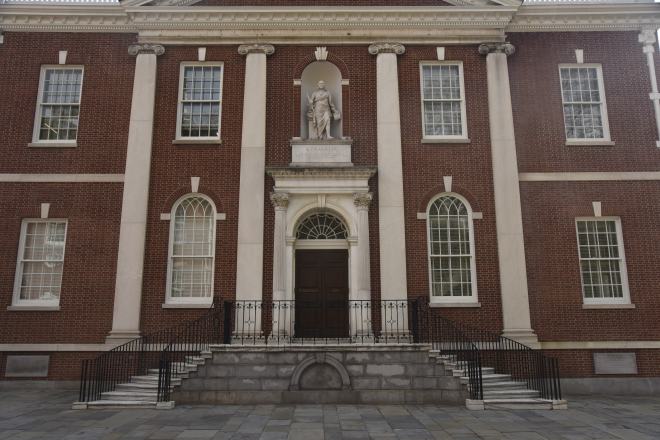
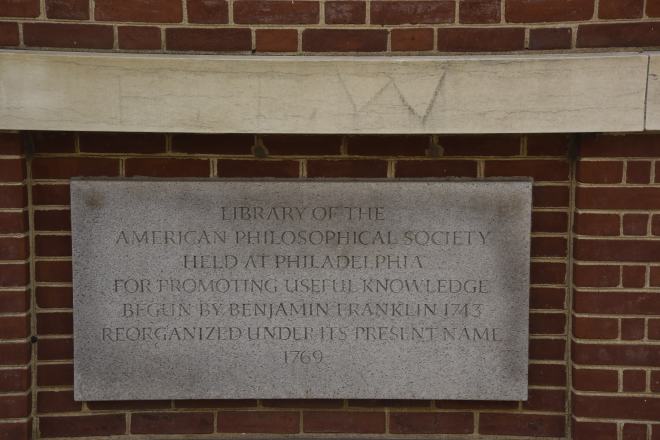
Library of the American Philosophical Society
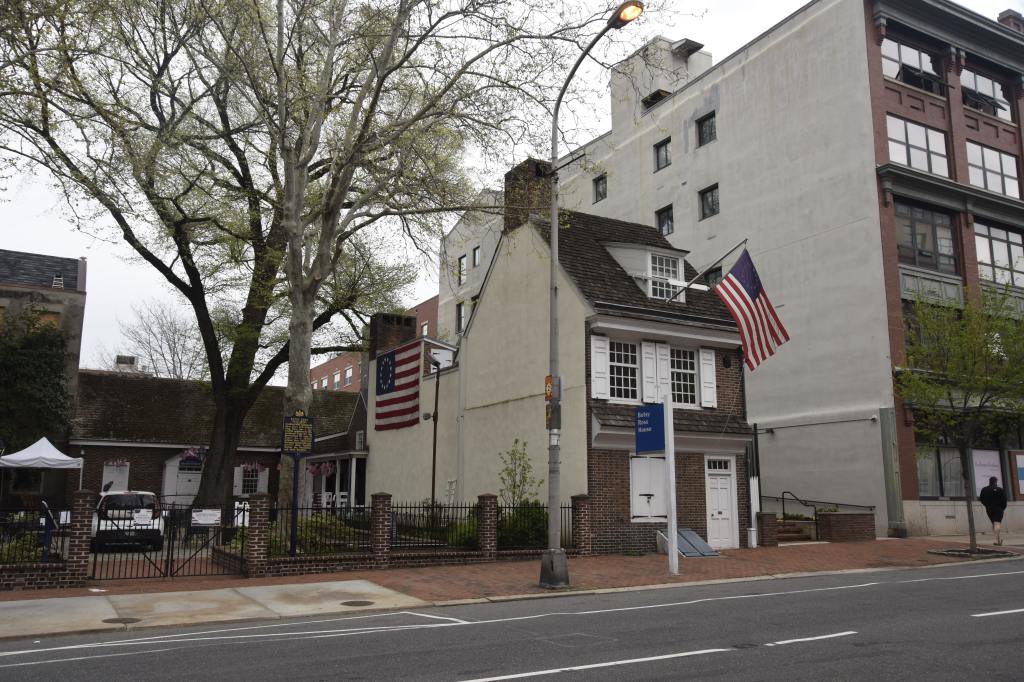
Home of Betsy Ross, seamstress, upholsterer, and creator of the Stars and Stripes.

The home where Jefferson composed the Declaration of Independence.

Independence Hall.

Ben Franklin’s grave in Christ Church Burial Ground. The church formed in 1695 as an Anglican church. In 1789 the church’s rector lead in the splitting of the American Episcopal Church from the Anglican Church. Fifteen signers of the Declaration of Independence were church members and five are buried there. The church still uses the baptismal font used to baptize William Penn.

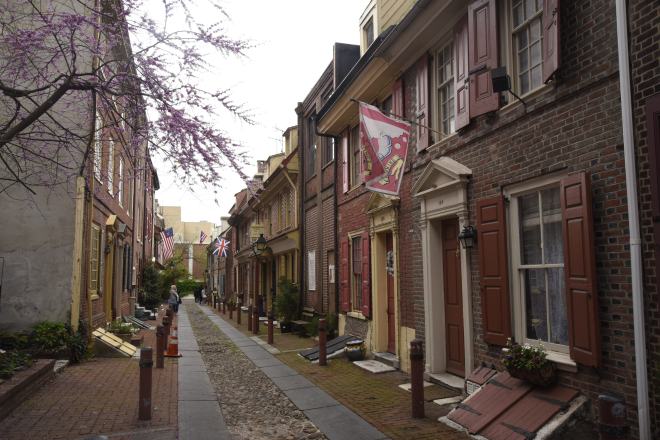

Elfreth’s Alley. The oldest continually occupied street in America. The homes are still privately owned and occupied. One homeowner gave us a peek inside her home.
In 1802 Lewis visited Philly for a social outing where he was introduced to a number of the political and social leaders of the time. In 1803, Thomas Jefferson gave Lewis command of the Corps of Discovery. Prior to embarking on the expedition, Jefferson first sent Lewis to Lancaster Pennsylvania to train in frontier surveying and mapping, then on to Philadelphia for more training. Jefferson, a member of the Philosophical Society, had Lewis meet with other members for training in frontier medicine, botany and plant identification, animal identification, celestial observation, and geology.
Dr. Benjamin Rush gave Lewis a couple weeks training in frontier medicine and supplied Lewis with a stock of the good doctor’s own concoction called “Rush’s Pills”. These pills were a massive laxative and given the nickname “Thunder Clappers”. The good doctor saw these pills as a cure-all and suggested using them liberally. Lewis also obtained other medicinal substances including opium and mercury in the form of a compound called Calomel, which at the time was the primary treatment for syphilis.
Benjamin Bartram, the country’s leading botanist, taught Lewis how to identify, collect, and preserve plant specimens. From Casper Wistar he learned about animal identification and fossils. From Robert Patterson he learned geography, geology, and celestial observation. He visited the museum of Charles Peale who put the first mastodon skeleton on view, an animal Jefferson thought they might find on the expedition.
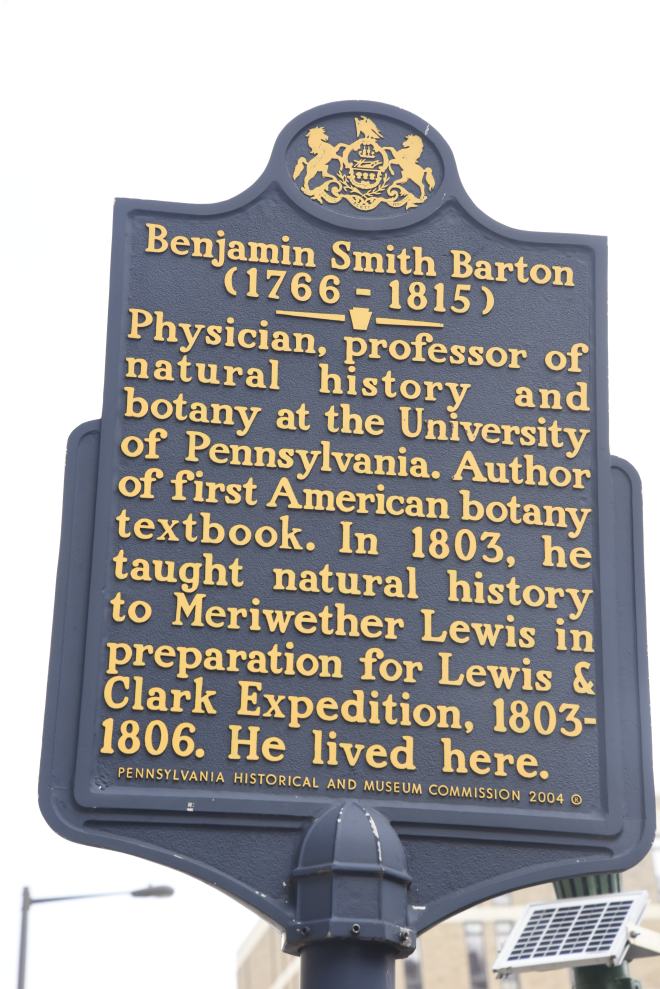


The location of Bartram’s home and its current use.
Lewis also went on a huge shopping trip to supply the Corps. His agent, Israel Whelan, visited over 20 different shops buying among other things, medicines, fishhooks, calico ruffled shirts, strong wine, Jew’s harps, tomahawks, 193 pounds of portable soup, 63 pounds of pigtail tobacco, trinkets for gifts, and a gold chronometer. All told Lewis purchased about 3,500 pounds of supplies. His $2,100 shopping spree is equivalent to over $44,000 in today’s money.
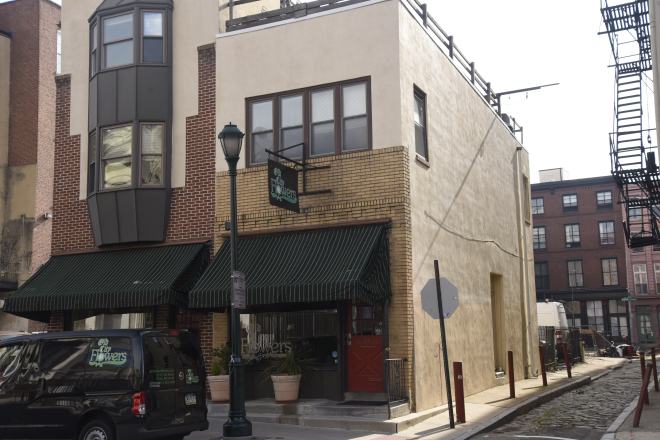
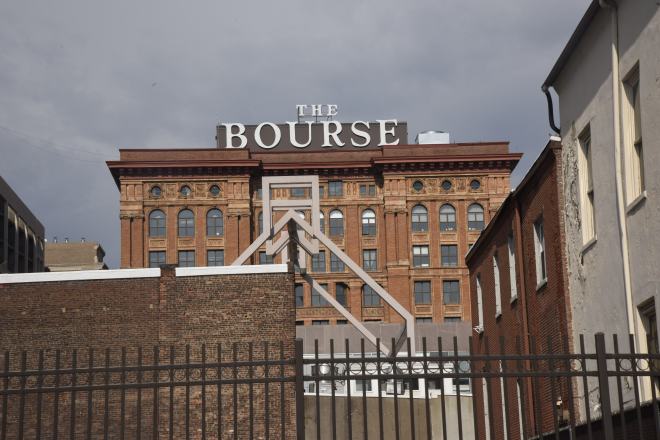
Now a flower shop, at 31 South Third Street Lewis bought a gold chronometer from Thomas Parker’s shop. From the shop looking towards the Bourse one can see the rebuilt frame of Benjamin Franklin’s home. The Bourse was the first commodities exchange in the U.S. It is also the first building in the world to house a commodities exchange, maritime exchange, and a grain trading exchange at the same time. It’s now a food court.

Now available for lease, at 726 Market Street, Lewis bought 63 pounds of “pigtail tobacco” from Thomas Leiper’s.

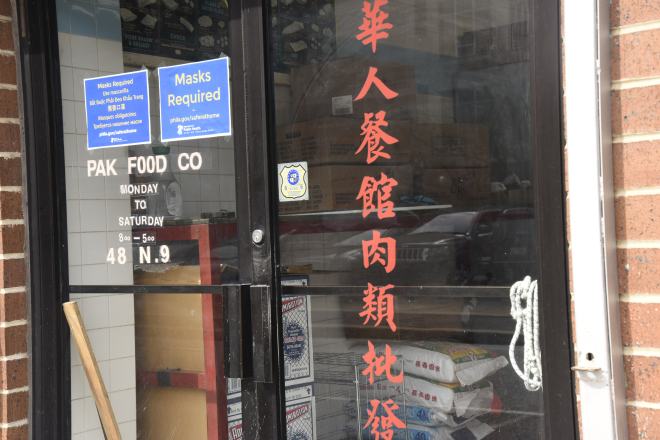
What is now a parking lot in Chinatown, 21 N. Ninth Street, was the shop of François Baillet’s. Here Lewis bought 193 pounds of “portable soup”. Currently, directly across the street, is a very different food provisioner.


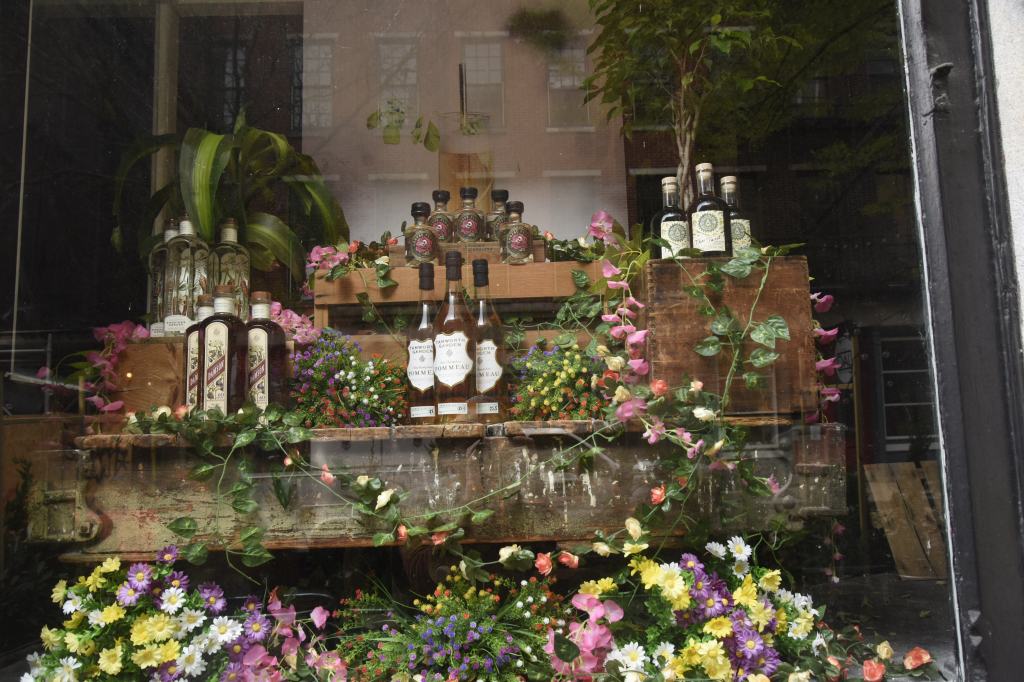

Now a barber school, 114 North Third Street was Christian H. Denchla’s shop. Here Lewis bought 73 dozen trinkets to be used as gifts for Native Americans. The wares available at adjoining shops are very different from those available during Lewis’s visit and attest to the Philly’s gentrification.
Philly also figures in the end of the Corps of Discovery expedition. Many of the specimens collected by Lewis and Clark came back to Philadelphia for identification and preservation. Lewis bequeathed many of the artifacts collected on the expedition to Charles Willson Peale. Peale also painted portraits of Lewis and Clark. And finally, after Lewis’s death, it was a Philadelphia publisher and writers that finished and published the story of the expedition. Lewis’s original leather-bound journals reside at the American Philosophical Society in Philadelphia.
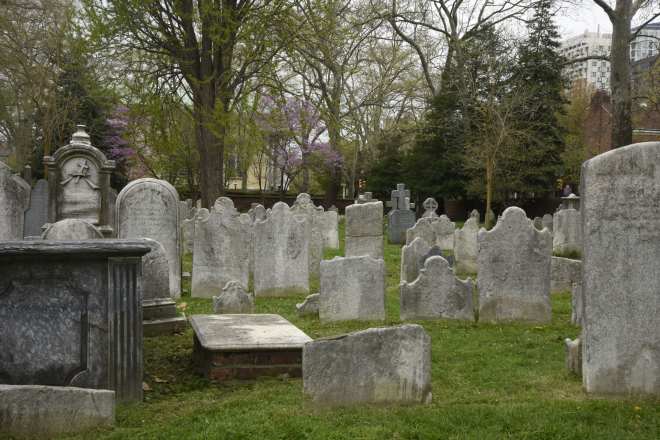

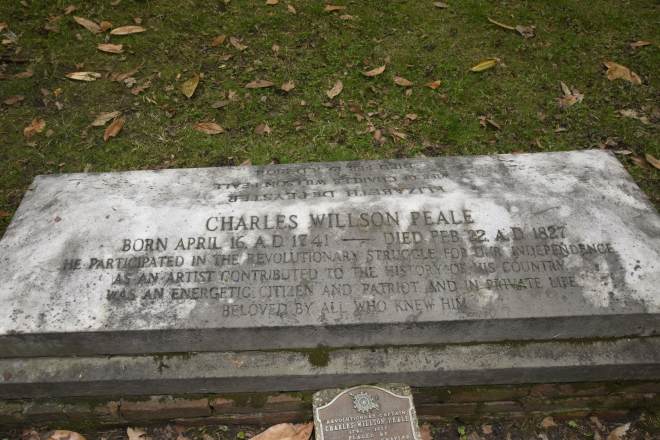
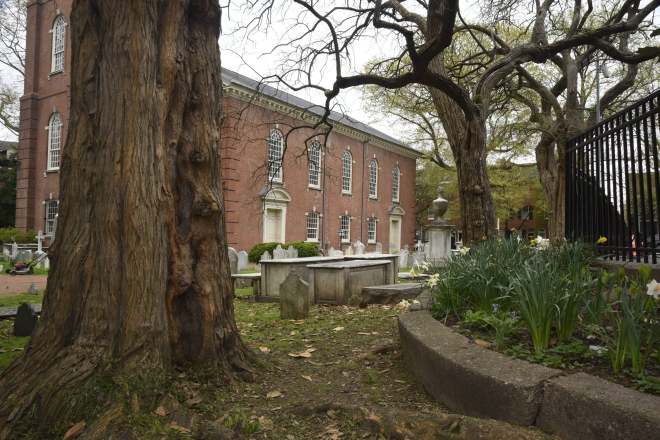
The graveyard containing Charles Willson Peale’s grave at St. Peter’s Church. The church was founded in 1761 and is still active today. Other historical figures are buried there. The church still uses the original box pews, including the one frequented by George and Martha Washington. The Osage orange trees in the graveyard were grown from stock brought back from the expedition that Lewis planted in St. Louis.
 Ed's and Lise's Biggish Years